

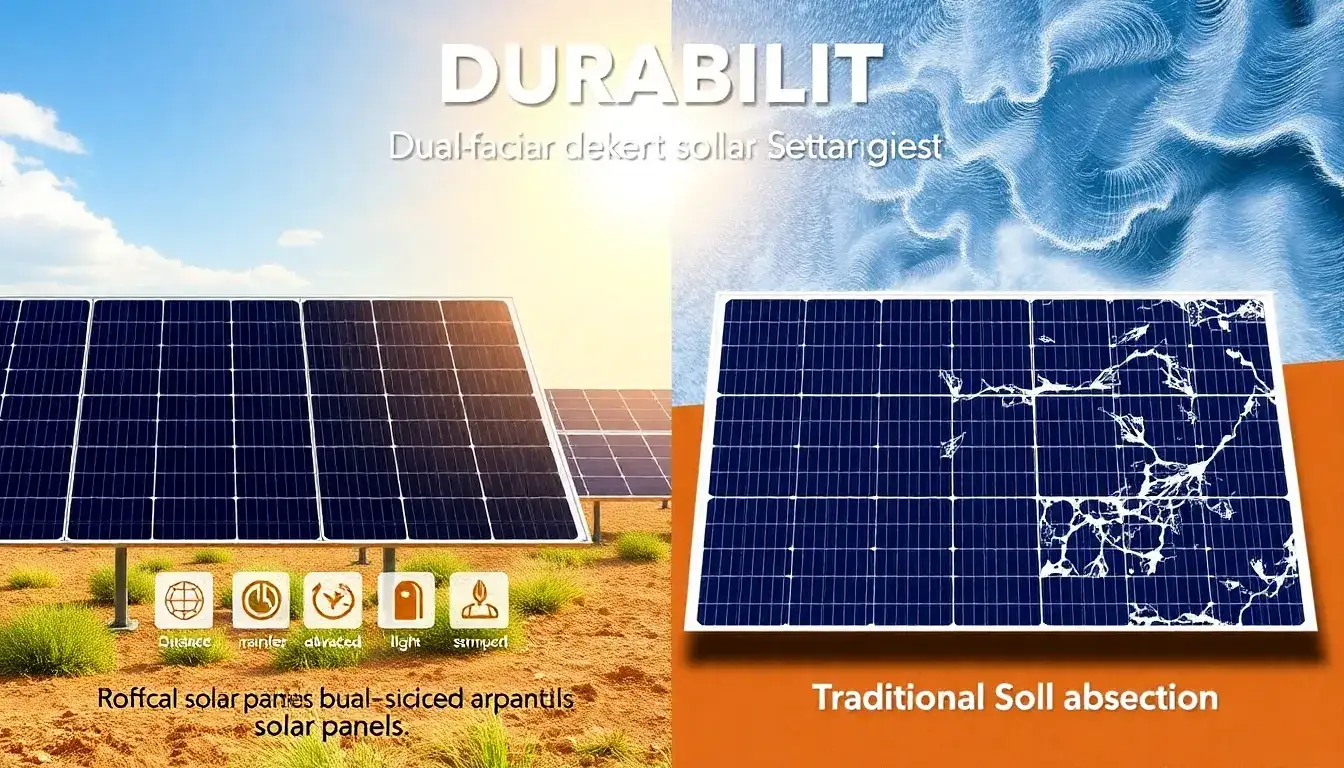
Bifacial solar panels generally demonstrate superior durability compared to traditional monofacial panels due to their double-glass construction, which enhances resilience against environmental factors such as wind and hail. Here are key points that highlight this comparison:
Durability Comparison
- Construction and Materials:
- Bifacial Panels: Often feature a double-glass design that provides additional strength, resulting in longer warranties and operational lifespans. This construction helps protect the panels from environmental stressors like hail and wind.
- Monofacial Panels: Typically use a single layer of glass on the front, with a backsheet on the back, which may not offer the same level of protection as the double-glass setup.
- Resistance to Environmental Factors:
- Bifacial Panels: The double-glass design enhances protection against harsh weather conditions, contributing to a longer lifespan (often up to 30 years).
- Monofacial Panels: Generally offer a standard lifespan of about 25 years, though they are also designed to withstand environmental stresses.
- Setup and Maintenance:
- Bifacial Panels: Can be installed vertically, which reduces accumulation of snow and debris, further enhancing durability and energy output.
- Monofacial Panels: Are typically installed horizontally to maximize sunlight exposure but can accumulate more debris.
- Cost and Long-Term Benefits:
- Bifacial Panels: Initially cost more (about 10% more than monofacial panels) but may offer long-term savings due to higher energy output and better durability.
- Monofacial Panels: Cheaper upfront but may not provide the same level of long-term efficiency or savings.
Overall, bifacial solar panels are more durable and less prone to degradation from environmental factors compared to traditional monofacial panels. This makes them a viable option for long-term energy generation in challenging conditions.
Original article by NenPower, If reposted, please credit the source: https://nenpower.com/blog/how-does-the-durability-of-bifacial-solar-panels-compare-to-traditional-panels/

