

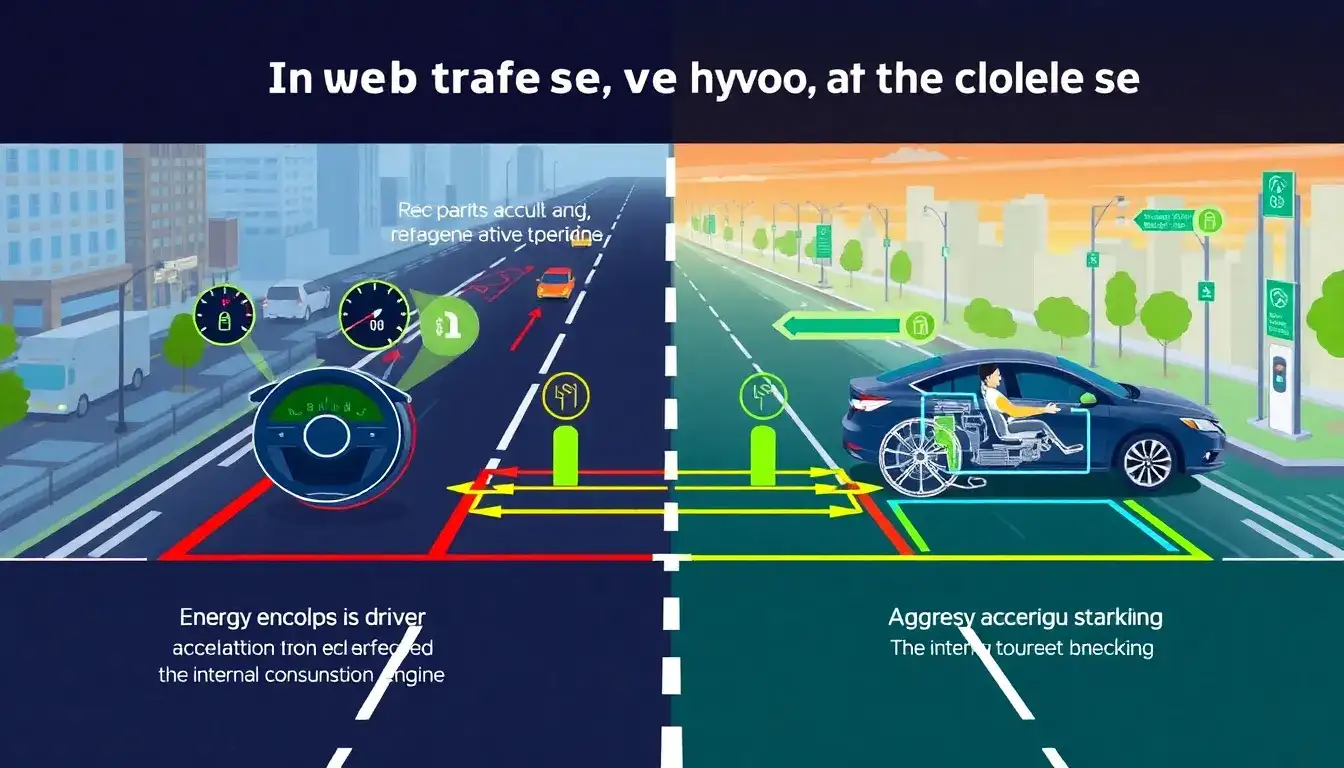
Driving style significantly affects the fuel economy of plug-in hybrid electric vehicles (PHEVs). Here are the key points demonstrating this impact:
Factors Influencing Fuel Economy
- All-Electric Range and Battery Usage: PHEVs operate more efficiently when driven within their all-electric range, as using battery power reduces fuel consumption. However, driving beyond this range activates the engine, leading to blended mode operation and increased fuel use.
- Temperature and Battery Performance: Cold temperatures (e.g., sub-freezing conditions) can decrease battery efficiency and fuel economy. For example, PHEVs can achieve over 100 MPG in moderate temperatures but drop to as low as 50 MPG in colder conditions.
- Driving Quality Metrics: Studies have shown that aggressive driving styles, characterized by rapid acceleration and frequent braking, increase energy consumption. Metrics such as Energy Rate (ER), Distance Rate (DR), and Absolute Speed Change Rate (ASCR) highlight the negative impact of aggressive driving on PHEV efficiency.
Eco-Driving Techniques
- Smooth Acceleration and Deceleration: Maintaining a steady speed and using gentle acceleration can reduce energy losses due to braking and acceleration, improving overall fuel economy.
- Maintaining Constant Speed: Constant speeds reduce frequent engine engagements, which can occur during varied driving conditions, thereby conserving fuel.
- Anticipation and Planning: Drivers who anticipate traffic conditions and plan their movements can maintain a more constant speed, minimize acceleration, and reduce fuel consumption.
In summary, adopting eco-friendly driving practices can significantly enhance the fuel economy of PHEVs by reducing unnecessary energy consumption associated with aggressive maneuvers.
Original article by NenPower, If reposted, please credit the source: https://nenpower.com/blog/how-does-the-driving-style-affect-the-fuel-economy-of-a-phev/

