

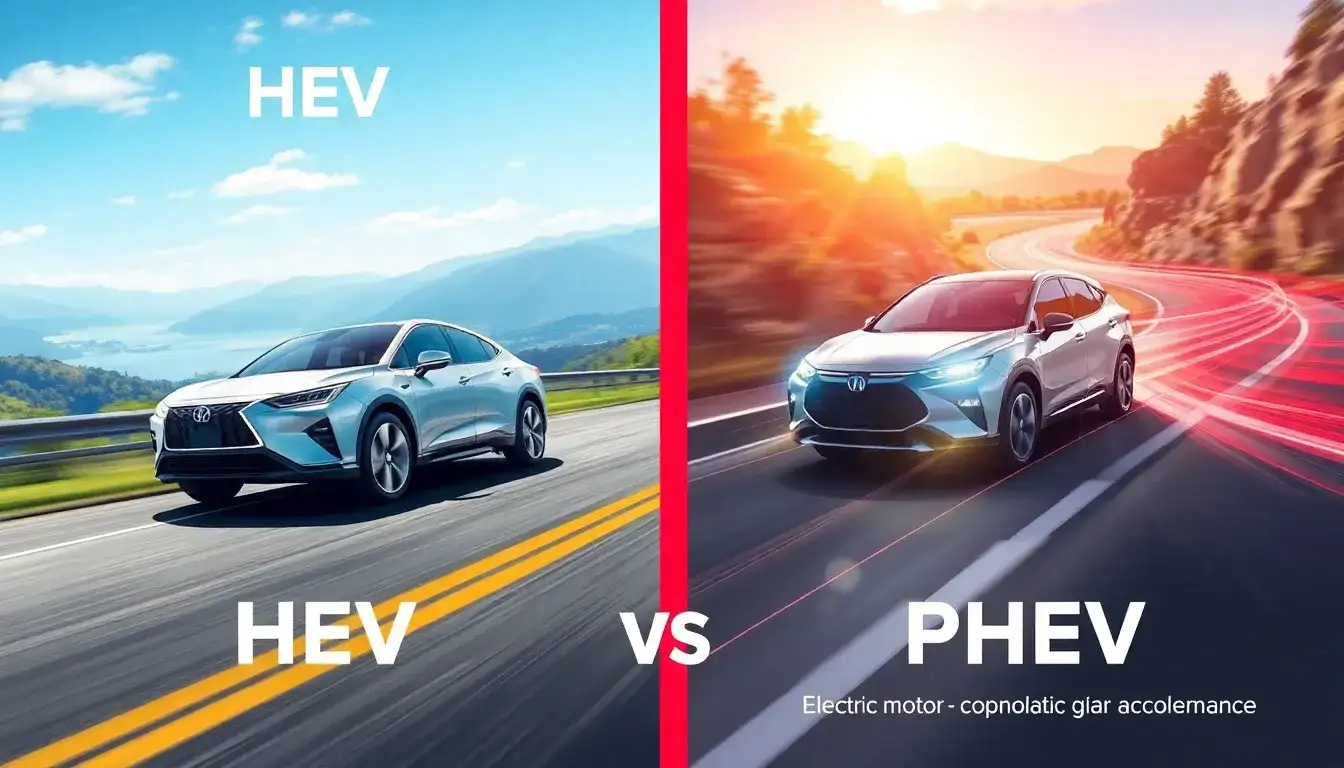
The driving experience in terms of acceleration between hybrid electric vehicles (HEVs) and plug-in hybrid electric vehicles (PHEVs) differs mainly because of their battery size, electric motor utilization, and powertrain strategy.
Acceleration Characteristics of HEVs vs PHEVs
- HEVs (Standard Hybrids):
HEVs have smaller batteries (around 1 kWh) and use the electric motor primarily to assist the internal combustion engine during acceleration, especially from a stop or at low speeds. The electric motor and gas engine work together smoothly to provide consistent and responsive acceleration, without a noticeable lag. The battery is continually charged through regenerative braking and the engine, so electric power is readily available to boost acceleration when needed. This results in generally brisk acceleration for everyday driving conditions since the gas engine is engaged as speeds increase, delivering higher power output. - PHEVs (Plug-In Hybrids):
PHEVs feature much larger batteries (10 to 20 times bigger than HEVs), allowing for a substantial all-electric driving range (typically 20 to 50 miles). When operating in all-electric mode, PHEVs rely solely on the electric motor, which often leads to slower acceleration compared to hybrid mode or traditional hybrid vehicles. For example, tests showed the Toyota Prius Prime and BMW X5 PHEVs took about twice as long to reach 60 mph in EV-only mode versus hybrid mode, with times more than double those when both engine and motor were working together. A notable case was the Mercedes-Benz GLE450e PHEV, which accelerated to 60 mph in 5.3 seconds using both gas and electric power, but took 14.4 seconds in electric-only mode, showing considerably reduced acceleration performance in EV mode alone. This reflects that while PHEVs can provide silent, zero-emission driving for short distances, their pure electric acceleration can feel sluggish compared to hybrid operation or dedicated electric vehicles.
Summary of Differences:
| Feature | HEVs (Hybrid Electric Vehicles) | PHEVs (Plug-In Hybrid Electric Vehicles) |
|---|---|---|
| Battery size | Small (~1 kWh) | Large (10–20x HEV battery size) |
| Electric motor use | Assistance during acceleration and low speeds | Can drive alone for 20–50 miles; hybrid mode combines motor + engine |
| Acceleration in electric mode | Typically not applicable; motor assists engine | Slower acceleration in EV-only mode, often double the time to 60 mph |
| Overall acceleration feel | Smooth, responsive acceleration with combined power | Quick in hybrid mode, sluggish in EV-only mode |
In essence, HEVs deliver more consistent and brisk acceleration by combining electric assist with the internal combustion engine seamlessly, while PHEVs offer the flexibility of all-electric driving but with a tradeoff of noticeably slower acceleration in EV-only mode. The gas engine in PHEVs boosts acceleration when hybrid mode is active, making their performance comparable or better than HEVs in hybrid mode but weaker when relying solely on electric power.
Original article by NenPower, If reposted, please credit the source: https://nenpower.com/blog/how-does-the-driving-experience-differ-between-hevs-and-phevs-in-terms-of-acceleration/

