

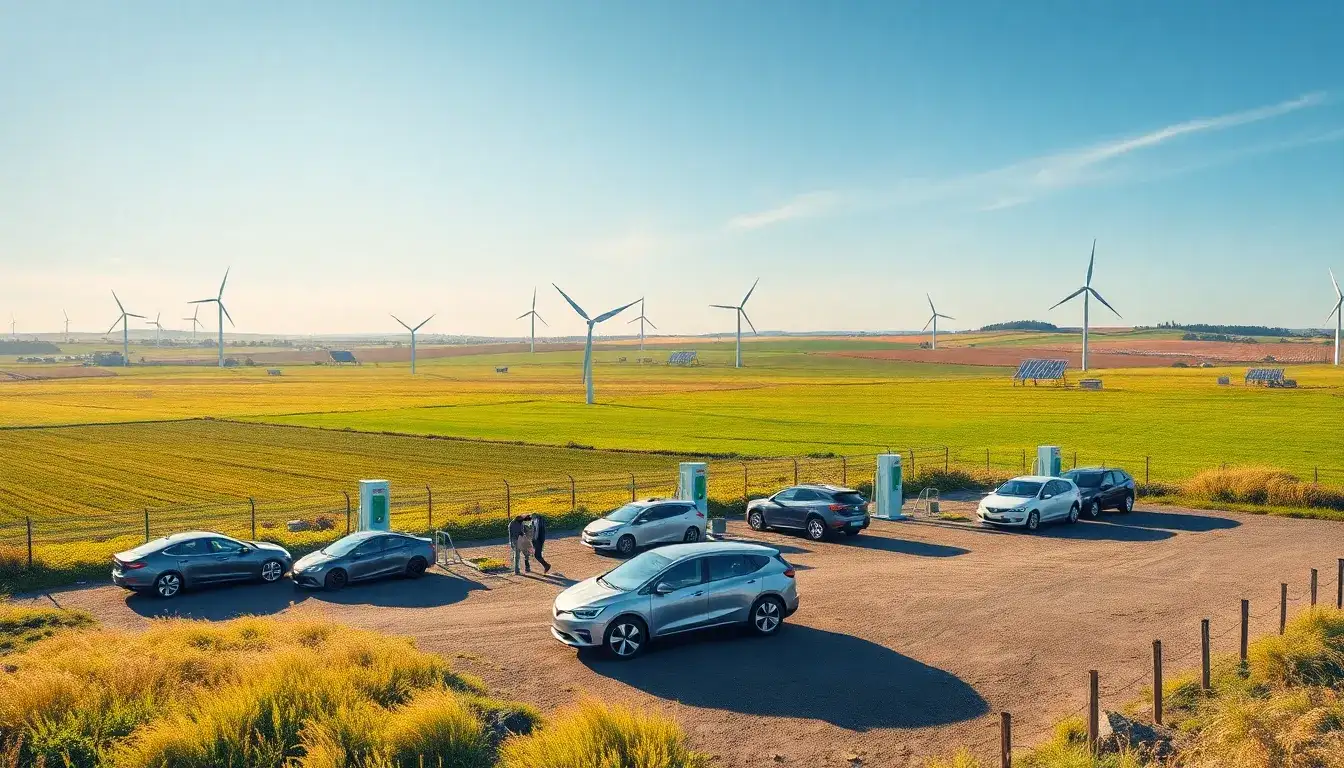
The distance to the nearest charger significantly reduces electric vehicle (EV) adoption in rural areas due to range anxiety, longer trip requirements, and infrastructure scarcity. Here’s how these factors interact:
Key Impacts
- Range Anxiety: Rural drivers often travel longer distances, making battery range and charger availability critical. The lack of public chargers forces drivers to worry about being stranded without power, especially since rural areas have fewer fast-charging options.
- Trip Planning Challenges: Chargers may be unavailable, out-of-order, or require detours, complicating long-distance travel. Cold climates exacerbate these issues by reducing battery performance and leaving drivers exposed during charging.
- Economic Barriers: Lower population density makes charger installation costly, leading to fewer stations. Urban areas recover costs through high usage, while rural stations struggle financially, perpetuating the shortage.
Urban vs. Rural Comparison
| Factor | Rural Areas | Urban Areas |
|---|---|---|
| Charger Density | Sparse, often along major corridors | Dense, widespread availability |
| Trip Lengths | Longer, less predictable | Shorter, more routine |
| Cost Recovery | Challenging due to low usage | Easier due to high demand |
| EV Adoption Rate | ~40% lower than urban areas | Higher, supported by infrastructure |
Addressing these challenges requires targeted investments in rural charging networks and education about EVs’ long-term savings.
Original article by NenPower, If reposted, please credit the source: https://nenpower.com/blog/how-does-the-distance-to-the-nearest-charger-impact-ev-adoption-in-rural-areas/

