

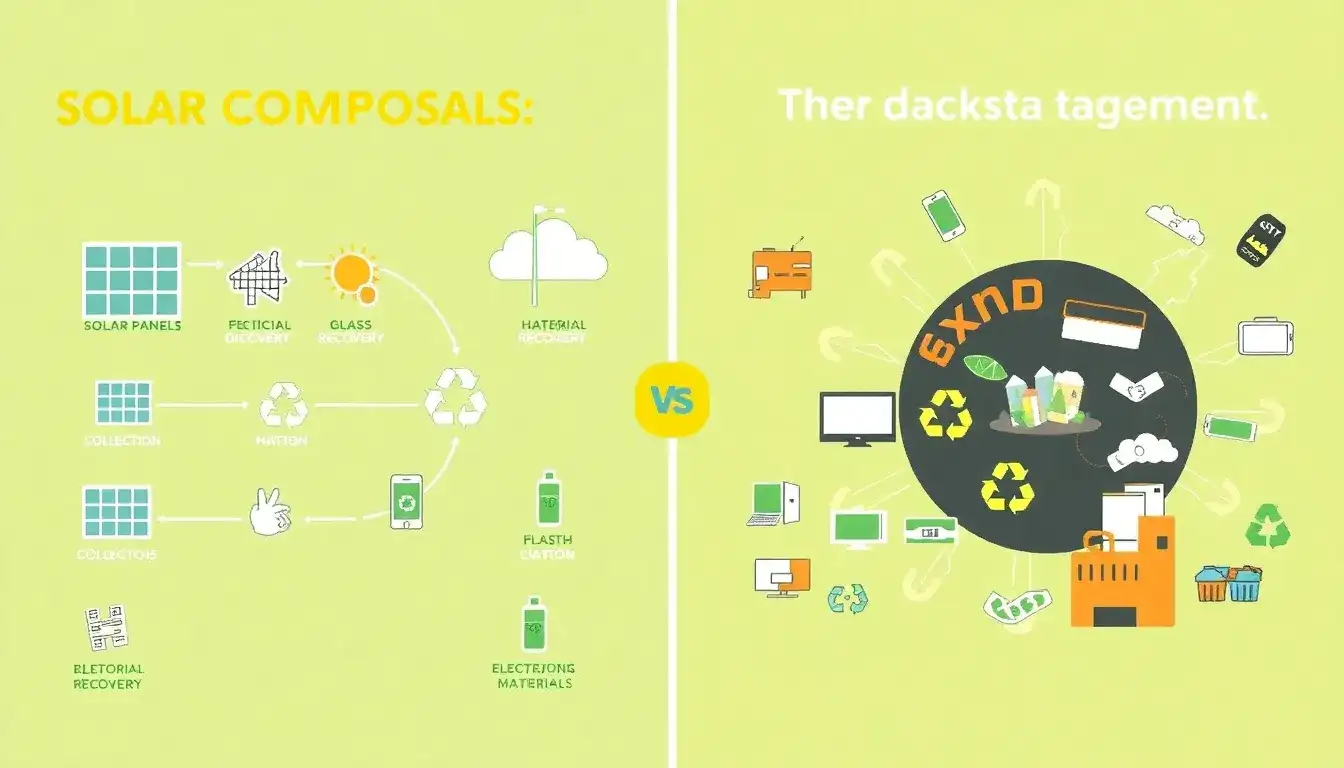
The disposal of solar panels presents distinct challenges and opportunities compared to other types of electronic waste (e-waste), with specific processes and growing regulatory focus.
Comparison to Other Electronic Waste Disposal
Recycling Complexity and Processes
Solar panels require specialized recycling processes that are more complex than many other e-waste items. The process typically involves:
- Removing the frame and junction box,
- Separating the glass from silicon wafers through thermal, mechanical, or chemical means,
- Extracting and purifying valuable materials like silicon cells and specialty metals (silver, tin, lead, copper) via chemical and electrical techniques.
This multi-step recycling contrasts with more straightforward e-waste recycling methods, which often focus on metal and plastic separation without such delicate handling of layers and semiconductor materials.
Current Recycling Scale and Effectiveness
While e-waste recycling generally benefits from more established infrastructure, solar panel recycling is still emerging. In many regions, solar panels end up at general-purpose glass recycling facilities or landfills due to a lack of specialized facilities. Up to 95% of used solar panels currently end up in landfills or non-specialized recycling processes, which can cause contamination and loss of valuable materials, unlike other e-waste streams that are more commonly and efficiently recycled.
Environmental and Regulatory Considerations
Solar panels do not emit pollutants while in use, but their disposal is critical due to the volume of waste expected as panels reach their end of life, projected to reach millions of tons in the US alone by 2030–2050. This volume forecast necessitates improved disposal methods to avoid environmental harm, similar in urgency to concerns around other e-waste disposal.
Some jurisdictions have begun implementing regulations requiring proper disposal and recycling of solar panels, mirroring legal frameworks for other e-waste types. These regulations aim to prevent landfill dumping and encourage sustainable recycling.
Reuse and Repurposing
Like other electronics, solar panels can sometimes be reused or repurposed if they still function, which mitigates the need for immediate disposal and reduces waste.
Summary Table
| Aspect | Solar Panels | Typical Electronic Waste |
|---|---|---|
| Recycling Complexity | High; requires disassembly and specialized material separation (glass, silicon, metals) | Moderate; often focused on metals and plastics separation |
| Recycling Infrastructure | Limited and emerging | More established and widespread |
| End-of-Life Waste Volume | Rapidly growing with solar market expansion | Increasing but more stable overall |
| Disposal in Landfills | High percentage currently (~95% in some areas) | Varies by region; often recycled more |
| Regulatory Environment | Increasing regulations emerging | Established in many parts of the world |
| Environmental Concerns | Potential contamination if not recycled properly; valuable materials lost | Similar concerns, but recycling usually better developed |
| Reuse/Potential for Repurposing | Possible for some panels if functional | Common for many e-waste devices |
In conclusion, solar panel disposal is more complex and less mature in recycling infrastructure than general electronic waste but is rapidly gaining attention due to increasing volumes and the valuable recoverable materials involved. Efforts continue to develop cost-effective, specialized recycling to improve sustainability compared to other electronics recycling processes.
Original article by NenPower, If reposted, please credit the source: https://nenpower.com/blog/how-does-the-disposal-of-solar-panels-compare-to-other-types-of-electronic-waste/

