

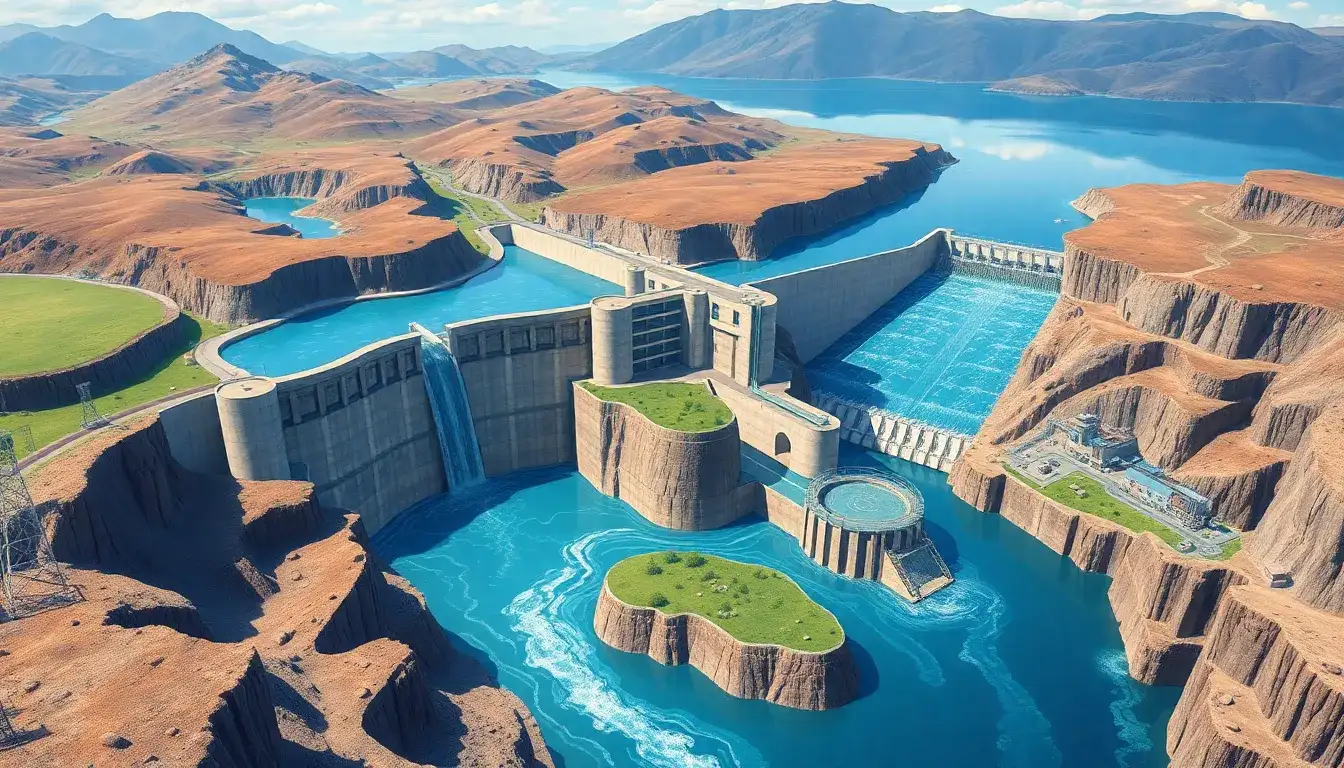
The design of the reservoirs in pumped hydroelectric energy storage (PHES) significantly influences the system’s response time — the speed at which the system can switch between storing energy (pumping water uphill) and generating electricity (releasing water downhill).
Key Design Factors of Reservoirs Impacting Response Time
- Elevation Difference (Head): The vertical distance between the upper and lower reservoirs determines the potential energy available. A greater elevation difference allows faster energy release because water gains more potential energy, enabling quicker turbine response and higher power output when released.
- Reservoir Size and Volume: Larger reservoirs can store more water, thus more energy, but the rate at which water can be moved depends on the design of inlet/outlet structures. Reservoirs designed with optimized water conveyance paths (e.g., wide tunnels or penstocks) enable rapid changes in flow, reducing lag in response time.
- Reservoir Configuration (Closed Loop vs. Pump-back): Closed-loop systems, with no natural inflows, generally offer more controlled water management, potentially allowing faster operational changes. Pump-back systems, which combine natural inflows and pumped storage, might have more complex management demands impacting response time.
- Water Conveyance and Turbine Integration: The connection between reservoirs (e.g., tunnels, pipes) and the reversible turbine/pump system design influences how quickly water flow can be adjusted. Designs with reversible turbines (often Francis turbines) capable of variable speed operation can optimize the transition speed between pumping and generating modes, thereby reducing response time.
Summary
The reservoirs’ design impacts how quickly pumped hydro systems can respond to grid demands by influencing how fast water can be moved and controlled between the two elevation points. Key factors include the elevation difference, reservoir size and shape, and conveyance infrastructure that allow swift changes in water flow. Additionally, integrating reversible, variable-speed turbines further enhances the system’s ability to rapidly switch between energy storage and generation, minimizing response time.
Thus, well-designed reservoirs with appropriate elevation, volume, and flow infrastructure combined with advanced turbine technology enable pumped hydroelectric energy storage systems to respond swiftly to changes in electricity demand.
Original article by NenPower, If reposted, please credit the source: https://nenpower.com/blog/how-does-the-design-of-the-reservoirs-impact-the-response-time-of-pumped-hydroelectric-energy-storage/

