

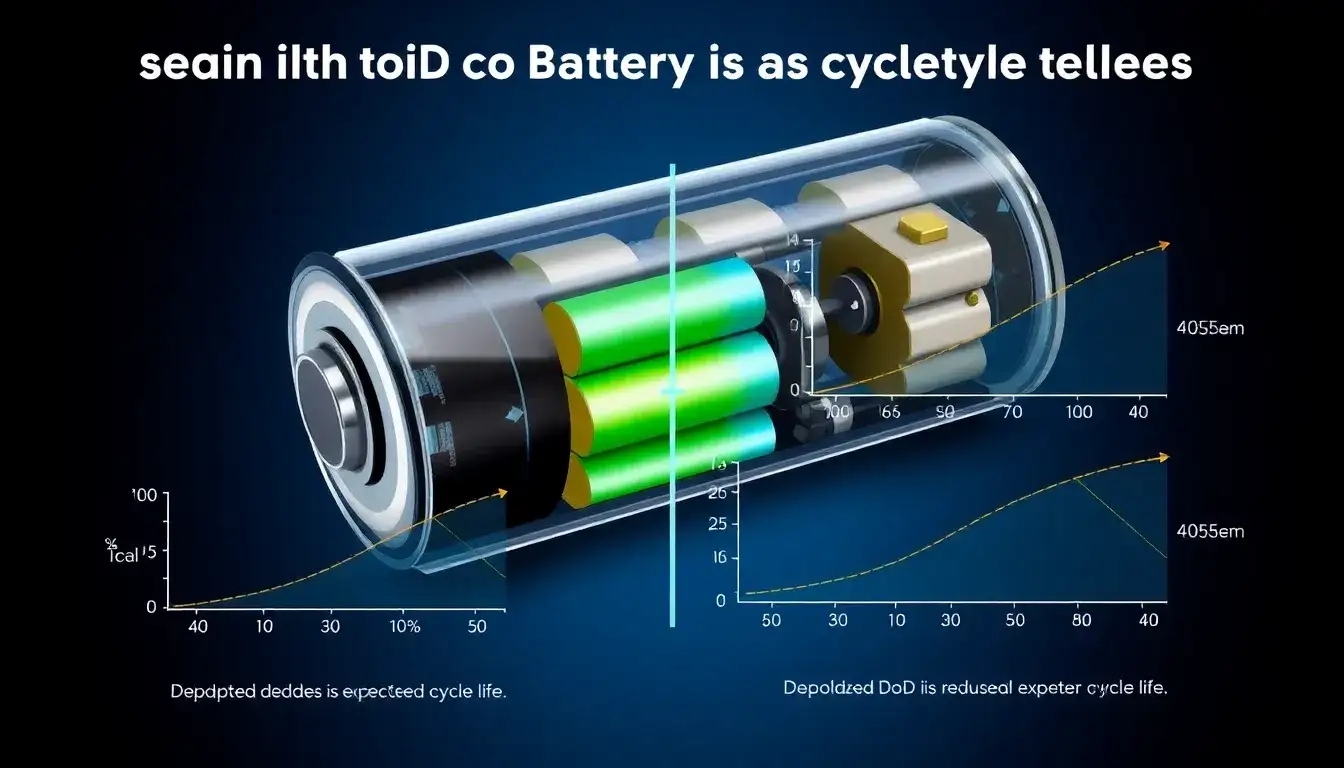
Understanding Depth of Discharge
- Definition: DoD is the percentage of the battery’s capacity that is used before recharging. For example, if a battery is discharged to 80% DoD, it means 80% of its capacity has been used, leaving 20% still available.
- Impact on Cycle Life: The cycle life of a battery is the number of complete charge and discharge cycles it can perform before its capacity degrades significantly. Higher DoD generally shortens the cycle life. This means discharging a battery more deeply reduces its overall number of usable cycles.
Relationship Between DoD and Cycle Life
- Inverse Relationship: As the DoD increases, the cycle life decreases. For example, a battery that is consistently discharged to 80% will have more limited cycle life compared to one discharged only 20%.
- Lithium-ion Batteries: Despite this, lithium-ion batteries can tolerate higher DoDs (often between 80% and 100%) without significant cycle life reduction compared to other battery types like lead-acid.
- LiFePO4 Batteries: These, a type of lithium-ion battery, can be safely discharged to 100% DoD but are often recommended to be limited to 80% DoD for longer lifespan.
Balancing Energy Use and Cycle Life
- Optimization: The key is finding a balance between maximizing energy use from the battery and minimizing damage to prolong its life. Deeper discharges might reduce cycle life but can also reduce the number of charge cycles needed, potentially extending the battery’s useful life within certain limits.
In summary, while higher DoD can increase usable energy per cycle, it also risks reducing the overall cycle life of lithium-ion batteries. Therefore, managing the depth of discharge is crucial for maintaining the health and longevity of these batteries.
Original article by NenPower, If reposted, please credit the source: https://nenpower.com/blog/how-does-the-depth-of-discharge-impact-the-overall-cycle-life-of-lithium-ion-batteries/

