

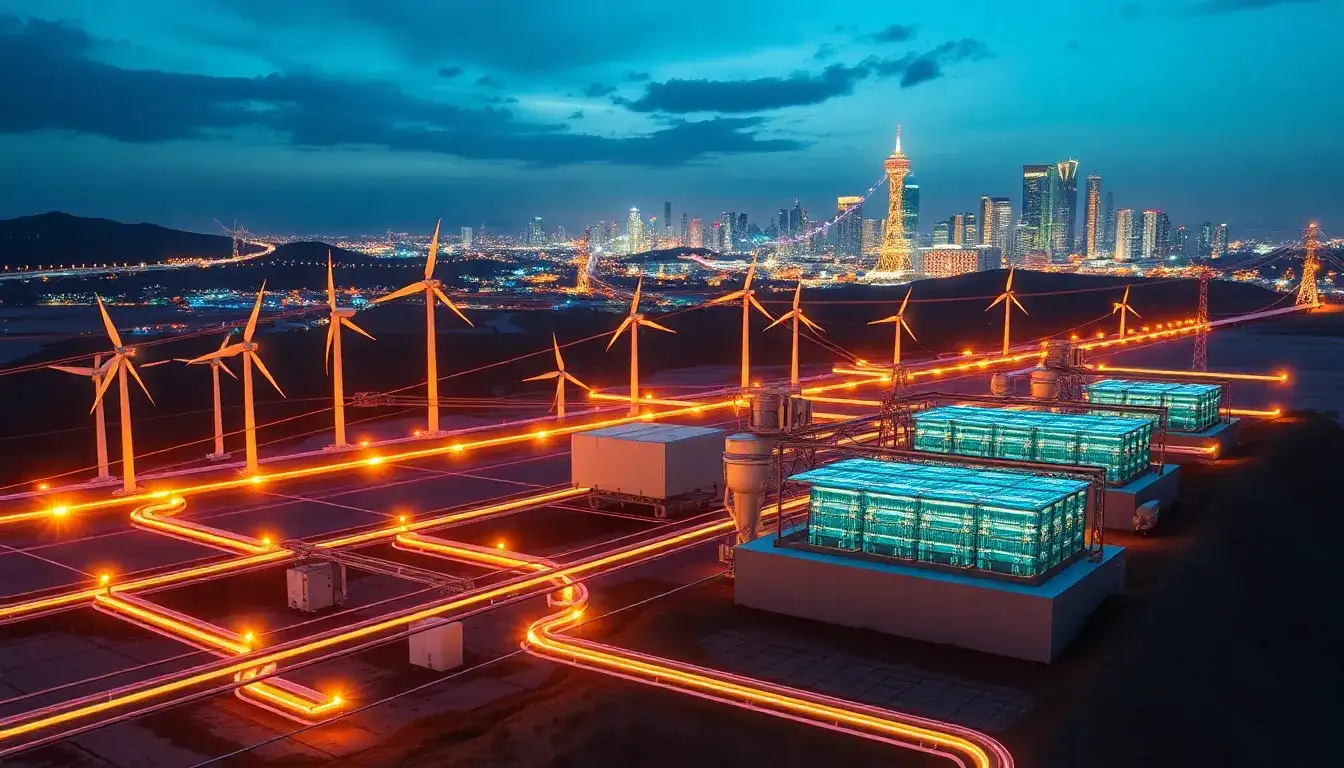
The deployment of long-duration energy storage (LDES) significantly improves overall grid efficiency by addressing the inherent challenges of integrating intermittent renewable energy sources like solar and wind. Here are the key impacts:
Grid Stabilization and Reliability
- LDES allows the grid to store excess energy during periods of high renewable generation (e.g., sunny or windy periods) and discharge that energy during low generation times, such as night or calm weather. This smoothing of supply and demand ensures consistent energy availability, thereby stabilizing the grid and reducing the risks associated with renewable intermittency.
- It provides essential ancillary services including voltage and frequency regulation, which are critical for maintaining grid stability and overall efficiency.
Enhanced Integration of Renewables
- By mitigating intermittency, long-duration storage facilitates higher penetration of renewables into the grid, reducing dependence on fossil fuel backup generation. This transition to cleaner energy sources improves the overall efficiency of the grid by optimizing energy use and reducing waste.
Cost Efficiency and Optimization
- LDES lowers total system costs by storing energy when it is cheapest and most abundant and delivering it when demand and prices are higher. This reduces the need for costly peaker plants and fossil fuel ramping, leading to more efficient grid operations.
- Advances in LDES technologies are also expected to improve round-trip efficiency (the ratio of energy output to input) by 7-15% and reduce costs by 45-55% by 2030, which will further enhance overall grid efficiency.
Diverse Technology Options Supporting Efficiency
- The variety of LDES technologies—mechanical (e.g., pumped hydropower), thermal, chemical, and electrochemical (batteries)—provides flexibility in deployment to meet different grid needs and scales, optimizing resource use and operational efficiency.
- Mechanical storage, such as pumped hydropower, currently dominates utility-scale storage due to high capacity and reliability, contributing to efficient grid balancing.
Long-Term Energy Security
- With increasing renewable capacity and growing electricity demand, LDES supports long-term energy security and grid resilience by providing reliable energy reserves that can supply power for 10+ hours or more, enabling sustained grid operation during extended low renewable output periods.
Summary
Overall, deploying long-duration energy storage results in a more efficient grid by stabilizing supply despite renewable variability, reducing operational costs, enhancing renewable integration, and providing critical grid services. This leads to a cleaner, more reliable, and cost-effective electricity system.
Original article by NenPower, If reposted, please credit the source: https://nenpower.com/blog/how-does-the-deployment-of-long-duration-energy-storage-impact-the-overall-grid-efficiency/

