

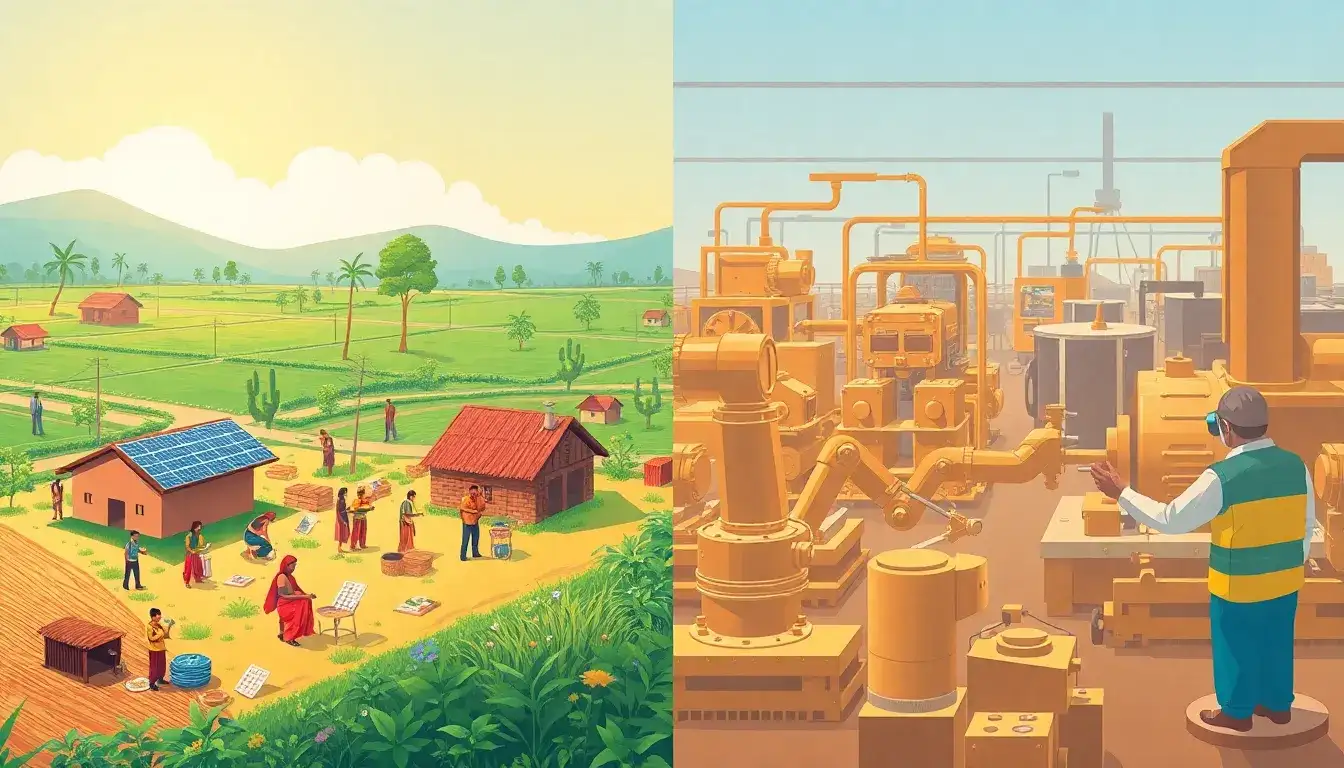
Differences in Demand for Solar Panel Manufacturing Skills in Rural vs Urban Areas
1. Nature of Solar Projects and Job Types
- Rural Areas:
- Rural solar projects often involve large-scale, ground-mounted solar farms due to the availability of vast land. These projects create significant demand for local labor, especially during construction and installation phases, which are less skill-intensive compared to other renewable sectors like wind power.
- Maintenance of large solar farms after construction provides ongoing employment opportunities for local workers, often requiring more general installation and operational skills rather than highly specialized manufacturing skills.
- However, rural areas tend to have fewer local training programs accessible to prospective workers, complicating efforts to supply skilled labor in solar manufacturing or installation roles.
- Urban Areas:
- Urban solar projects focus more on specialized installations such as building-integrated photovoltaics (BIPV), which require more advanced design, engineering, and system optimization skills.
- While urban projects might create fewer jobs in large-scale installation, they demand more specialized expertise in design, engineering, and system monitoring to maximize efficiency within limited space.
- Urban areas tend to have better access to training facilities and technical programs, supporting a workforce with more advanced or specialized solar manufacturing and installation skills.
2. Skill Intensity and Workforce Challenges
- Manufacturing photovoltaic solar panels, which is more skill-intensive and involves complex electronics and automated processes, tends to be centralized in specific industrial settings rather than directly distributed across rural or urban installation sites.
- The manufacturing process requires skilled workers, such as semiconductor processors, machine operators, and technicians who monitor and maintain sophisticated equipment.
- These manufacturing jobs are typically located in industrial or urban centers with access to skilled labor pools and infrastructure, meaning rural areas less likely have high demand for these specialized manufacturing skills locally.
3. Workforce Availability and Training Access
- Rural communities often face challenges due to limited access to training programs necessary to develop advanced manufacturing or technical skills. This impacts the rural workforce’s ability to transition into specialized solar manufacturing roles.
- Urban centers benefit from proximity to technical schools, colleges, and training programs, promoting a more skilled workforce capable of filling manufacturing and advanced installation roles.
- The solar industry overall suffers from a shortage of trained workers, but this shortage is more acute in rural areas due to training access issues and geographic mismatch between job locations and available talent.
Summary Table of Demand Differences
| Aspect | Rural Areas | Urban Areas |
|---|---|---|
| Solar project type | Large-scale ground-mounted solar farms | Building-integrated photovoltaics (BIPV) |
| Skill intensity | Lower skill intensity in installation & maintenance | Higher skill in design, engineering, monitoring |
| Manufacturing skill demand | Low local demand; manufacturing often centralized | Higher due to proximity to industrial facilities |
| Workforce training access | Limited local training programs | Better access to technical and specialized training |
| Job stability | Temporary construction jobs + ongoing maintenance | Ongoing specialized roles in monitoring and optimization |
| Challenges | Training access, workforce shortages | Talent competition, need for advanced skills |
In conclusion, rural areas primarily demand less skill-intensive installation and operational roles tied to large-scale solar farms but struggle with local training access affecting workforce readiness. Urban areas have a greater demand for highly skilled workers in specialized solar manufacturing, design, and system management due to limited space and the nature of urban solar projects. Manufacturing skills, particularly those related to photovoltaic panel production, are concentrated around industrial hubs generally found in or near urban areas.
Original article by NenPower, If reposted, please credit the source: https://nenpower.com/blog/how-does-the-demand-for-solar-panel-manufacturing-skills-differ-between-rural-and-urban-areas/

