

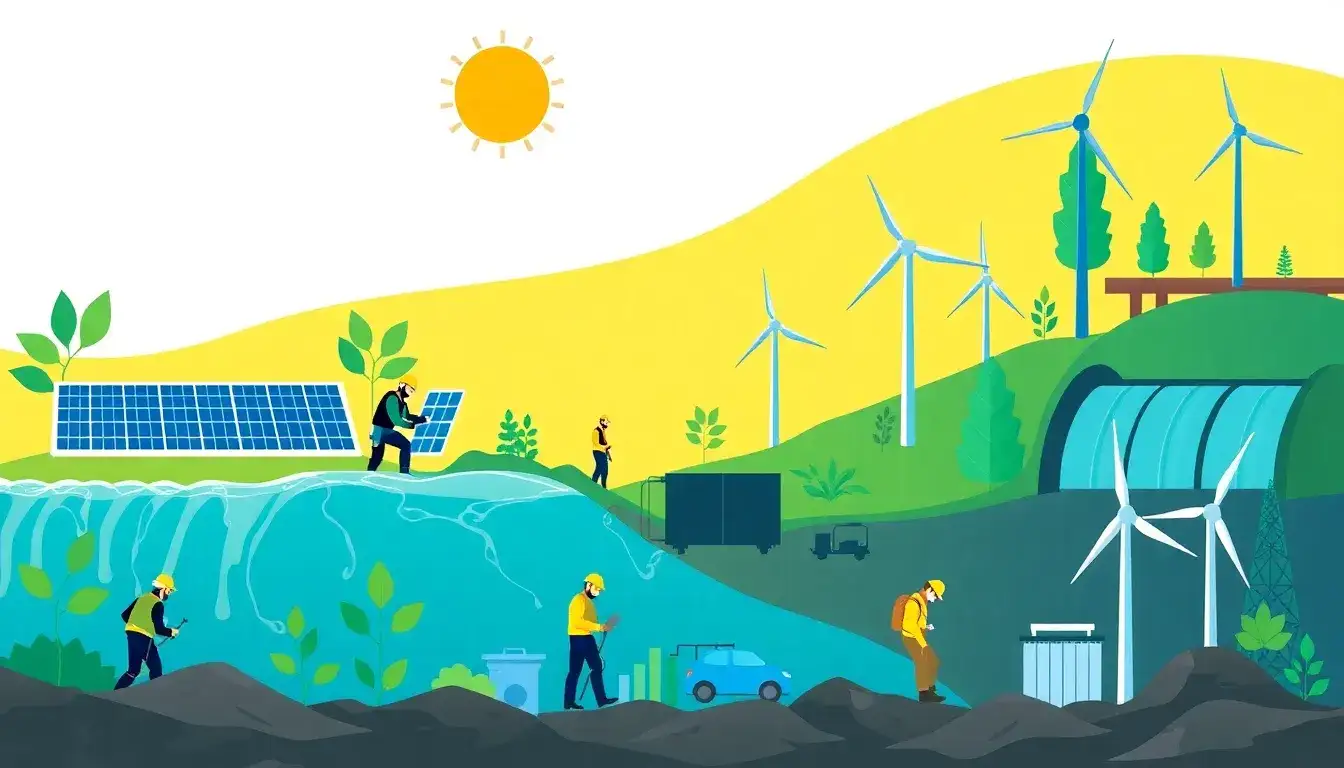
The demand for energy storage jobs is growing faster than many other clean energy sectors, driven by rapid market expansion and technological advancements. Here’s a comparative analysis:
Growth Rate Comparison
- Energy storage jobs grew by 4.4% in 2023, with 89,592 workers employed in the sector. While this growth aligns with broader clean energy trends, the market value of energy storage surged 737% between 2019 and 2024 (from $645 million to $5.4 billion), far outpacing most sectors.
- Clean energy overall saw 4.9% job growth in storage and related fields, slightly higher than the general economy, but storage-specific hiring is accelerating due to state and federal goals and the rising need for grid resilience.
Key Drivers
- Renewable integration: Solar and wind generation require storage solutions, leading to 18.2 GW of new utility-scale battery storage projected for 2025.
- Cost reductions: Declining storage costs and lithium-ion battery advancements (driven by EV demand) are expanding opportunities.
- Policy support: The U.S. battery supply chain initiative and Saudi Arabia’s renewable push (a rising market in 2025) are creating global demand.
Sector-Specific Trends
- Solar and wind: While these sectors remain larger in absolute employment, storage is becoming a critical enabler, with roles like project developers, battery engineers, and grid operators in high demand.
- Emerging roles: Energy storage is driving specialization in project finance, recycling, and manufacturing, whereas other sectors focus more on installation and maintenance.
In summary, energy storage is among the fastest-growing segments within clean energy, with job growth driven by its essential role in modernizing grids and enabling renewable energy scalability. While other sectors may employ more workers, storage’s strategic importance and market velocity make it a standout.
Original article by NenPower, If reposted, please credit the source: https://nenpower.com/blog/how-does-the-demand-for-energy-storage-jobs-compare-to-other-clean-energy-sectors/

