

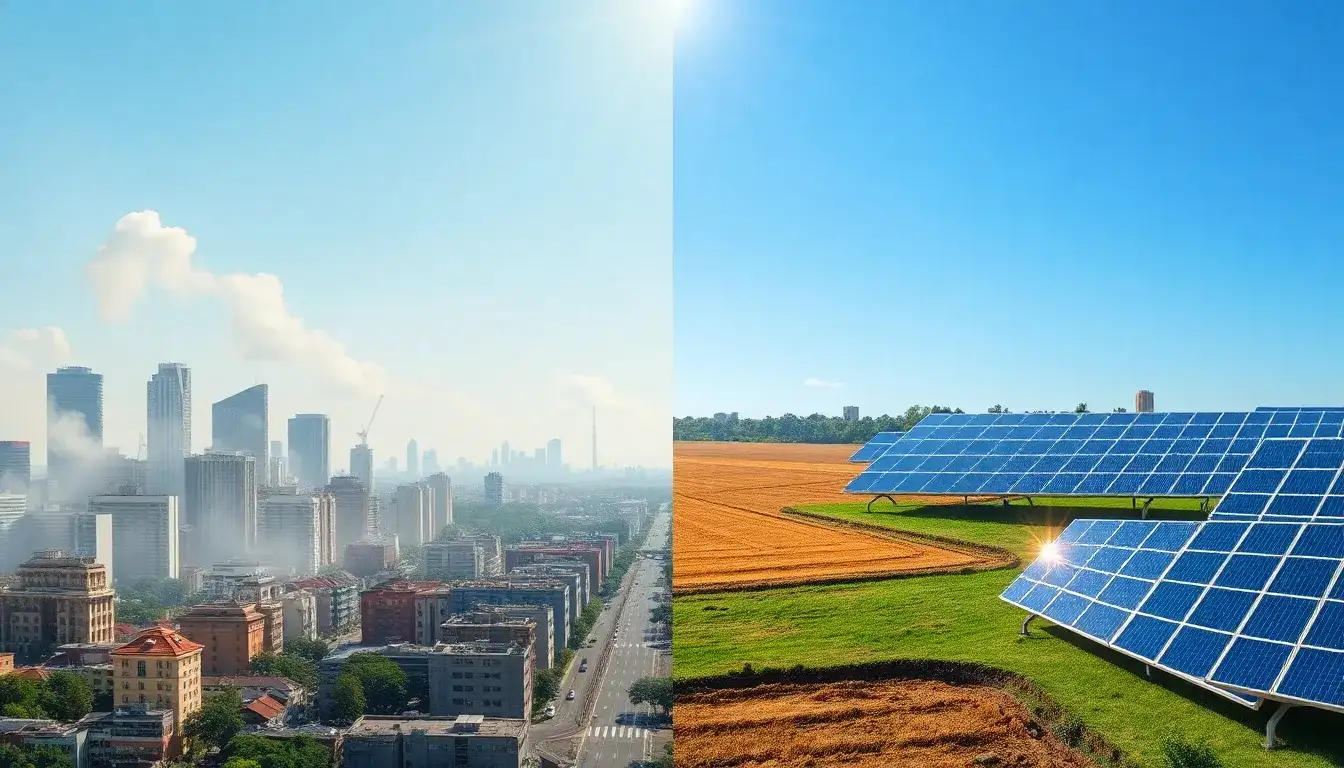
The degradation rate of solar panels, which is the annual decline in their power output, generally averages around 0.5% per year based on broad field data from various environments. This median degradation rate reflects a gradual reduction in efficiency due to factors such as exposure to sunlight, temperature fluctuations, and material aging.
Regarding the comparison between urban and rural areas specifically, the detailed publicly available literature and studies do not offer a direct, conclusive comparison of degradation rates exclusively segmented by urban versus rural locations. However, several factors imply potential differences in degradation behavior:
- Soiling and Pollution: Urban areas typically have higher levels of air pollution, dust, and particulates, which can accumulate on solar panels (soiling) and reduce their effective output. This can contribute to increased performance loss if panels are not regularly cleaned or maintained. Soiling effects can accelerate the apparent degradation rate.
- Heat and Microclimate: Urban environments often experience the “urban heat island” effect, where temperatures are higher than in rural areas. Higher ambient temperatures can increase the degradation rate of solar panels because heat accelerates material aging and electrical resistance growth within cells.
- Installation and Maintenance Practices: Urban installations might be more subject to shading from buildings or pollution-related corrosion, while rural installations may face less shading but potentially more exposure to harsh natural elements like dust storms or wildlife interference. Maintenance frequency can vary, affecting degradation rates indirectly.
- System-Level Degradation: Some studies highlight that degradation at the system level (including inverters, wiring, and mounting structures) can be more pronounced than module degradation alone. Urban setups with complex rooftop installations might experience higher system degradation due to additional mechanical stresses and environmental factors.
In summary, while the median degradation rate for solar panels is around 0.5% per year generally, urban solar panels may experience slightly higher effective degradation rates compared to rural panels due to increased pollution-induced soiling and elevated temperatures typical of urban environments. However, rigorous, location-specific degradation rate data explicitly comparing urban vs. rural contexts is sparse in the literature. Both sets of panels degrade over time but environmental stressors tend to be more intense in urban areas, potentially accelerating degradation somewhat.
Therefore, for practical purposes:
- Rural solar panels may have degradation rates close to or slightly below the median 0.5%/year.
- Urban solar panels might face higher degradation rates, possibly exceeding 0.5%/year, primarily due to pollution soiling and heat effects, unless mitigated by frequent maintenance.
This contextual understanding should guide expectations and maintenance strategies for solar PV systems based on their deployment environment.
Original article by NenPower, If reposted, please credit the source: https://nenpower.com/blog/how-does-the-degradation-rate-of-solar-panels-in-urban-areas-compare-to-those-in-rural-areas/

