

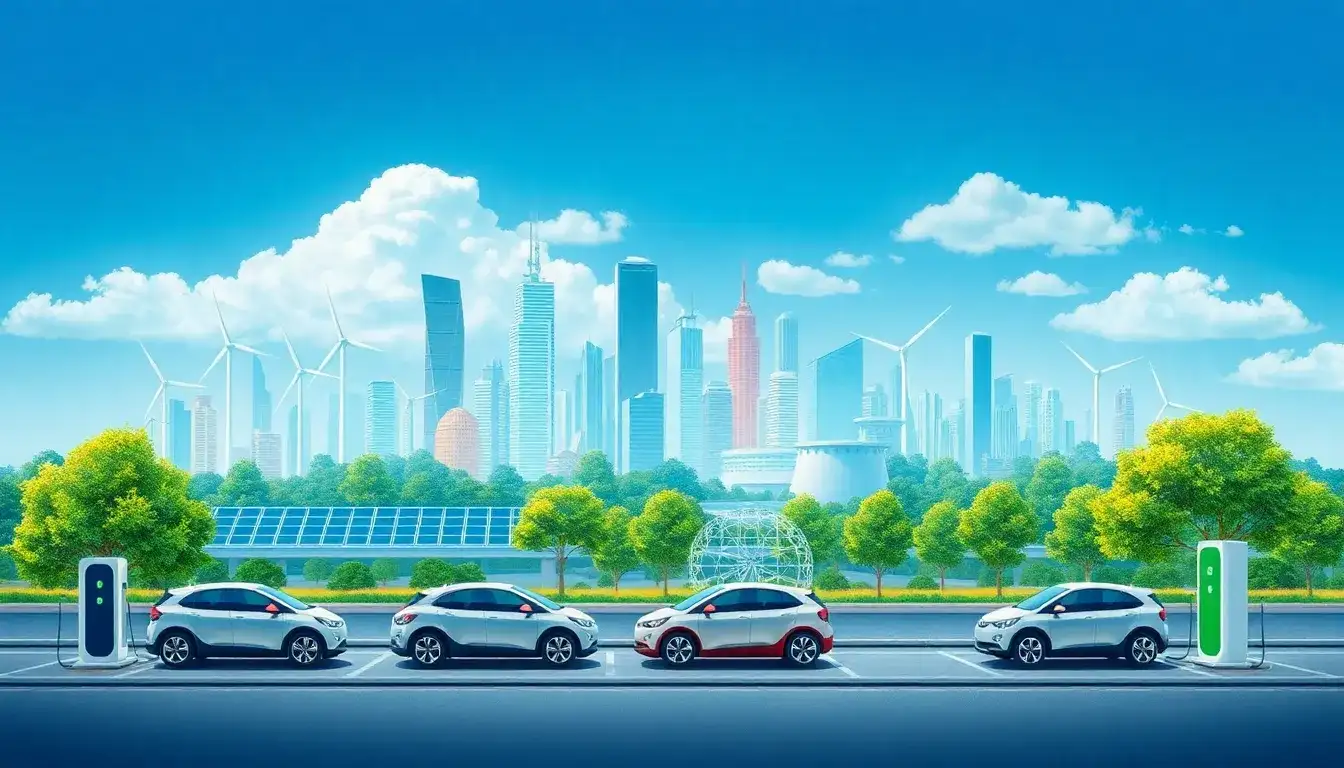
The decarbonization of the electrical grid significantly improves the emissions offset times of electric vehicles (EVs), meaning EVs can “break even” in terms of carbon emissions compared to internal combustion engine vehicles (ICEVs) more quickly as the grid becomes cleaner.
How Grid Decarbonization Impacts EV Emissions Offset Times
-
Reduced Well-to-Tank Emissions:
As the electricity generation mix shifts away from fossil fuels toward low-carbon sources like renewables and nuclear, the well-to-tank emissions—those emissions related to producing and delivering the electricity used to charge EVs—decrease substantially. For example, by 2035, well-to-tank emissions for EVs are expected to decline by 55% to 75%, depending on the scenario, due to grid decarbonization efforts. This directly lowers the total lifecycle emissions of EVs. -
Faster Emissions Payback:
Lifecycle analyses show that EVs become less carbon-intensive than equivalent ICE vehicles after driving a certain number of miles, which shortens as the grid cleans up. In regions with low-carbon electricity, the emissions crossover point can be as low as 19,000 miles. This means the upfront carbon emissions from EV production (including battery manufacturing) are offset more rapidly when powered by cleaner electricity. -
Larger Lifetime Emissions Savings:
With continued grid decarbonization, the lifetime emissions of EVs compared to ICEVs improve notably. For medium-size cars purchased in 2035 under accelerated decarbonization pathways, total emissions over a vehicle’s lifetime can be less than half that of an ICE vehicle, increasing the relative emissions savings by about 5 percentage points compared to slower grid improvements. This means the full environmental benefits of EVs are maximized when they are charged on a decarbonized grid. -
Battery Production Emissions Also Decline:
Grid decarbonization also reduces emissions from battery production by about 10% by 2035. Since battery manufacturing is an emissions-intensive process, cleaner electricity lowers the embedded emissions in producing EV batteries, which improves the overall emissions offset time.
Summary
| Impact of Grid Decarbonization | Effect on EV Emissions Offset Times |
|---|---|
| Decreases well-to-tank emissions 55-75% by 2035 | Quicker emissions “break-even” compared to ICE vehicles |
| Lowers lifecycle emissions of EVs by ~30-50% | Greater lifetime emissions savings versus ICE vehicles |
| Reduces battery production emissions by ~10% | Further shortens total emissions payback time |
| Achieves emissions crossover point around 19,000 miles in low-carbon electricity regions | Makes EVs more environmentally efficient early in their use |
In conclusion, the decarbonization of the electrical grid is critical to maximizing the emissions savings of EVs. As the grid becomes cleaner, EVs offset their initial manufacturing emissions faster and provide increasingly significant reductions in greenhouse gas emissions relative to conventional gasoline vehicles.
Original article by NenPower, If reposted, please credit the source: https://nenpower.com/blog/how-does-the-decarbonization-of-the-electrical-grid-impact-the-emissions-offset-times-of-evs/

