

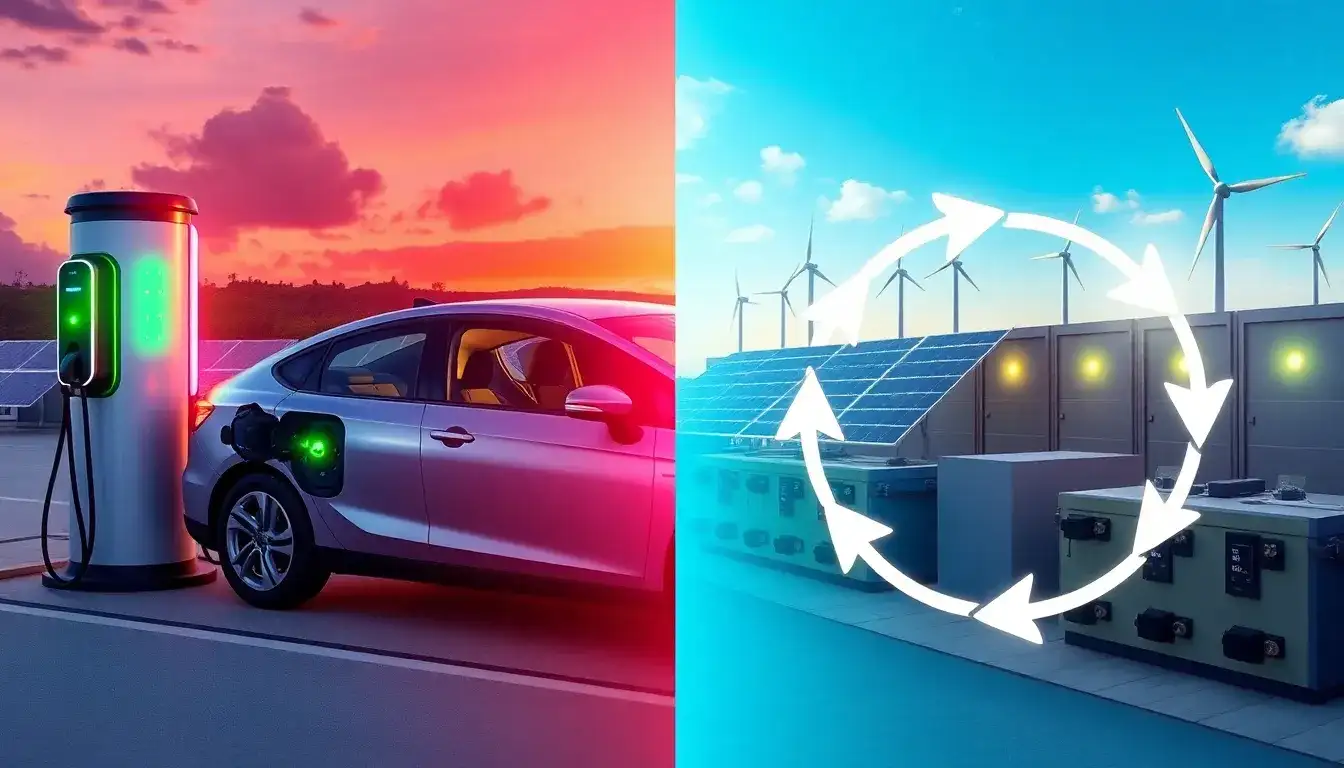
The cycle life of lithium-ion batteries in electric vehicles (EVs) and renewable energy storage systems (RESS) can vary significantly due to differences in usage patterns and operational conditions.
Cycle Life in Electric Vehicles
- Usage Patterns: Electric vehicles involve frequent charging and discharging cycles, often to high depths of discharge (DoD), which can affect the cycle life. Deep discharges, especially below 20%, reduce the number of cycles the battery can handle before its capacity drops to 80% of its initial value.
- Cycle Count Expectations: A well-maintained lithium-ion battery in an EV might last for about 5 to 8 years or more, depending on the model and usage conditions, with a typical cycle count ranging from 1,000 to several thousand cycles.
- Operational Conditions: Factors such as high temperatures and rapid charging can further stress the battery, impacting its cycle life.
Cycle Life in Renewable Energy Storage Systems
- Usage Patterns: In renewable energy systems, lithium-ion batteries are typically used for load leveling and backup power, often involving shallower discharge cycles (e.g., between 20% to 80% SoC) to prolong battery life.
- Cycle Count Expectations: Batteries in these systems can last longer than those in EVs, as they typically operate at partial states of charge and experience fewer deep discharges, potentially lasting 10 years or more.
- Operational Conditions: Storage systems often have controlled environments, which can help minimize stress from extreme temperatures and overcharging, contributing to a longer cycle life.
Comparison Summary
| Feature | Electric Vehicles (EVs) | Renewable Energy Storage Systems (RESS) |
|---|---|---|
| Usage Patterns | Frequent deep discharges; varied SoC levels | Shallower discharges; more consistent SoC levels |
| Cycle Count | 1,000 to several thousand cycles; typically 5-8 years life | Longer cycle count; can last 10+ years |
| Operational Stress | Higher due to temperature, depth of discharge | Lower, controlled environments |
Overall, batteries in renewable energy storage systems generally experience fewer stress factors and thus may have a longer cycle life compared to those in electric vehicles. However, both applications benefit from practices like reduced DoD and controlled environmental conditions to maximize longevity.
Original article by NenPower, If reposted, please credit the source: https://nenpower.com/blog/how-does-the-cycle-life-of-lithium-ion-batteries-in-electric-vehicles-compare-to-those-in-renewable-energy-storage-systems/

