

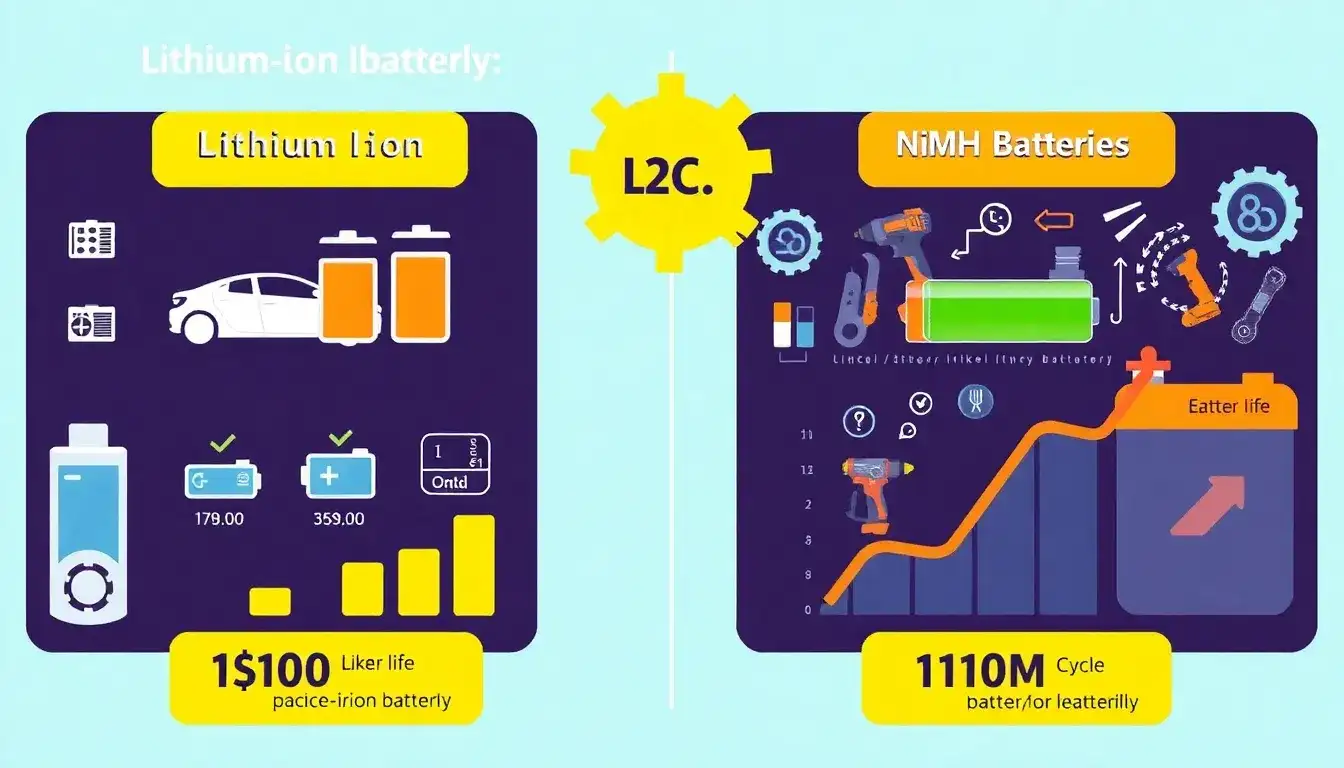
Comparison of Cycle Life: Lithium-ion vs. Other Rechargeable Batteries
The cycle life of a rechargeable battery refers to the number of charge and discharge cycles it can endure before its capacity significantly decreases. Here’s a comparison of lithium-ion batteries with other types:
1. Lithium-ion (Li-ion) Batteries
- Cycle Life: Typically ranges from 300 to 500 cycles, though some specialized types like LiFePO4 can last up to 3,000 cycles.
- Advantages: High energy density, lightweight, and environmentally safer compared to lead-acid or nickel-based batteries.
- Disadvantages: Prone to degradation with deep discharges and high temperatures.
2. Lead-Acid Batteries
- Cycle Life: Approximately 1500 cycles, though this can vary based on depth of discharge and usage conditions.
- Advantages: Cost-effective in the short term and reliable for applications requiring low energy density.
- Disadvantages: Heavy, lower energy density, and not environmentally friendly due to toxic materials like lead.
3. Nickel-Metal Hydride (NiMH) Batteries
- Cycle Life: Typically between 700 and 1,000 cycles.
- Advantages: Environmentally safer than nickel-cadmium batteries and less expensive than lithium-ion.
- Disadvantages: Lower energy density compared to lithium-ion and more prone to self-discharge.
4. Nickel-Cadmium (NiCd) Batteries
- Cycle Life: Ranges from 200 to 1,500 cycles, depending on the model and usage.
- Advantages: High discharge rates suitable for power tools.
- Disadvantages: Contains toxic cadmium, environmentally harmful, and less energy-efficient.
Summary:
- Lithium-ion batteries generally offer a high cycle life and energy density, making them ideal for portable electronics and electric vehicles, though they can be more expensive and require careful handling.
- Lead-Acid and NiMH batteries are cost-effective for specific applications but have lower energy density and less cycle life compared to lithium-ion.
- NiCd batteries are less used due to toxicity concerns but can still provide high discharge rates.
In conclusion, lithium-ion batteries, particularly LiFePO4 types, provide the longest cycle life among common rechargeable battery types, making them suitable for applications requiring high longevity and capacity retention.
Original article by NenPower, If reposted, please credit the source: https://nenpower.com/blog/how-does-the-cycle-life-of-lithium-ion-batteries-compare-to-other-types-of-rechargeable-batteries/

