

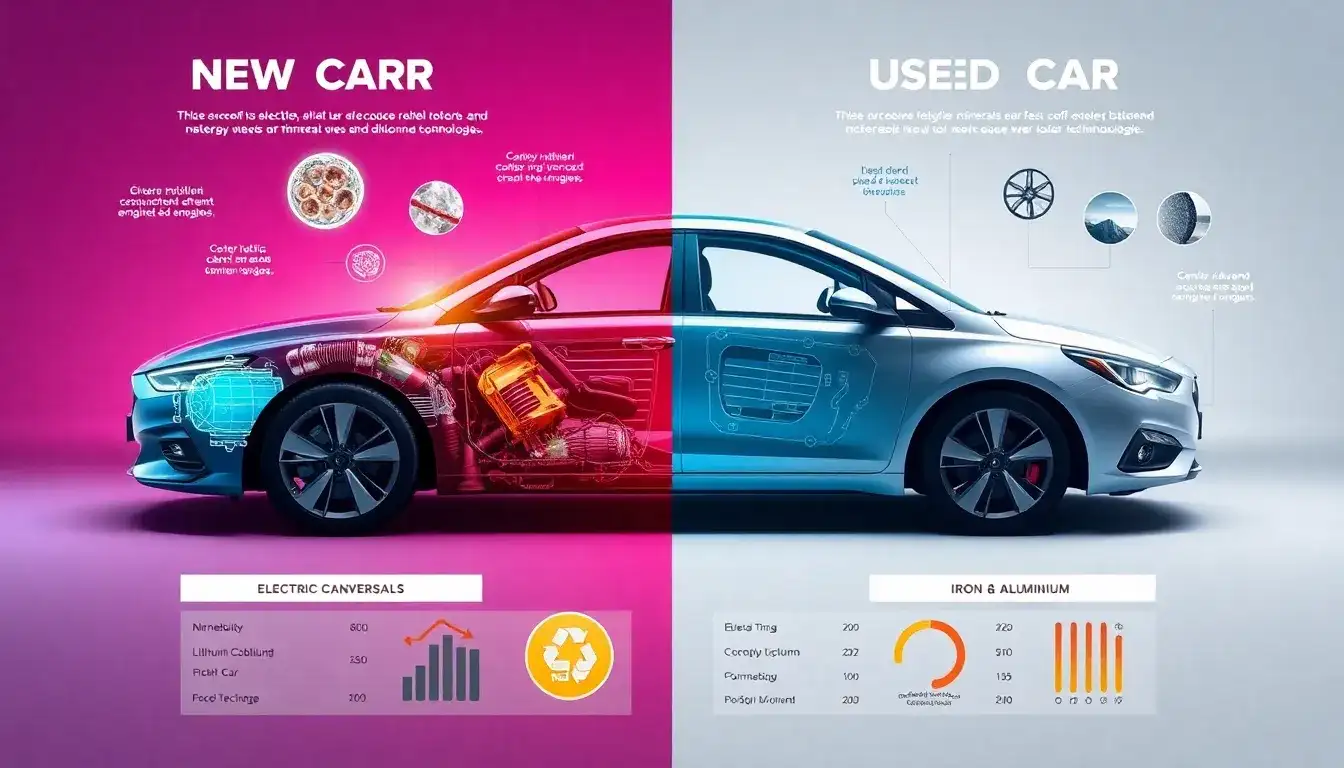
The critical mineral requirement for new and used vehicles differs primarily in how the requirements are applied and the specific incentives involved.
For new vehicles, the critical mineral requirements are part of the eligibility criteria for receiving the clean vehicle tax credit under the Inflation Reduction Act (IRA). To qualify for up to $7,500 in credits, vehicles must meet sourcing requirements for both critical minerals and battery components. Specifically for the critical minerals:
- A certain percentage of the value of the critical minerals in the battery must be extracted, processed in the U.S. or countries with free trade agreements, or recycled in North America.
- This applicable percentage increases annually, starting at 40% for 2023 and rising to 80% by 2027 and onwards.
These strict sourcing requirements apply only to new clean vehicles placed in service on or after April 18, 2023 and are tied to the vehicle’s battery content and materials.
For used vehicles (previously owned), the critical mineral and battery component requirements are generally less stringent or may not apply at all in the same way. While specific detailed requirements for used clean vehicles are covered in guidance documents, the new critical mineral sourcing rules primarily target new vehicles to incentivize the use of domestically or allied sourced materials in the manufacture of electric vehicle batteries.
In summary:
- New Vehicles: Must meet progressive critical mineral sourcing thresholds to qualify for the critical minerals portion of the clean vehicle credit.
- Used Vehicles: Typically have different or less stringent critical mineral requirements, primarily reflected in specific clean vehicle credit guidance, and are subject to separate qualifications distinct from new vehicles.
The rationale behind this distinction is to promote strengthening the domestic and allied critical mineral supply chains for new vehicle production, which is critical to achieving environmental and economic goals.
Additionally, critical minerals important for EV batteries include cobalt, lithium, manganese, nickel, and natural graphite, which are essential for battery performance and are the focus of these sourcing requirements.
Original article by NenPower, If reposted, please credit the source: https://nenpower.com/blog/how-does-the-critical-mineral-requirement-differ-for-new-and-used-vehicles/

