

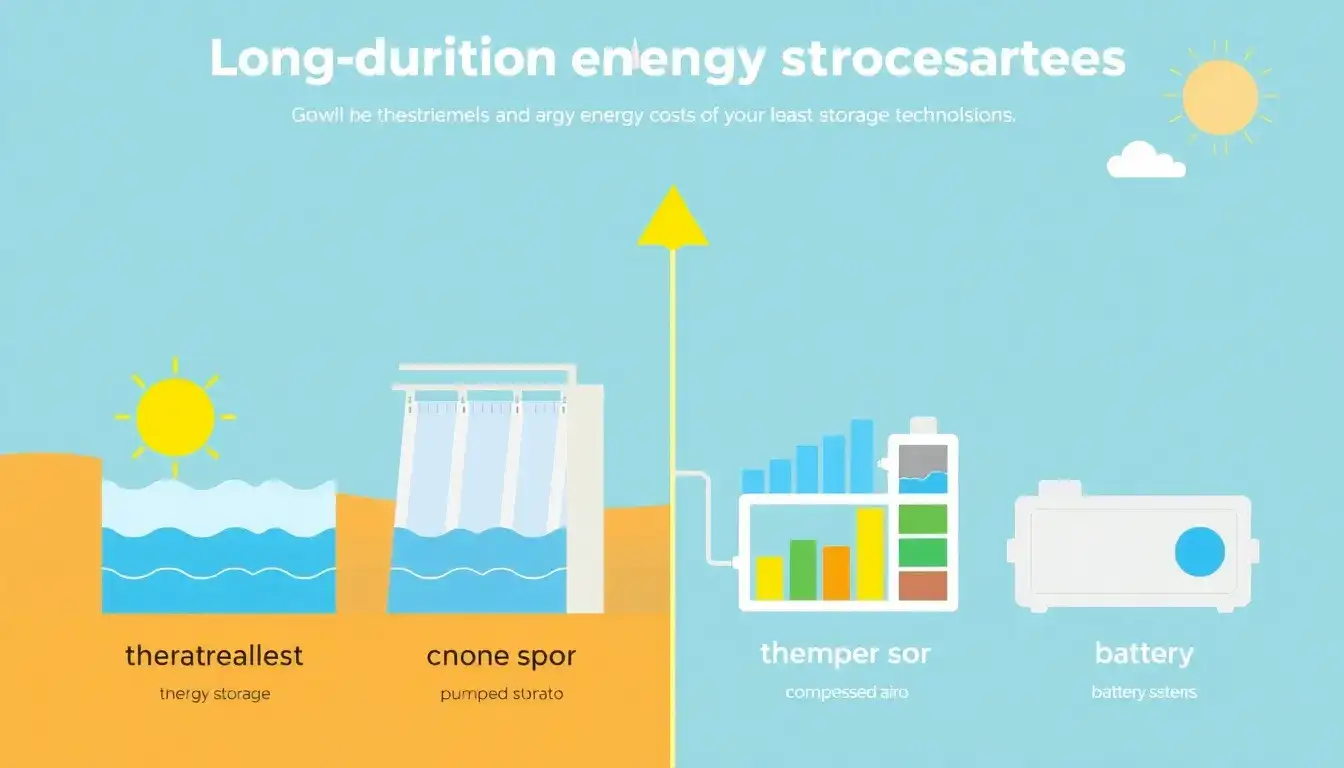
Thermal energy storage (TES) is emerging as a cost-competitive option for long-duration energy storage (LDES), particularly in markets like China where large-scale adoption has progressed. According to recent analyses:
Cost comparisons
- Thermal energy storage:
- Global average installed system cost: $232/kWh, making it the cheapest LDES technology for durations exceeding 8 hours.
- Thermal energy cost (standalone): $2–$4 per kWh of thermal energy for particle-based systems (e.g., silica sand).
- Full-system economics: ~13.5¢/kWh-th for a project targeting a 10% IRR at $350/kWh capex.
- Compressed air storage:
- Global average installed cost: $293/kWh, ~26% more expensive than TES but still cheaper than lithium-ion beyond 8 hours.
- Lithium-ion batteries:
- 4-hour systems: $304/kWh globally, but costs rise sharply for longer durations due to oversizing requirements.
- Long-duration viability: Underperforms TES and compressed air for >8-hour applications without hybridization.
Regional disparities
Non-China markets face 54–68% higher costs for TES and compressed air due to smaller project scales and less mature supply chains. China’s gigawatt-hour-scale projects, particularly in compressed air and flow batteries, benefit from targeted policies and industrialization advantages.
Key trade-offs
While lithium-ion offers superior energy density, TES sacrifices compactness for affordability, using low-cost materials like silica sand ($30–$50/ton). This makes TES suitable for grid-scale applications where footprint is less critical than cost. Gravity storage ($643/kWh) and flow batteries also remain niche due to higher costs.
(All figures reflect 2024 benchmarking data unless specified.)
Original article by NenPower, If reposted, please credit the source: https://nenpower.com/blog/how-does-the-cost-of-thermal-energy-storage-compare-to-other-long-duration-energy-storage-technologies-2/

