

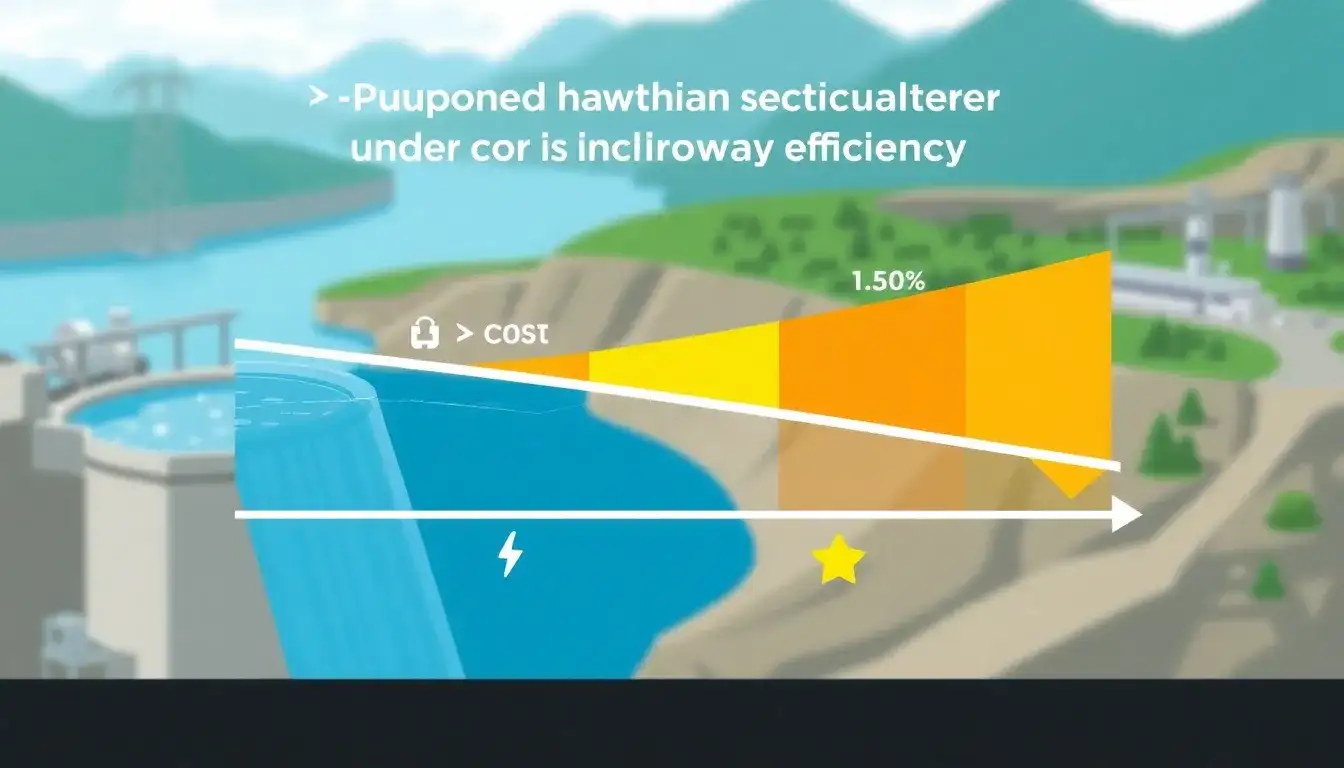
The cost of pumped hydroelectric energy storage (PHES) can be influenced by round-trip efficiency, but the primary cost factors are capital costs and operating and maintenance (O&M) costs rather than round-trip efficiency directly. However, a higher round-trip efficiency can lead to cost savings in several ways:
- Energy Loss Reduction: A higher efficiency means less energy is lost during the cycle of pumping and generating, which can reduce the amount of excess energy needed to meet demand, potentially lowering overall operational costs.
- Capacity Utilization: With higher efficiency, the same storage capacity can provide more usable energy, which might reduce the need for additional storage capacity, thus potentially lowering capital costs per unit of stored energy.
- Long-term Cost Effects: Higher efficiency can also extend the lifespan of equipment by reducing wear and tear, potentially lowering long-term O&M costs.
Despite these indirect benefits, the cost of PHES is more directly influenced by factors like site geography, reservoir size, construction materials, and scaling effects. For example, higher head sites require smaller reservoirs for the same energy storage, and larger installations benefit from economies of scale, reducing costs per megawatt.
Overall, while round-trip efficiency can influence operational efficiency, it is not a primary driver of cost changes in PHES compared to other factors like site characteristics and economies of scale.
Original article by NenPower, If reposted, please credit the source: https://nenpower.com/blog/how-does-the-cost-of-pumped-hydroelectric-energy-storage-change-with-different-round-trip-efficiencies/

