

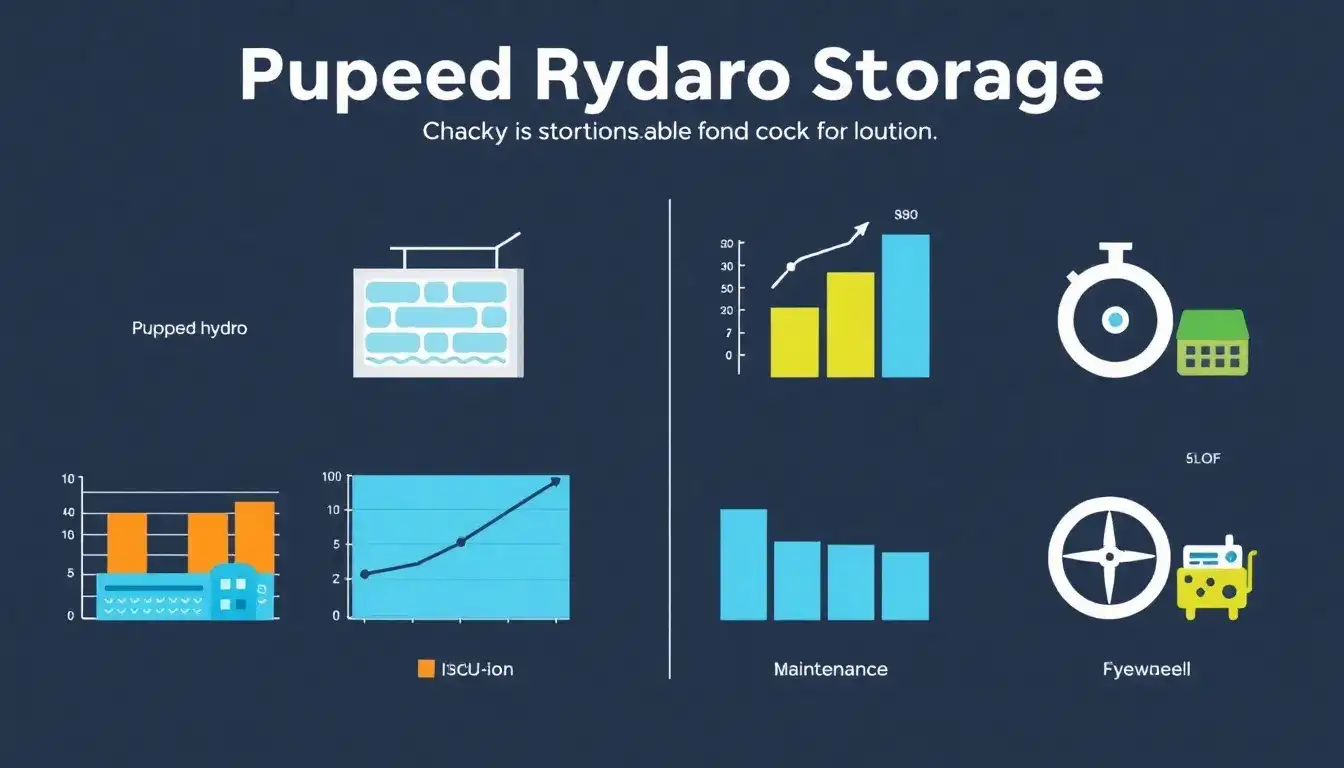
The cost comparison between pumped hydro storage (PHS) and other energy storage solutions can be evaluated in several ways, including capital costs, energy storage costs per kWh, and lifecycle considerations.
Capital Costs and Energy Storage Costs
- Pumped Hydro Storage: PHS is generally cost-effective for longer-term energy storage due to its lower capital costs compared to batteries. The cost can range from $3,025 to $3,307 per kW for a complete project, although costs can vary widely depending on site specifics and include transmission lines. When considering energy storage costs per kWh, PHS is around $165/kWh when looking at an energy-to-power (E/P) ratio of 16.
- Lithium-Ion Batteries: Li-ion batteries are more suitable for short-term storage due to their quick response time and scalability. They have a higher cost when considering longer storage durations but offer advantages in flexibility and rapid deployment. Current costs are higher than PHS for long-term storage, but they can be economical for short cycles.
- Compressed Air Energy Storage (CAES): Similar to PHS, CAES offers low costs for energy storage, around $105/kWh for an E/P ratio of 16. However, it involves less mature technology and more complex site requirements.
Lifecycle Costs and Considerations
- Lifecycle Durability: Pumped hydro systems have a significant advantage in terms of lifespan, typically lasting between 50 to 100 years. This makes their long-term costs more favorable compared to batteries, which may last only about 10 years before needing replacement.
- Geographic Flexibility: While PHS requires specific geographic conditions (e.g., mountainous terrain), it offers high scalability in suitable locations. Batteries and other technologies like CAES can be used in a wider range of environments, offering greater flexibility in deployment.
Comparison Table
| Technology | Capital Costs | Energy Storage Cost/kWh | Lifespan |
|---|---|---|---|
| Pumped Hydro Storage | $2,915 – $3,217/kW (excluding transmission) | ~$165/kWh | 50-100 years |
| Lithium-Ion Batteries | Varies, generally higher for long-term use | Higher for short-term use | ~10 years |
| Compressed Air Energy | Lower than PHS, around $105/kWh | ~$105/kWh | Less mature than PHS |
Pumped hydro storage remains a cost-effective solution for long-duration energy storage due to its low energy storage costs and long lifespan, although its deployment is limited by geographic requirements. Battery technologies are better suited for short-term or rapid-response needs due to their quick deployment and flexibility.
Original article by NenPower, If reposted, please credit the source: https://nenpower.com/blog/how-does-the-cost-of-pumped-hydro-storage-compare-to-other-energy-storage-solutions/

