

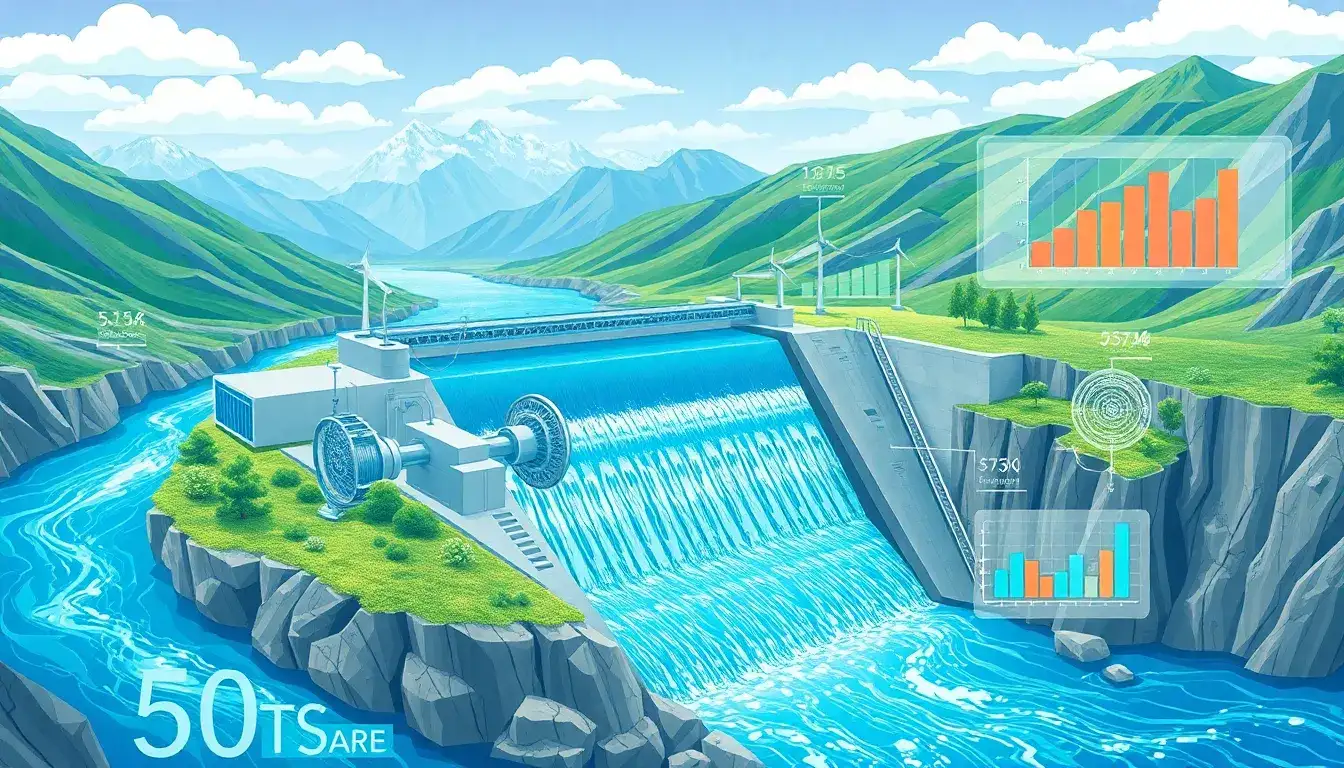
Cost Comparison of Pumped Hydro Storage vs. Other Energy Storage Methods
Capital Cost and Cost per kWh:
- Pumped storage hydropower typically has lower capital costs per unit of energy stored compared to battery storage when storage duration exceeds about 4 hours. For shorter durations, batteries tend to have lower capital costs due to lower power costs.
- Reported cost estimates place pumped storage hydropower around $165 per kWh of storage capacity, which is lower than many other large-scale storage technologies such as compressed air energy storage.
- NREL’s detailed cost model for pumped storage hydropower suggests costs vary widely depending on site-specific factors like geography and reservoir characteristics but highlights PSH’s competitive cost especially for grid-scale applications.
Lifetime and Durability:
- Pumped hydro plants have very long lifetimes, usually assumed to be 50 to 100 years, with many facilities operating effectively for several decades without retirement.
- In contrast, battery storage systems, like lithium-ion, generally have shorter operational lifetimes around 10 years and degrade with usage cycles. This leads to higher replacement and maintenance costs over time.
- When accounting for lifetime and financing (annualized capital costs), pumped hydro is often significantly more cost-effective than batteries due to its longer operational life and stable performance.
Power Capacity Costs and Scalability:
- Pumped hydro storage projects tend to have higher upfront development and construction costs but benefit from economies of scale and large capacity, often in the range of hundreds to thousands of megawatts.
- Batteries have lower upfront costs per installed MW for power but higher costs per MWh for longer-duration storage, making them more suited for short-duration and fast-response applications.
Summary Table
| Feature | Pumped Hydro Storage | Lithium-ion Batteries | Compressed Air Storage |
|---|---|---|---|
| Capital Cost (approximate) | ~$165/kWh (energy capacity) | Higher for longer duration | ~$105/kWh (variable) |
| Typical Lifetime | 50 – 100 years | ~10 years (with degradation) | Moderate |
| Suitable Storage Duration | Long-duration (8+ hours or more) | Short to medium duration (hours or less) | Medium to long duration |
| Power Capacity Cost | Higher upfront power infrastructure costs | Lower power capacity costs | Moderate |
| Operational Scale | Large-scale grid applications (MW to GW) | Small to medium scale (kW to MW) | Large-scale possible |
Conclusion:
Pumped hydro storage is among the lowest-cost large-scale energy storage technologies when considering capital cost per unit of stored energy, especially for long-duration applications. Its longevity and scalability make it economically attractive compared to batteries, which are more costly and degrade faster but are better suited for short-duration storage and rapid response. Compressed air energy storage can be competitive but varies widely by site.
Original article by NenPower, If reposted, please credit the source: https://nenpower.com/blog/how-does-the-cost-of-pumped-hydro-storage-compare-to-other-energy-storage-methods/

