

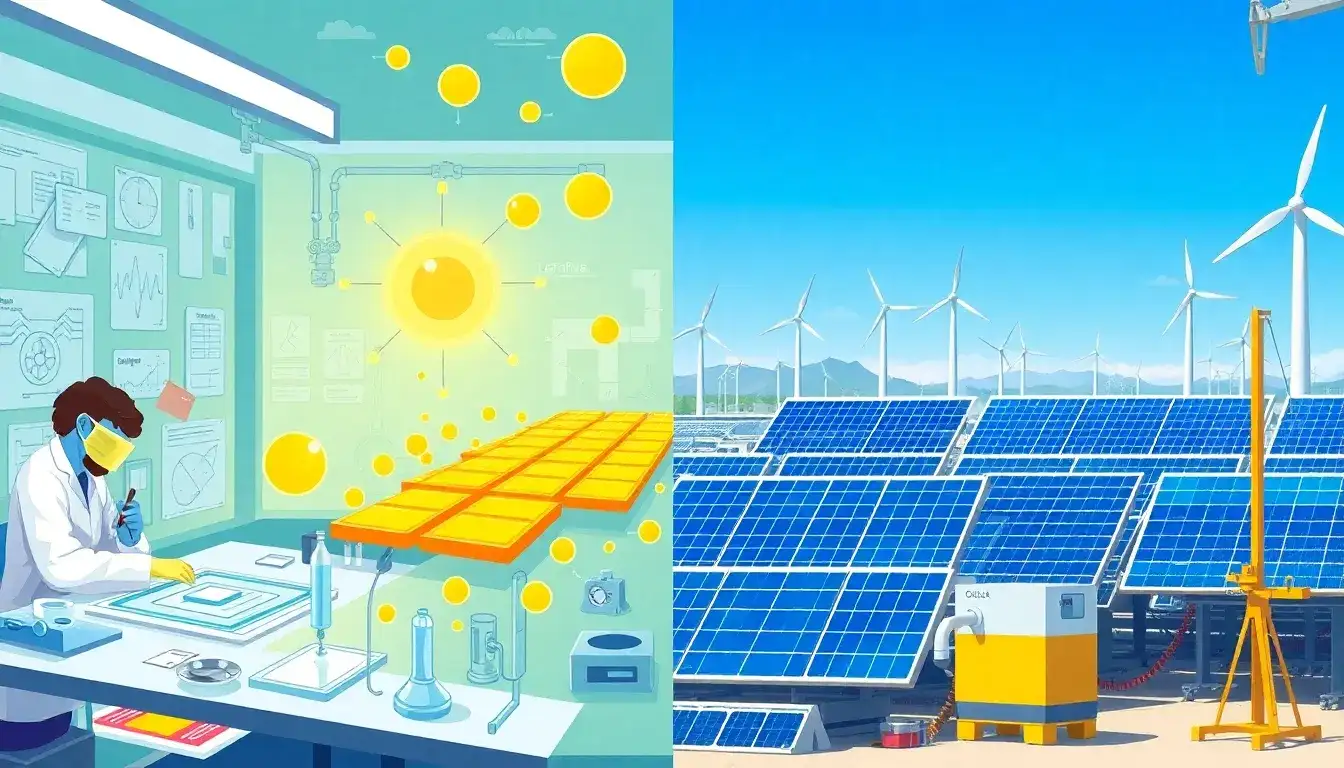
The cost of perovskite solar panels is generally lower than that of traditional silicon-based solar panels, with expectations for even further cost reductions as production scales and technology matures.
Current Cost Comparisons
- Perovskite solar panels have a manufacturing cost currently close to the lowest costs of crystalline silicon panels, which is a mature and widely deployed technology.
- Per watt, current perovskite solar cell technology can cost around $0.16, with potential future costs dropping as low as $0.10 per watt, which is significantly cheaper than traditional thin-film photovoltaics that range from $0.40 to $0.69 per watt and far below GaAs technology at $50 per watt.
- In comparison, traditional silicon solar panels typically cost over $0.20 per watt, often around $0.40 or higher depending on technology and scale.
Factors Driving Lower Costs for Perovskite Panels
- Perovskite cells can be manufactured at lower temperatures (below 150°C) compared to silicon cells that require heating above 1000°C for purification and crystallization, reducing energy consumption and production costs by approximately 90%.
- Raw materials for perovskite cells are abundant and significantly less expensive, estimated to be 50-75% cheaper than those used for silicon panels.
- Although the perovskite precursor inks currently cost about $250 per square meter, compared to about $100 per square meter for pure polysilicon, economies of scale and scaling production methods could substantially reduce these costs.
- Labor and material costs such as glass influence total panel cost, but these vary by region. For example, labor-intensive glass costs in Switzerland led to higher panel costs ($73/m²), which might not be the case in other manufacturing hubs.
Cost Performance and Energy Production
- Studies show perovskite solar modules have lower levelized cost of electricity (LCOE) estimates, between 3.5 and 4.9 US cents per kWh, which is competitive with or better than traditional photovoltaic technologies.
- Efficiency improvements, such as tandem perovskite-silicon cells achieving about 29% efficiency, may enhance cost-effectiveness by generating more power per panel area.
Summary Table
| Feature | Perovskite Solar Panels | Traditional Silicon Solar Panels |
|---|---|---|
| Current cost per watt | Approx. $0.16, potentially down to $0.10 | Typically around $0.20-$0.40+ per watt |
| Material cost (per m²) | ~$250 (precursor ink) with scaling potential | ~$100 (polysilicon) |
| Production energy requirement | Low (<150°C process) | High (>1000°C process) |
| Raw material expense | 50-75% cheaper than silicon | More expensive silicon raw materials |
| Levelized cost of electricity | 3.5–4.9 cents/kWh (estimated) | Typically higher LCOE |
| Efficiency | >25%, tandem cells near 29% | 15-22% typical commercial efficiency |
In conclusion, perovskite solar panels currently offer cost advantages over traditional silicon panels due to cheaper materials, lower energy manufacturing processes, and potential for further cost reductions as scale increases. These factors combined position perovskite technology as a promising, more cost-effective alternative to conventional solar panels in the near future.
Original article by NenPower, If reposted, please credit the source: https://nenpower.com/blog/how-does-the-cost-of-perovskite-solar-panels-compare-to-traditional-solar-panels/

