

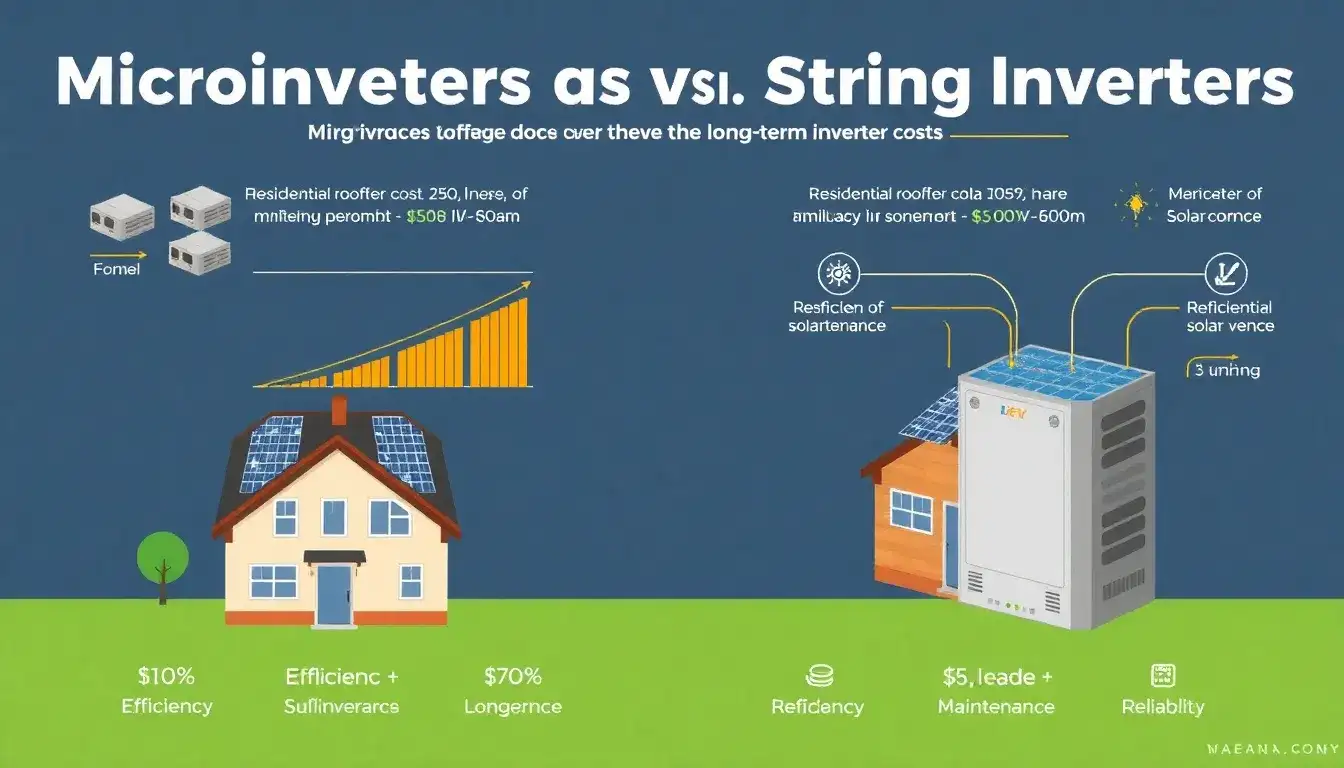
When comparing the cost of microinverters to string inverters over the long term, several factors come into play. Here’s a breakdown of the costs and considerations:
Upfront Cost
- Microinverters: Typically have a higher upfront cost compared to string inverters. For example, a microinverter costs about $1.15 per watt, while a string inverter costs about $0.75 per watt. This means a larger upfront investment for microinverters.
- String Inverters: Generally cheaper in terms of initial installation, making them more attractive for those looking to save money at the outset. However, their lower upfront cost can be offset by potential efficiency losses and maintenance needs.
Long-Term Costs and Efficiency
- Microinverters:
- Offer better efficiency since each panel operates independently, maximizing energy production even in shaded conditions.
- Typically have longer warranties (up to 25 years), which can reduce long-term costs associated with replacements and maintenance.
- While more expensive to install and replace if they fail, microinverters can result in better long-term savings due to increased energy output and reduced need for system-wide repairs.
- String Inverters:
- While cheaper initially, string inverters can result in higher long-term costs due to efficiency losses if any panel in the string is shaded or performs poorly.
- Have shorter warranties (usually 10 to 12 years) compared to microinverters, which means more frequent replacements may be needed.
- Situated in more accessible locations like walls or sheds, making maintenance easier compared to roof-mounted microinverters.
Return on Investment
The return on investment (ROI) for both types of inverters depends on factors such as system size, local energy costs, and whether a solar battery is included. Microinverters, despite their higher upfront cost, can provide better long-term ROI by optimizing energy production and reducing the impact of panel inefficiencies. In contrast, string inverters offer a faster initial payback period due to lower installation costs but may provide less optimal performance over time.
In summary, while microinverters are more expensive upfront, they can offer better long-term efficiency and cost savings. String inverters are cheaper initially but might incur higher maintenance and efficiency losses over time.
Original article by NenPower, If reposted, please credit the source: https://nenpower.com/blog/how-does-the-cost-of-microinverters-compare-to-string-inverters-over-the-long-term/

