

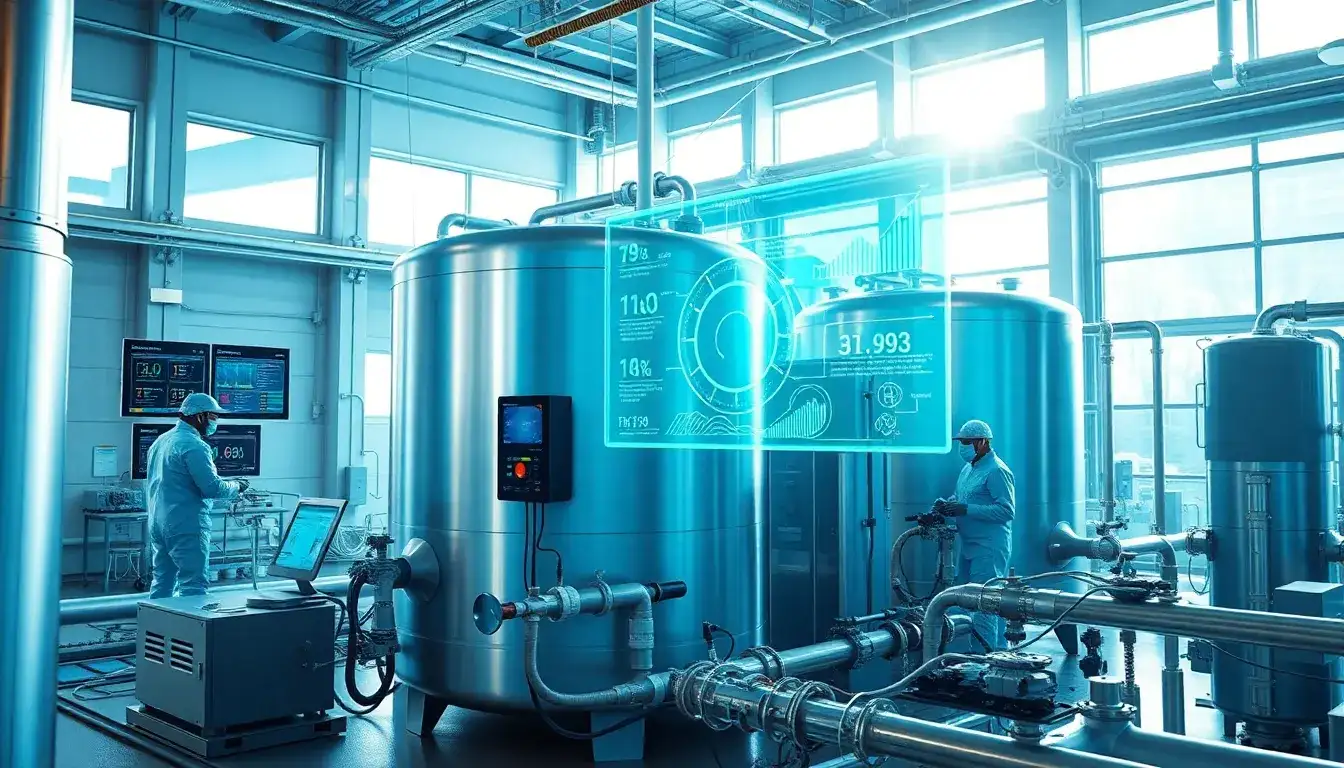
The cost of maintenance for liquid air energy storage (LAES) systems is one component of their total annual operating cost, which also includes labor and utility costs. However, existing research indicates that maintenance costs do not significantly impact the overall economic viability or efficiency of LAES systems.
A detailed techno-economic analysis of different LAES configurations shows that among various system layouts, the case with a 2-stage compressor provided the most economical option with relatively low total annual operating costs, including maintenance. Adding more complex components, such as an Organic Rankine Cycle (ORC) to increase energy efficiency, does increase maintenance and operational costs but also raises net present value (NPV) by improving power output sufficiently to offset these costs.
Moreover, research from MIT and NTNU reports that increasing the energy efficiency of LAES systems up to the theoretical limit does not substantially improve their economic viability. The levelized cost of storage (LCOS) for LAES remains around $60 per megawatt-hour regardless of increased efficiency measures. Instead, financial incentives like subsidies have a far greater effect on making LAES economically attractive than efforts to improve technical efficiency, including maintenance optimizations.
In summary, while maintenance costs contribute to the operating expenses of LAES, they do not significantly reduce the overall efficiency or economic feasibility of these systems. Economic viability is more strongly influenced by capital costs, subsidies, and the system’s design capacity rather than by incremental changes in maintenance cost. Therefore, maintenance costs impact LAES overall efficiency only modestly compared to other factors.
Original article by NenPower, If reposted, please credit the source: https://nenpower.com/blog/how-does-the-cost-of-maintenance-for-liquid-air-energy-storage-systems-impact-their-overall-efficiency/

