

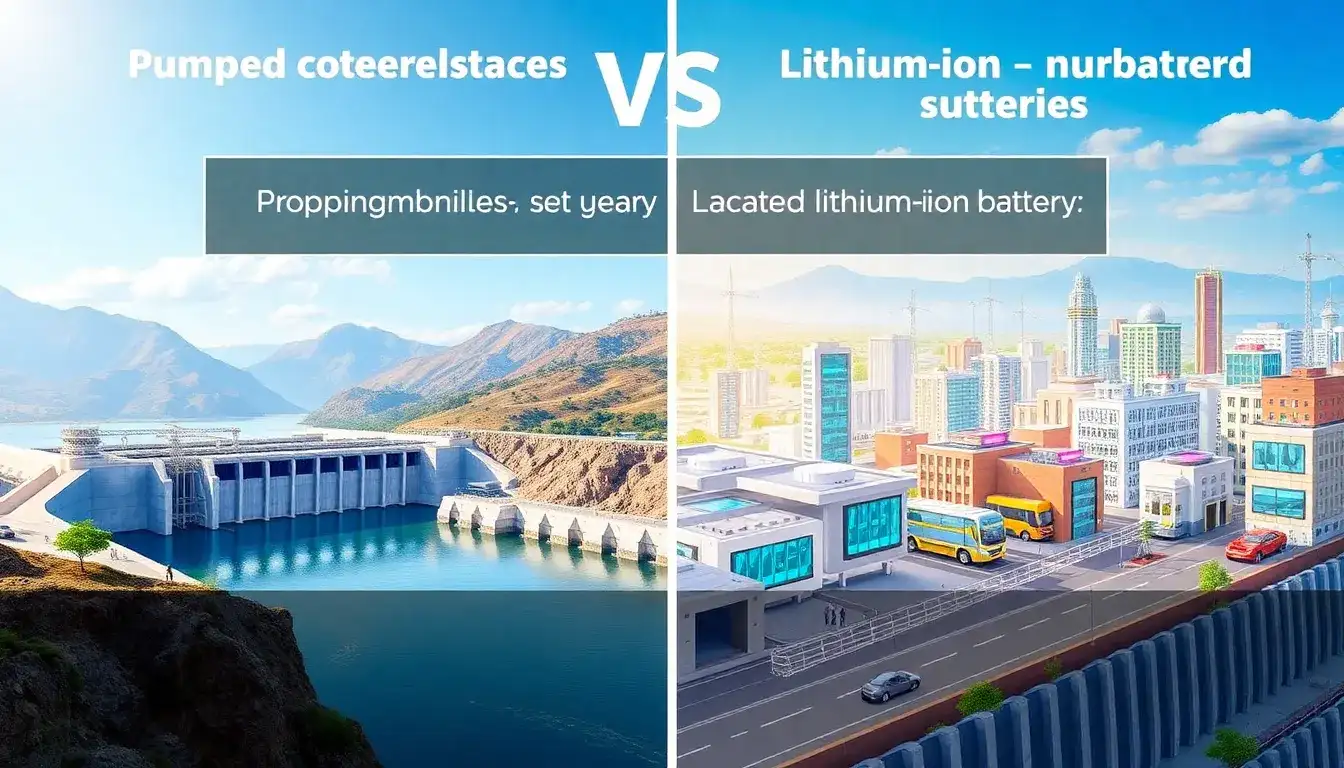
Pumped hydroelectric energy storage and lithium-ion batteries are both used for storing energy, but they have different maintenance costs and operational characteristics.
Pumped Hydroelectric Energy Storage
Pumped hydroelectric storage is known for its low operation and maintenance (O&M) costs compared to many other energy storage technologies, including fuels like natural gas.
- O&M Costs: For example, the Northfield Mountain Pumped Storage facility had O&M costs of $1.90/kW-year in 1979, which is significantly lower than those of combustion-based plants.
- Long-term Advantage: Over a 50-year lifespan, these facilities can offer substantial savings compared to traditional fossil fuel-based systems.
- Capital Costs: The capital costs for pumped hydro can be high, with estimates around $2,250/kW for a 0.5GW x 12-hour storage facility.
Lithium-ion Batteries
Lithium-ion batteries have different maintenance characteristics:
- O&M Costs: Typically, lithium-ion batteries require minimal maintenance and have lower labor costs compared to pumped hydro, mainly because they are more modular and less mechanically complex.
- Capital Costs: The capital cost per kW of lithium-ion batteries is generally lower than that of pumped hydro systems, but the cost per kWh of storage capacity varies. Lithium-ion batteries have a shorter lifespan compared to pumped hydro systems, which can last for decades.
- Efficiency and Durability: Lithium-ion batteries have a round-trip efficiency comparable to or slightly better than some pumped hydro systems. However, their overall efficiency and lifespan can be affected by the number of charge cycles and environmental conditions.
Comparison Summary
| Feature | Pumped Hydroelectric Storage | Lithium-ion Batteries |
|---|---|---|
| Capital Costs | High (approximately $2,250/kW) | Generally lower |
| O&M Costs | Low ($1.90 to $5.64/kW-year) | Minimal |
| Efficiency | Varies, often around 80% | Typically around 90% |
| Lifespan | Decades | Typically up to 15 years or more |
| Scalability | Large-scale energy storage possible | Modular, easy to scale up or down |
| Environmental Impact | Can have significant environmental impacts, though closed-loop systems are designed to minimize these | Generally low environmental impact |
In summary, while pumped hydroelectric storage offers long-term durability and low O&M costs, lithium-ion batteries provide advantages in terms of capital costs, modularity, and round-trip efficiency, but have shorter lifespans. The choice between these technologies depends on the specific needs and constraints of the energy storage project.
Original article by NenPower, If reposted, please credit the source: https://nenpower.com/blog/how-does-the-cost-of-maintaining-pumped-hydroelectric-energy-storage-systems-compare-to-lithium-ion-batteries/

