

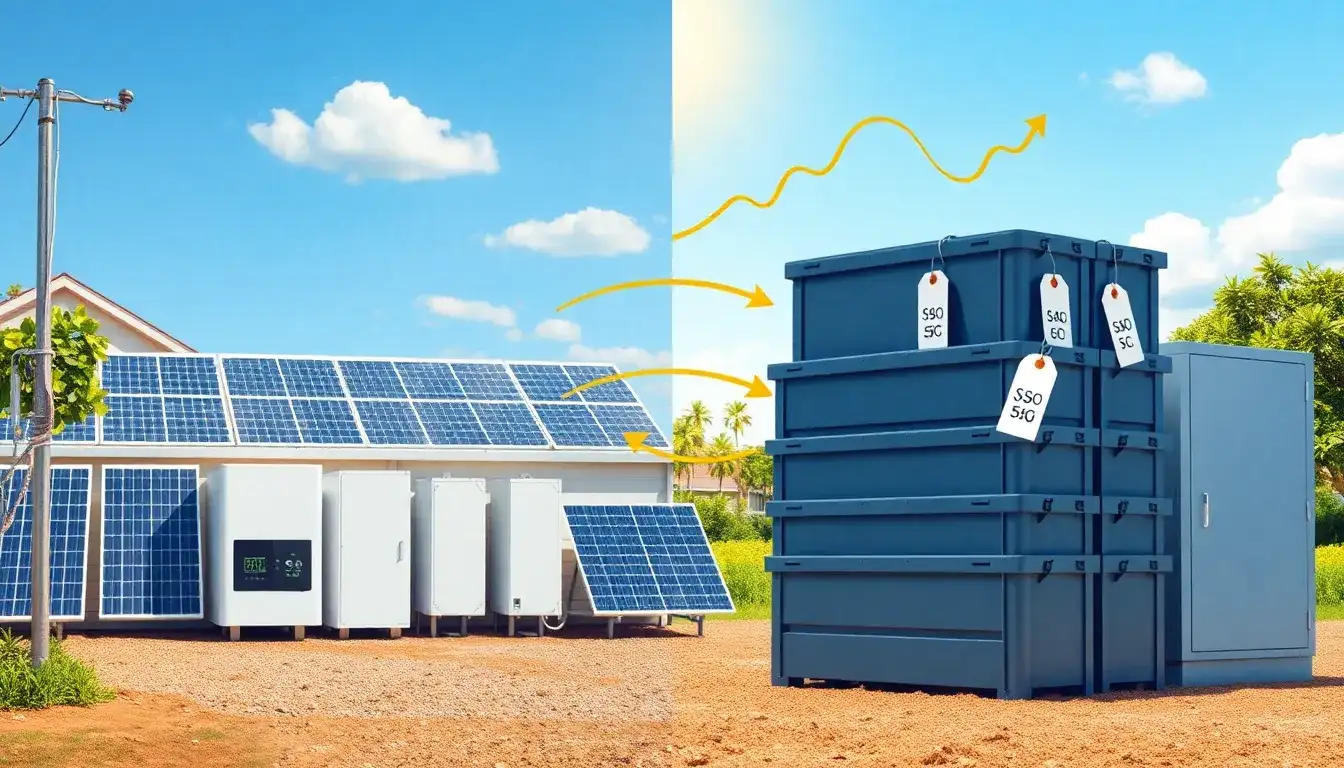
The cost of lithium-ion batteries significantly impacts the overall cost of solar energy systems by affecting their economic viability. Here are some key points to consider:
Cost Implications of Lithium-Ion Batteries
- Cost Reduction Trends: The prices of lithium-ion batteries and solar panels have been declining over time. This trend makes solar energy systems more competitive with traditional energy sources, enhancing their economic appeal.
- Current Cost: On average, installing a lithium-ion battery for solar energy costs around $1,300 per kWh before incentives. With a 30% federal tax credit, the cost drops to about $1,000 per kWh.
- Variability in Costs: The total cost of a solar battery installation can range widely, from $6,000 to $18,000 or more, depending on the size of the battery and other factors like brand and installation costs.
- Utility-Scale Costs: For utility-scale applications, lithium-ion battery costs are projected to decrease further. By 2030, costs could range from $245/kWh to $403/kWh, and by 2050, from $159/kWh to $348/kWh.
Impact on Solar Energy Systems
- Economic Viability: Lower battery costs help reduce the overall cost of solar energy systems, making them more viable alternatives to traditional energy sources.
- Energy Storage and Backup: Lithium-ion batteries enable homeowners to store excess solar energy for later use, providing backup power during outages and allowing more efficient use of solar generation.
- Incentives and Rebates: The availability of incentives like federal tax credits can further reduce the cost of installing lithium-ion batteries with solar systems, enhancing their appeal.
Overall, the decreasing cost of lithium-ion batteries is crucial for making solar energy systems more cost-effective and attractive to consumers and investors alike.
Original article by NenPower, If reposted, please credit the source: https://nenpower.com/blog/how-does-the-cost-of-lithium-ion-batteries-impact-the-overall-cost-of-solar-energy-systems/

