

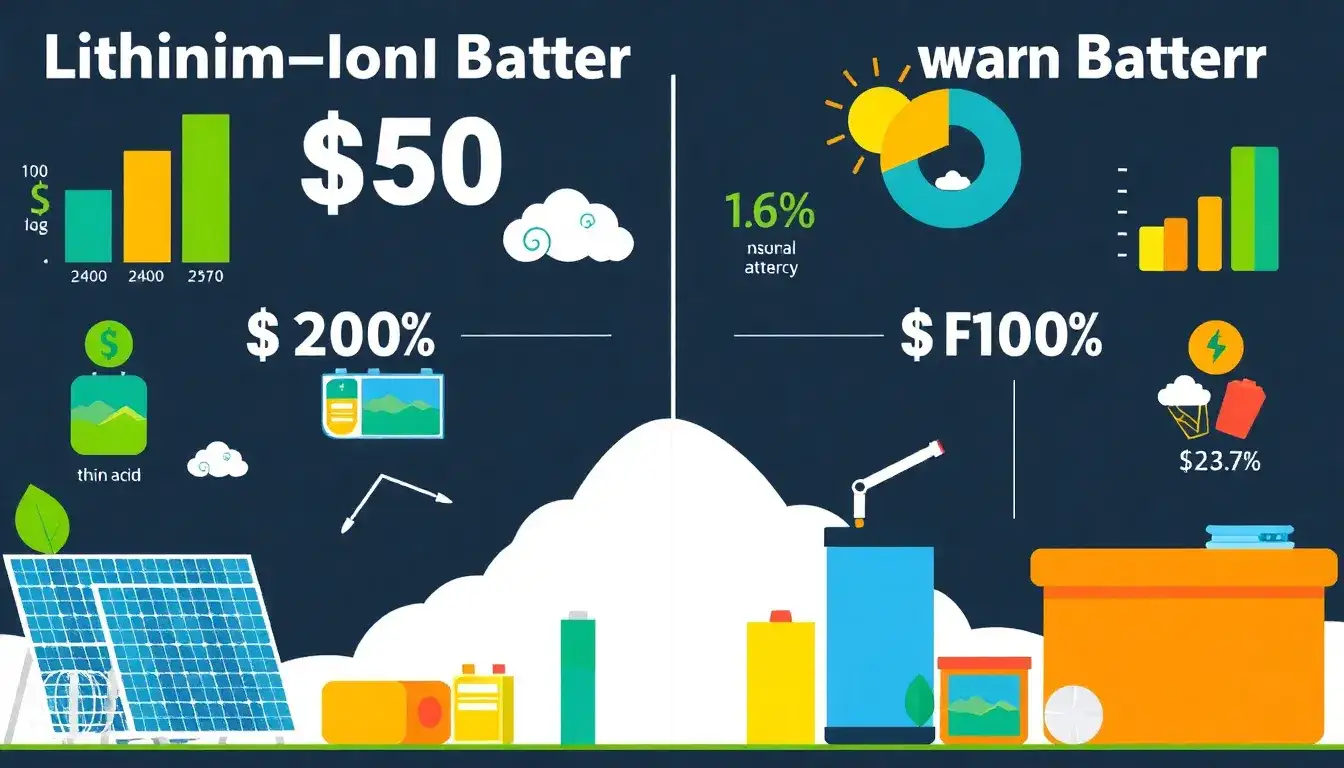
The cost of lithium-ion batteries for solar energy storage is generally higher compared to lead-acid batteries. Here’s a breakdown of their costs and characteristics:
Lithium-ion Batteries
- Cost: Lithium-ion batteries typically range from $400 to $850 per kWh, with installations often costing between $10,000 and $30,000, depending on the size and features.
- Advantages: High energy density, long lifespan (up to 15 years), high efficiency, and minimal maintenance. They are also more efficient and can handle deeper discharges.
- Disadvantages: Higher upfront cost, risk of thermal runaway (though rare with proper installation).
Lead-Acid Batteries
- Cost: Cheaper upfront with prices between $100 and $400 per kWh. Installation costs typically fall between $5,000 and $15,000.
- Advantages: Lower initial cost, well-established technology.
- Disadvantages: Lower energy density, shorter lifespan (5-10 years), and higher maintenance needs.
Nickel-Cadmium (NiCd) Batteries
- Cost: These range from $500 to $1,300 per kWh. However, they are less common in solar applications due to environmental concerns related to cadmium toxicity.
Comparison Summary
| Battery Type | Cost Range per kWh | Lifespan | Key Features |
|---|---|---|---|
| Lithium-ion | $400-$850 | Up to 15 years | High efficiency, low maintenance |
| Lead-Acid | $100-$400 | 5-10 years | Affordable, high maintenance |
| NiCd | $500-$1,300 | Varies | Toxic cadmium; less environmentally friendly |
Despite the higher upfront cost, lithium-ion batteries offer significant long-term advantages, including lower total cost of ownership over their lifespan compared to lead-acid batteries. However, lead-acid batteries remain a budget-friendly option for smaller setups or short-term energy needs.
Original article by NenPower, If reposted, please credit the source: https://nenpower.com/blog/how-does-the-cost-of-lithium-ion-batteries-compare-to-other-types-of-solar-batteries/

