Cost Comparison: Lithium-Ion vs. Other Solar Battery Technologies
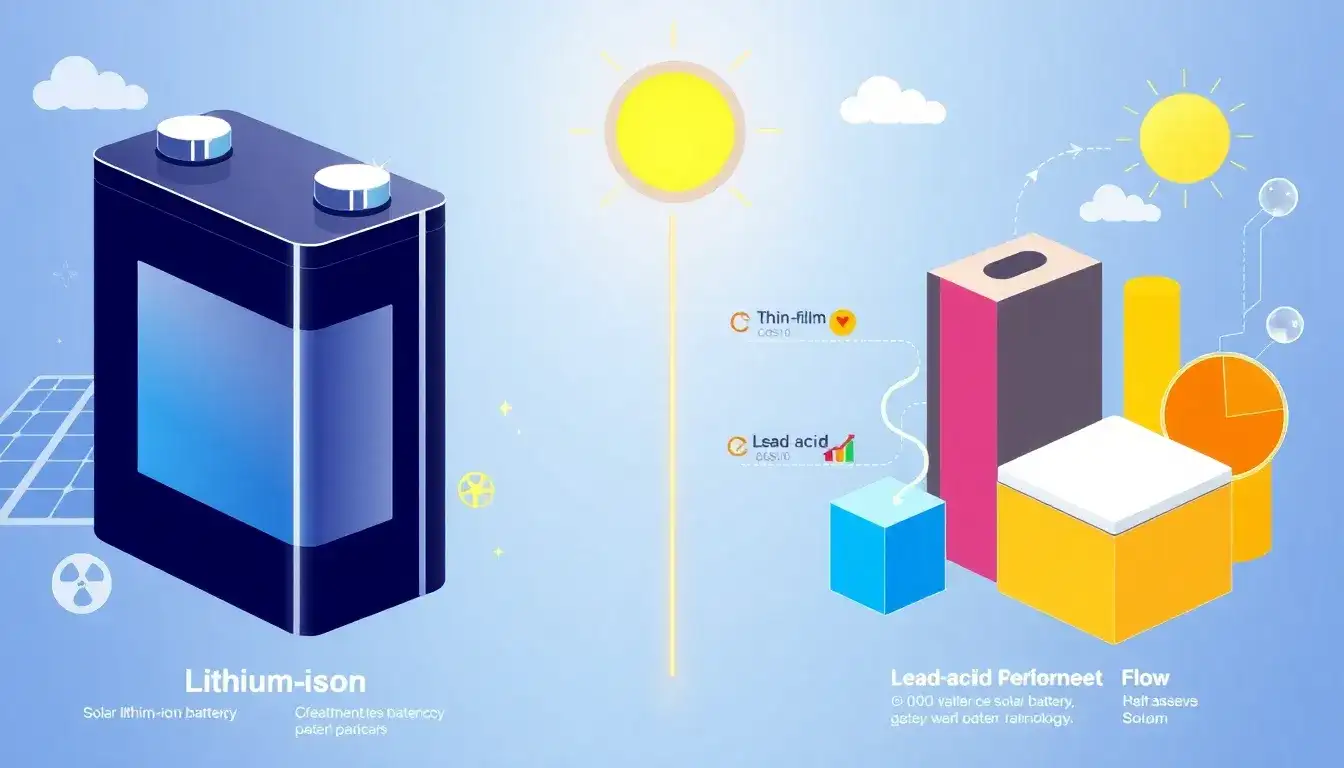
The cost of lithium-ion batteries can vary widely, but they generally offer several advantages over other solar battery technologies, particularly lead-acid batteries.
Lithium-Ion Batteries
- Cost Range: Lithium-ion batteries used for solar applications typically cost between $6,800 and $10,700, excluding installation costs. For larger scale solar systems, the cost can range from $7,000 to $11,000.
- Advantages: Long lifespan, low maintenance, high energy density, and a total cost of ownership that is about 2.8 times cheaper per usable kWh compared to lead-acid batteries. Additionally, they offer a discharge rate of 100% compared to 50% for some lead-acid batteries.
Lead-Acid Batteries
- Cost: Although lead-acid batteries have a lower upfront cost, their total cost of ownership is higher due to poorer performance metrics like shorter lifespan and lower energy density.
- Disadvantages: They have a lower discharge rate and may not be suitable for deep discharge cycles, significantly impacting their overall efficiency and lifespan.
Other Factors Influencing Solar Battery Costs
- Capacity: The cost per kilowatt-hour decreases as the battery capacity increases.
- Type (DC vs AC): DC batteries are generally less expensive but may be more challenging to integrate with existing solar systems compared to AC batteries.
- Installation and Maintenance: Costs also depend on the installation complexity and ongoing maintenance needs of the battery system.
In summary, while lithium-ion batteries are often more expensive upfront, their long-term benefits, efficiency, and lower overall cost per usable kWh make them a more cost-effective option for solar energy storage compared to other technologies like lead-acid batteries.
Original article by NenPower, If reposted, please credit the source: https://nenpower.com/blog/how-does-the-cost-of-lithium-ion-batteries-compare-to-other-solar-battery-technologies/