

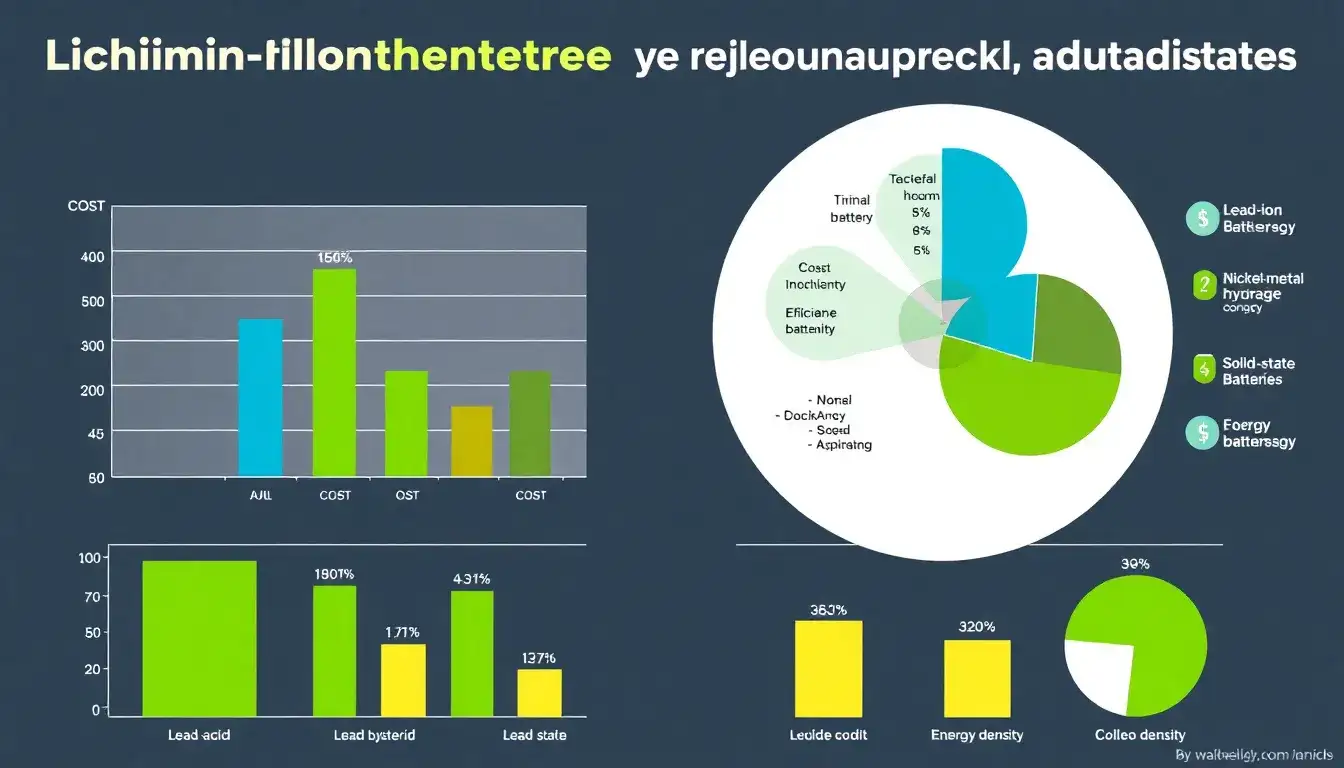
When comparing the cost of lithium-ion batteries to other battery technologies for grid-scale applications, several factors come into play. Here’s a breakdown of how lithium-ion batteries fare against other technologies:
Lithium-Ion Batteries
- Cost: Lithium-ion batteries are typically priced in the range of $100 to $300 per kWh for large-scale applications. The cost projections for utility-scale lithium-ion battery systems suggest that by 2030, costs could drop to between $159 and $403 per kWh depending on the projection scenario.
- Advantages: High energy density, long cycle life, and well-established manufacturing infrastructure make lithium-ion a preferred choice for many grid-scale applications.
- Disadvantages: Material cost volatility and potential supply chain risks.
Other Battery Technologies
- Sodium-Ion Batteries: Still in development, potentially cheaper materials than lithium, but not yet widely available or cost-competitive on a large scale.
- Flow Batteries (e.g., Vanadium Redox Batteries): More suitable for long-duration energy storage (e.g., 8-12 hours), potentially more cost-effective for applications requiring extended discharge times.
- Cost: Typically higher upfront cost but can be cost-effective for longer storage durations due to better economics per cycle.
- Lead-Acid Batteries: Generally cheaper upfront but much heavier, larger, and less efficient than lithium-ion, making them less suitable for grid-scale applications due to their lower energy density and shorter lifespan.
- Cost: Often around $100 to $150 per kWh, but significantly heavier and less efficient per kWh than lithium-ion.
Comparison Summary
| Battery Type | Cost Range per kWh | Energy Density | Cycle Life |
|---|---|---|---|
| Lithium-Ion | $100-$300 | High | Long (3000+ cycles) |
| Flow Batteries | Varies, often higher | Low-Moderate | Very Long (10,000+) |
| Lead-Acid | $100-$150 | Low | Short-Moderate |
For grid-scale applications, lithium-ion batteries are currently the most widely used due to their balance of cost, efficiency, and long cycle life. However, flow batteries are gaining traction for long-duration storage needs due to their potential for long cycle life and lower cost per cycle. Lead-acid batteries are generally not preferred for large-scale applications due to their low energy density and shorter lifespan.
Original article by NenPower, If reposted, please credit the source: https://nenpower.com/blog/how-does-the-cost-of-lithium-ion-batteries-compare-to-other-battery-technologies-for-grid-scale-applications/

