

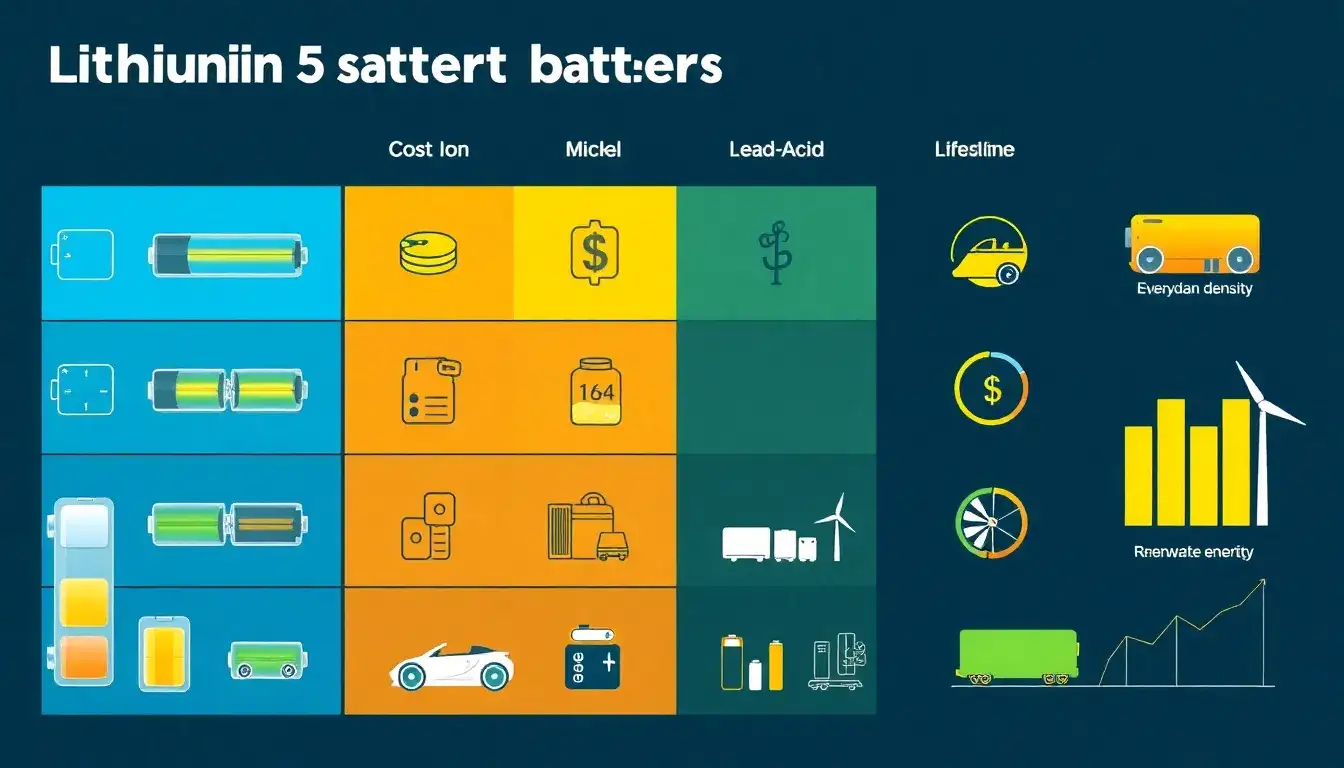
The cost of lithium-ion batteries compared to other battery technologies, particularly lead-acid batteries, presents a complex but favorable economic picture when considering total ownership and performance.
Purchase Price Comparison
- Lithium-ion batteries have a higher upfront purchase price than traditional lead-acid batteries. On average, lithium-ion batteries cost around $139 to $151 per kilowatt-hour (kWh) in 2024, with prices continuing to decline from previous years (down to about $115/kWh in some reports).
- Lead-acid batteries are significantly cheaper initially on a per kWh basis, roughly about 2.8 times less expensive than lithium-ion when only the nominal purchase price is considered.
Total Cost of Ownership and Usable Capacity
- Despite higher initial costs, lithium-ion batteries tend to be more cost-effective over time. This is because lithium-ion batteries have:
- Higher usable capacity due to deeper discharge rates (nearly 100%) compared to about 50% for lead-acid AGM batteries.
- Longer cycle life (e.g., about 3000 cycles or roughly 8 years expected lifespan).
- Higher energy density, requiring less volume and thus reducing installation, transportation, and related costs.
- This translates into lithium-ion batteries being approximately 2.8 times cheaper per usable kWh over their lifespan compared to lead-acid batteries, making them more economical for applications involving deep discharge cycles such as electric vehicles or standalone solar installations.
Other Considerations
- The cost of lithium-ion batteries varies by chemistry; for example, lithium iron phosphate (LFP) batteries tend to cost less than nickel manganese cobalt oxide (NMC) batteries, which can be 20% more expensive due to the use of pricier metals like cobalt and nickel.
- Regional price differences also exist, with prices in China generally lower than in the US or Europe, influenced by manufacturing scale and supply chain efficiencies.
Summary Table: Lithium-ion vs. Lead-Acid Battery Cost Comparison
| Aspect | Lithium-ion Battery | Lead-Acid Battery |
|---|---|---|
| Purchase Price per kWh | ~$115 – $151 | Roughly 1/2 to 1/3 of lithium-ion cost |
| Usable Capacity | ~100% Depth of Discharge | ~50% Depth of Discharge |
| Cycle Life | ~3000 cycles (8 years) | Shorter, fewer cycles |
| Energy Density | Higher (3.5 times lead-acid) | Lower |
| Total Cost of Ownership | About 2.8 times cheaper per usable kWh | Higher long-term cost despite lower initial price |
| Maintenance and Efficiency | Lower maintenance, higher efficiency | Higher maintenance, less efficient |
In conclusion, while lithium-ion batteries have a higher upfront purchase cost compared to lead-acid batteries, their superior performance, longer lifespan, higher usable capacity, and lower total cost of ownership make them more cost-effective over time for most deep cycle applications.
Original article by NenPower, If reposted, please credit the source: https://nenpower.com/blog/how-does-the-cost-of-lithium-ion-batteries-compare-to-other-battery-technologies/

