

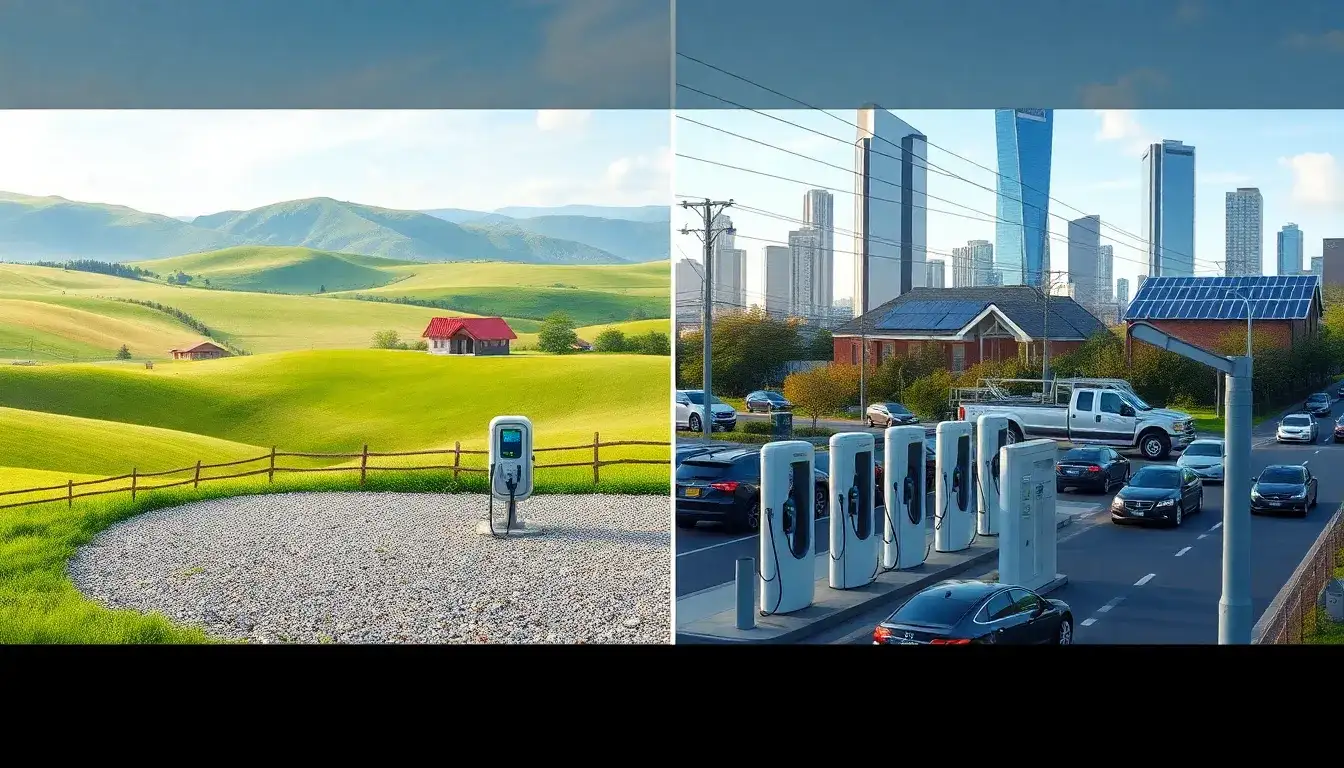
The cost of installing EV chargers in rural areas generally tends to be higher than in urban areas due to infrastructure challenges, though specific factors influence both settings differently.
Key Cost Variables
- Infrastructure Readiness:
- Urban areas often have existing electrical infrastructure that can support EV chargers without extensive upgrades, keeping installation costs for Level 2 chargers in the $600–$12,700 range per unit.
- Rural areas may require electrical grid upgrades, trenching, or longer conduit runs to remote sites, increasing costs beyond urban baselines.
- Charger Type:
- Level 1/2 chargers in rural settings can exceed $1,000 per outlet if trenching or grid upgrades are needed.
- DC fast chargers cost $20,000–$100,000+ in urban areas, but rural installations often incur additional expenses for transformer upgrades or off-grid power solutions.
- Labor and Permitting: Urban projects may face higher labor rates but benefit from streamlined permitting processes, whereas rural areas often deal with limited contractor availability and longer project timelines.
Cost Comparison
| Factor | Urban Areas | Rural Areas |
|---|---|---|
| Grid Upgrades | Less frequent | Often required, increasing costs |
| Trenching | Minimal (existing infrastructure) | Common for remote sites |
| Contractor Access | High availability | Limited, potentially raising labor costs |
While exact rural-urban cost gaps depend on site specifics, rural installations typically face higher per-unit expenses due to infrastructure challenges and logistical complexities.
Original article by NenPower, If reposted, please credit the source: https://nenpower.com/blog/how-does-the-cost-of-installing-ev-chargers-in-rural-areas-compare-to-urban-areas/

