

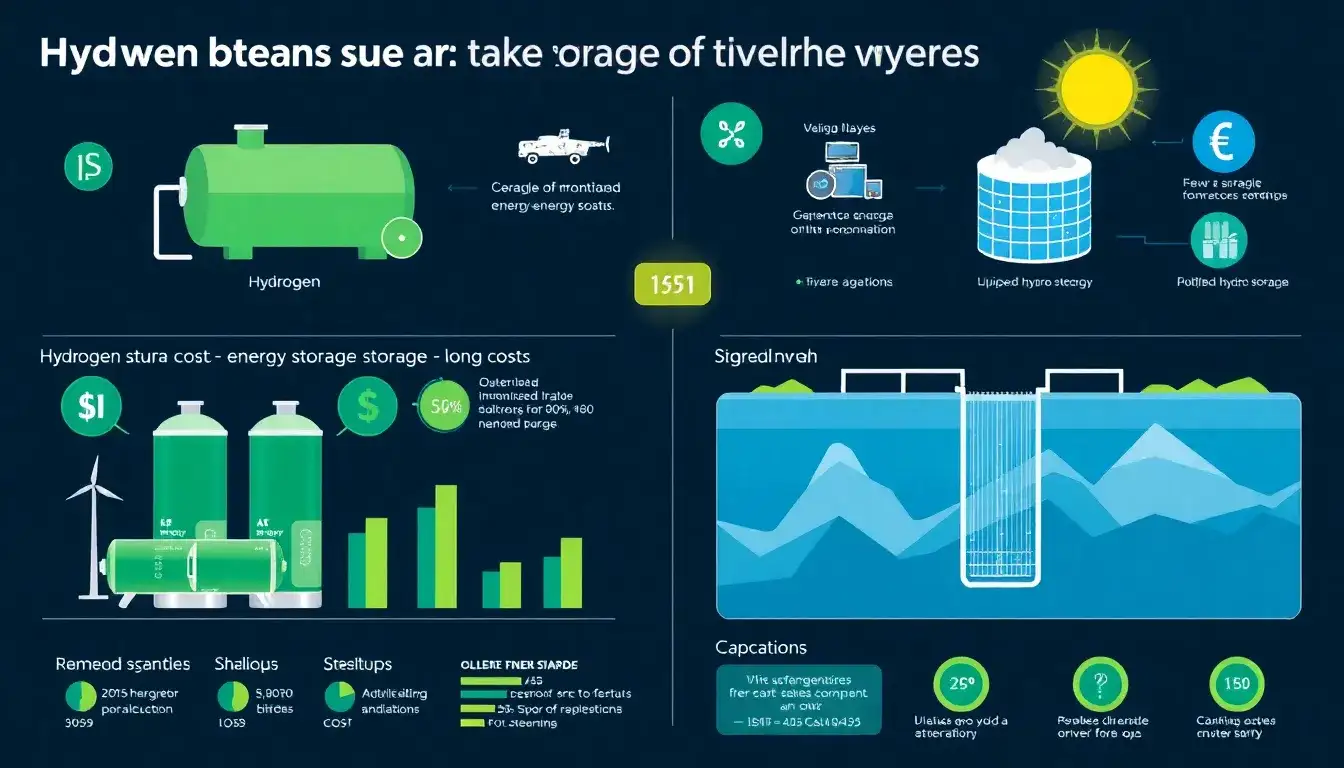
Comparing the cost of hydrogen storage with other long-duration energy storage solutions involves examining the costs associated with different storage methods. Here’s a breakdown of how hydrogen storage costs compare to other solutions:
Hydrogen Storage Costs
- Tank Storage: The cost for hydrogen tank storage is typically high, ranging from $400 to $600 per kilogram of hydrogen capacity, which translates into a variable cost depending on usage (e.g., $0.16 to $0.32 per kg of hydrogen stored depending on utilization rates).
- Underground Storage: Storing hydrogen in underground salt caverns is significantly cheaper, with costs ranging from €0.66 to €1.75 per kg of hydrogen, influenced by storage volume and frequency of use.
Other Long-Duration Energy Storage Solutions
- Pumped Hydro Storage (PHS): PHS is one of the cheapest forms of long-duration energy storage, with a relatively low cost compared to most other forms, often cited as being under $100 per kWh of capacity. However, its geographical requirements limit its applicability.
- Compressed Air Energy Storage (CAES): CAES involves storing compressed air in underground caverns, similar to hydrogen storage. The cost can vary but is generally more expensive than PHS.
- Liquid Air Energy Storage (LAES): LAES involves chilling air to liquid form for storage, offering potential for long-duration storage, though its costs are still being developed.
- Flow Batteries: These can offer a flexible duration of storage but are more expensive per kWh than PHS and CAES.
Comparison
- Cost Basis: Hydrogen storage, particularly in salt caverns, is competitive with other long-duration energy storage solutions like CAES and flow batteries in terms of cost per kg stored. However, its overall cost-effectiveness depends on the entire hydrogen production and utilization chain.
- Scalability and Flexibility: While PHS is generally the cheapest option, its geographical limitations make hydrogen storage and other solutions like CAES and flow batteries more versatile in terms of deployment locations.
- Energy Density: Hydrogen offers high energy density per kg, which is advantageous for long-duration storage when considering transportation and space efficiency.
In summary, hydrogen storage, especially in underground caverns, can be competitive with other long-duration energy storage solutions, but its overall viability depends on factors like production costs, utilization rates, and the broader energy system context.
Original article by NenPower, If reposted, please credit the source: https://nenpower.com/blog/how-does-the-cost-of-hydrogen-storage-compare-to-other-long-duration-energy-storage-solutions/

