

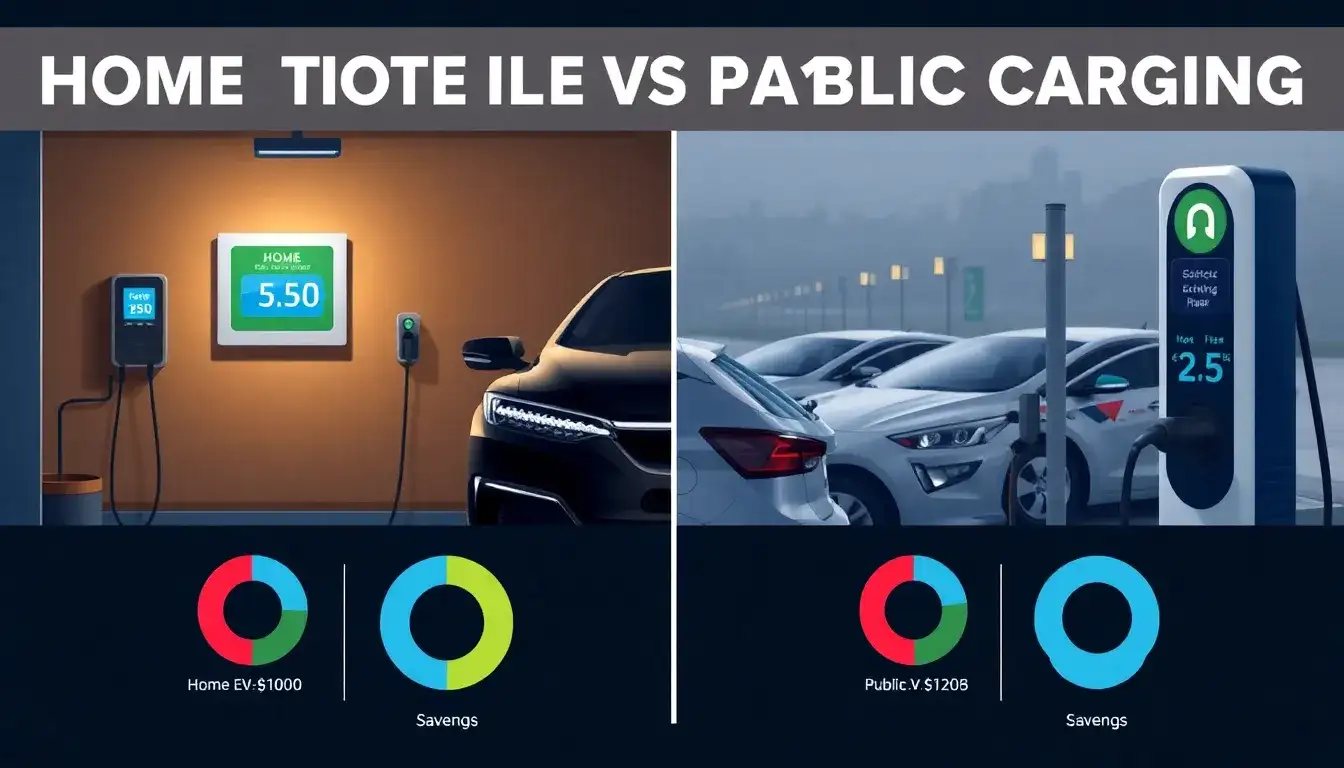
The cost of home charging an electric vehicle (EV) is significantly lower than charging at public stations over the course of a year. Several key points illustrate this difference:
Home Charging Costs
- The average cost to charge an EV at home typically ranges from about $0.11 to $0.16 per kWh depending on the state, with some variation; for example, Washington state can have rates as low as $0.11/kWh, while places like California average around $0.30/kWh and Hawaii can exceed $0.40/kWh.
- Using an average rate of $0.16/kWh, a full charge of a 40 kWh battery would cost roughly $6.40. For typical annual driving of about 14,000 miles, this translates to roughly $1,000 to $1,400 per year in electricity costs at home in high-rate states like California.
- Charging at home benefits from the absence of additional fees and the ability to take advantage of lower residential electricity rates and potential off-peak pricing.
Public Charging Costs
- Public charging stations tend to charge a higher rate per kWh, averaging around $0.17 to $0.25 or more per kWh, depending on the charging level and location.
- Fast public chargers (DC chargers) especially come with higher costs, sometimes billing by the minute or including subscription fees, which add to the expense compared to home charging.
- Using a $0.25/kWh public charging rate example, a charge requiring 48 kWh (typical from 20% to 80% battery state) would cost about $12, double the approximate $5.76 cost at home for the same amount of energy.
- Over a year, this cost difference can add up significantly, effectively doubling the electricity expense if relying predominantly on public charging versus home charging.
Summary Comparison Table
| Charging Type | Typical Cost per kWh | Cost for 40-60 kWh Full Charge | Annual Cost Estimate (14,000 miles) |
|---|---|---|---|
| Home Charging | $0.11 – $0.30 | $6.40 – $18 | $1,000 – $1,400+ |
| Public Charging | $0.17 – $0.25+ | $12 – $15+ | $2,000+ (roughly double home costs) |
In conclusion, home charging is considerably more economical than public charging over the course of a year, often costing about half as much or less per kWh due to lower residential energy rates and absence of public charging fees. This cost advantage makes home charging the preferred and budget-friendly option for the majority of EV owners.
Original article by NenPower, If reposted, please credit the source: https://nenpower.com/blog/how-does-the-cost-of-home-charging-compare-to-public-charging-over-a-year/

