

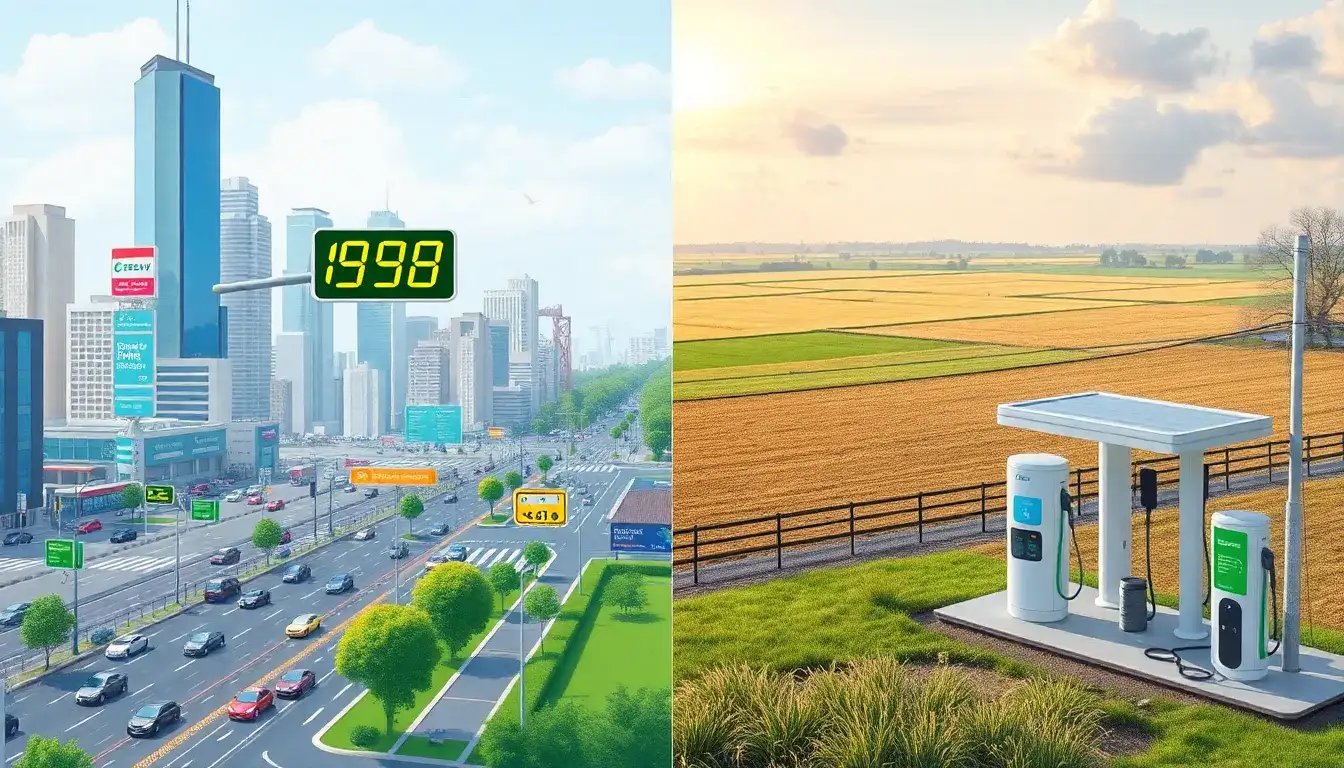
Differences in EV Charging Costs Between Urban and Rural Areas
Higher Public Charging Fees in Urban Areas
In urban areas, public EV charging fees tend to be higher. This is partly because urban charging stations are often operated by private entities in high-demand locations, and the convenience of dense charging networks allows operators to charge premium prices.
Lower Usage and Higher Infrastructure Costs in Rural Areas
Rural areas generally have fewer EV charging stations with lower utilization rates due to sparse populations. This lower usage makes it challenging to recoup the high costs of installing and maintaining charging infrastructure, leading to potentially higher cost per use or limited availability of fast charging options. As a result, while the nominal charging fees may not be higher, the effective cost in rural areas can be influenced by fewer stations and longer travel distances.
Charging Behavior and Energy Demand
Research indicates that while rural EV users tend to have shorter dwell times at charging stations (about 50% less) and only slightly lower energy demands (7% less) compared to urban users, the access and convenience differences influence cost dynamics.
Home Charging Influence
The availability of home charging varies with urbanicity. Rural residents are more likely to rely on home charging due to fewer public stations, which can reduce their charging costs overall, but this depends on access to home electrical infrastructure and rates that vary by region.
Range Anxiety and Fast Charging Cost Impact
Rural drivers often travel longer distances and face range anxiety due to the scarcity of fast chargers, which are typically more expensive to use. Urban areas benefit from dense fast-charging networks, which helps keep costs predictable and reduces anxiety.
Summary of Cost Influences
| Factor | Urban Areas | Rural Areas |
|---|---|---|
| Public Charging Fees | Generally higher due to demand | Potentially lower fees but fewer stations and less availability |
| Infrastructure Density | High, many stations, frequent use | Low, fewer stations, high installation cost per station |
| Charging Convenience | High, many options | Low, limited options, longer travel for charging |
| Home Charging Access | Variable, often less available | More common but depends on home infrastructure |
| Range Anxiety | Lower due to dense networks | Higher due to sparse fast charging |
In essence, while urban EV drivers may pay more per session at public chargers due to higher demand and convenience pricing, rural drivers face higher indirect costs from limited infrastructure, less fast charging access, and longer travel distances, which can increase time and logistical costs associated with EV charging.
This creates a complex cost environment where urban users face higher direct per-charge fees, but rural users experience higher overall charging challenges and costs tied to infrastructure scarcity and travel needs.
Original article by NenPower, If reposted, please credit the source: https://nenpower.com/blog/how-does-the-cost-of-ev-charging-differ-between-urban-and-rural-areas/

