

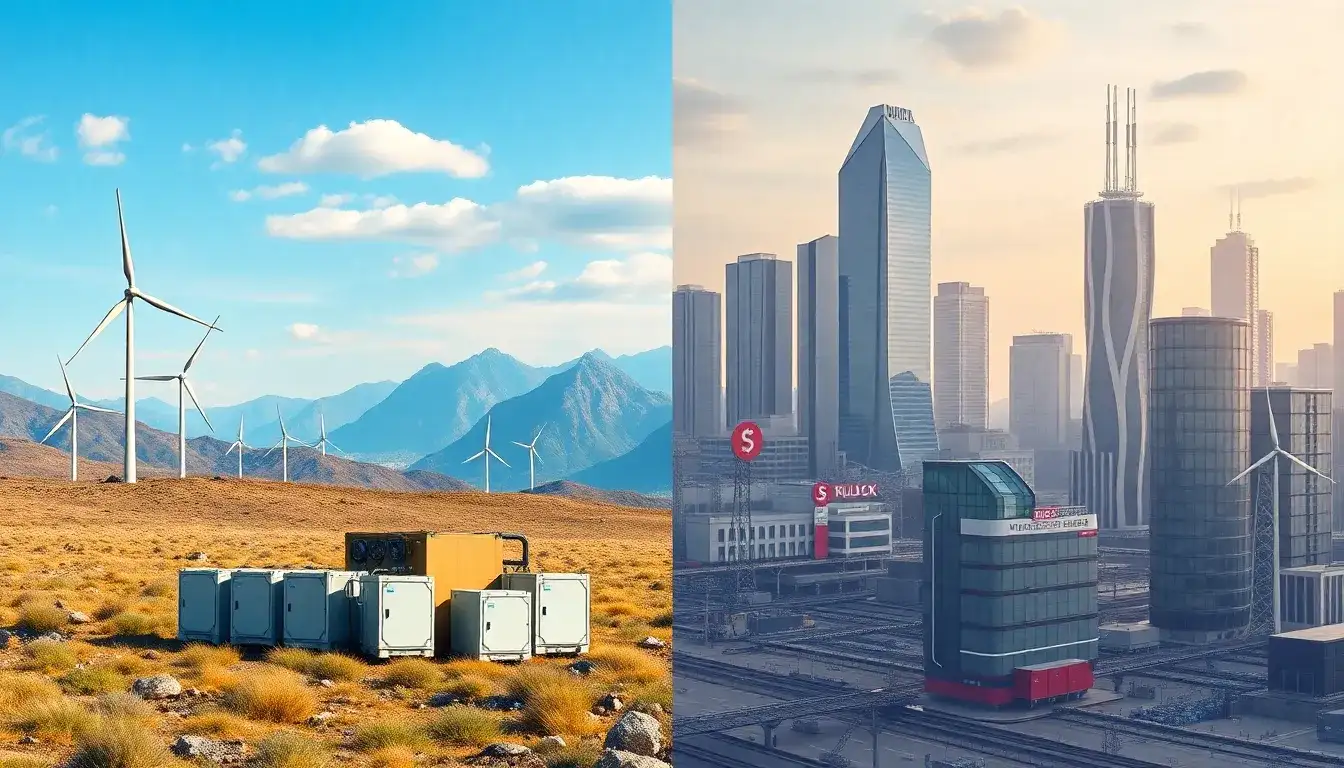
The cost of energy storage systems in remote areas compared to urban areas can vary significantly due to several factors:
Cost Factors in Remote Areas
- Higher Initial Costs: In remote areas, the initial cost of purchasing and installing energy storage systems, such as solar plus battery systems, can be a significant barrier. This includes higher costs for transportation and installation due to distant locations.
- Maintenance Challenges: Remote locations often face challenges in maintaining systems due to limited access to technical expertise and spare parts, which can increase long-term costs.
- Economies of Scale: Smaller systems are typically less cost-effective per unit compared to larger-scale systems often used in urban areas.
Cost Factors in Urban Areas
- Economies of Scale: Urban areas often benefit from large-scale energy storage systems that can provide more cost-effective solutions due to economies of scale. This includes lower costs per unit for both installation and maintenance.
- Access to Infrastructure: Urban areas typically have well-established infrastructure, making it easier to integrate energy storage solutions into the existing grid, reducing costs related to new infrastructure development.
- Grid Stability: Urban areas can leverage energy storage to stabilize the grid during peak demands, reducing strain on the grid and potentially lowering electricity costs.
Comparison
| Aspect | Remote Areas | Urban Areas |
|---|---|---|
| Initial Costs | Higher due to transportation and installation challenges | Lower due to economies of scale and existing infrastructure |
| Maintenance | More challenging due to lack of local expertise | Easier with more accessible technical support and parts |
| System Size | Typically smaller, less cost-effective per unit | Larger, more cost-effective due to scale |
| Grid Integration | Often not connected to the main grid, requiring stand-alone systems | Easily integrated into existing grid infrastructure |
Overall, while energy storage systems are more expensive to deploy and maintain in remote areas due to logistical challenges and smaller scale, they offer critical access to energy in these regions. In contrast, urban areas benefit from larger-scale installations and better infrastructure, leading to more cost-effective solutions.
Original article by NenPower, If reposted, please credit the source: https://nenpower.com/blog/how-does-the-cost-of-energy-storage-systems-in-remote-areas-compare-to-those-in-urban-areas/

