When comparing the cost of energy storage systems to the savings from reduced demand charges, several factors come into play:
Key Points
- Demand Charges: These are fees based on the highest electrical demand during a billing period, often a significant portion of commercial electricity bills, ranging from 30% to 70% of the total bill. Rates typically vary between $2 to $15 per kW, though some rates exceed $30 per kW.
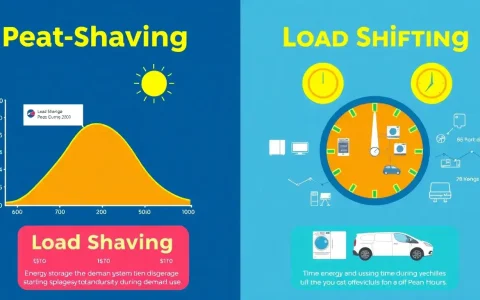
- Energy Storage Systems (ESS): These systems can significantly reduce demand charges by shifting power usage to off-peak hours, thus “peak shaving” during times when demand is high. This can lead to substantial savings, potentially hundreds of thousands of dollars annually.
- Cost of Energy Storage: The initial investment in ESS can be substantial. However, savings from demand charge reduction and other benefits like energy arbitrage can offset these costs over time. Energy arbitrage involves charging batteries during low-cost periods and discharging them during high-cost periods, which can sometimes offer greater savings than demand charge reduction.
- Savings Comparison: The effectiveness of ESS in saving costs depends on the rate design and the customer’s demand profile. For customers with high demand charges (above $15 per kW), using ESS can be particularly cost-effective. Studies suggest that while savings from demand charge reduction are valuable, they may face diminishing returns with longer storage durations, whereas energy arbitrage savings can increase linearly with storage capacity.
Conclusion
In summary, the cost of energy storage systems can be weighed against potential savings from reduced demand charges. Energy storage offers a dual benefit: it can significantly reduce demand charges and provide additional savings through energy arbitrage. However, the economics depend heavily on the customer’s demand profile and the specific rate structures offered by utilities. For many commercial customers, investing in energy storage can lead to substantial cost savings over time, making it a viable option for reducing electricity costs.
Example Scenario
- Initial Investment: High upfront cost for installing energy storage systems.
- Savings Mechanisms:
- Demand Charge Reduction: By reducing peak demand, customers can avoid high demand charges, typically saving between $8 to $143 per kW of storage annually.
- Energy Arbitrage: Savings range from $4 to $112 per kW, often scaling with longer storage durations.
- Break-Even Point: The savings from reduced demand charges and energy arbitrage can help recover the initial investment over several years, depending on usage patterns and utility rate structures.
By strategically using energy storage, businesses can optimize their electricity costs, especially in environments with high demand charges or favorable rate structures.
Original article by NenPower, If reposted, please credit the source: https://nenpower.com/blog/how-does-the-cost-of-energy-storage-compare-to-the-savings-from-reduced-demand-charges/