

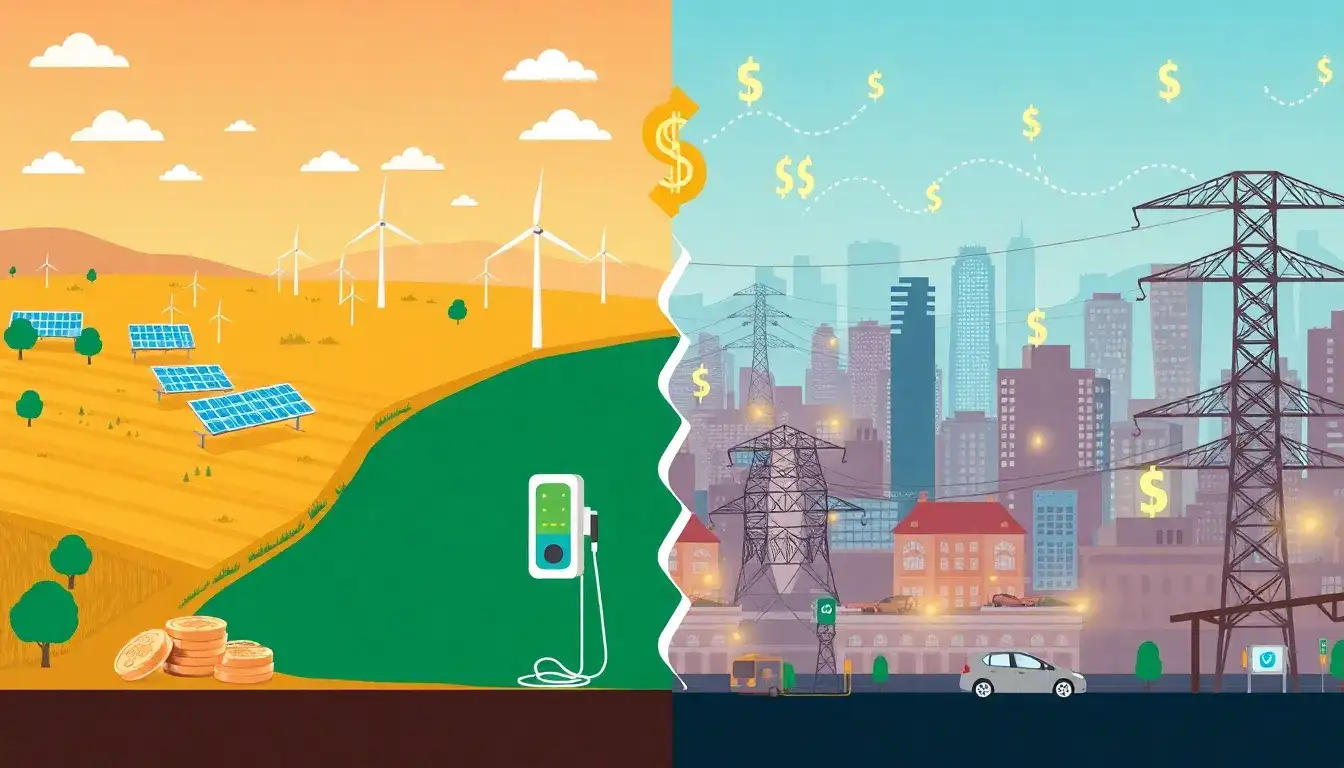
The cost of electricity for EV charging can vary between rural and urban areas, but there is no consistent trend indicating that rural areas are either significantly cheaper or more expensive than urban areas. However, several factors can influence the cost:
- Electricity Prices: The cost of electricity itself can vary by region. Rural areas might have different electricity rates compared to urban areas, depending on local electricity suppliers and regulatory policies. Generally, if rural electricity costs are lower, charging an EV could be less expensive in these areas.
- Charging Infrastructure Costs: The installation and maintenance costs of EV charging infrastructure are often higher in rural areas due to fewer economies of scale and higher costs associated with building and maintaining remote installations. This might influence the prices charged at public stations, though home charging remains unaffected by these costs.
- Demand and Usage Patterns: Urban areas often have more charging stations and higher demand, which can lead to higher charging fees at public stations due to market pressures. In contrast, rural areas have fewer stations but may experience faster growth in EV adoption and charging infrastructure.
- Charging Options: In rural areas, more drivers rely on home charging due to the availability of off-street parking and standard power outlets, which can reduce reliance on public charging stations and associated costs. This reliance on home charging can make the overall cost of EV charging more stable and potentially cheaper in rural settings.
Overall, the cost of electricity for EV charging in rural versus urban areas depends on local electricity rates, charging infrastructure costs, and usage patterns. However, home charging remains a significant factor in reducing costs, especially in rural areas.
Original article by NenPower, If reposted, please credit the source: https://nenpower.com/blog/how-does-the-cost-of-electricity-in-rural-areas-compare-to-urban-areas-for-ev-charging/

