

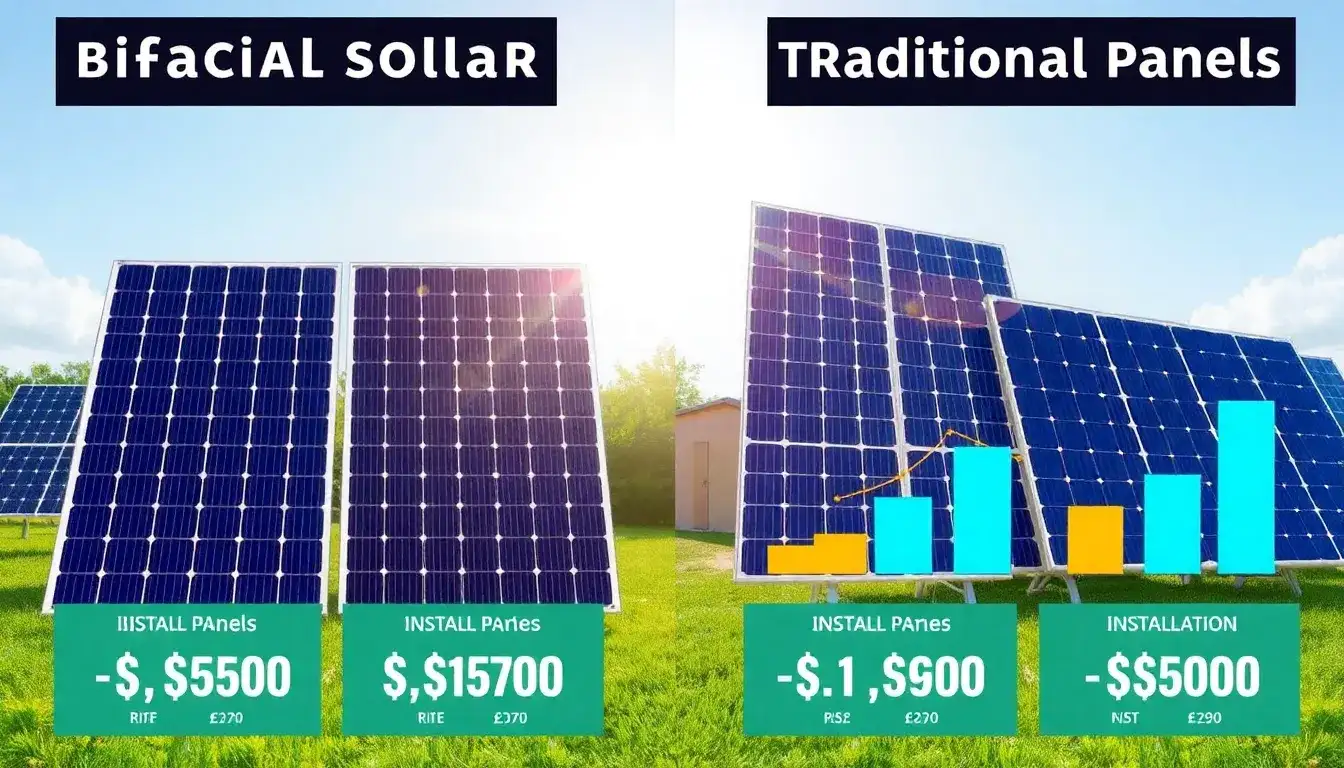
Bifacial solar panels are generally more expensive than traditional monofacial solar panels, but the cost difference tends to be relatively modest and often justified by their higher energy production.
Cost Comparison
- Price per watt: Bifacial solar panels typically cost about 10 to 20 cents more per watt than traditional monofacial panels. In larger utility-scale projects, this premium might range from 1 to 5 cents more per watt.
- System cost example: For residential systems, bifacial solar panel installations for a 2-3 bedroom home may cost between £5,500 and £6,600 including installation, whereas a monofacial system would cost around £4,000 to £5,000 for a similar-sized home.
- Additional costs: Beyond the panel cost itself, bifacial panels can incur higher balance of system (BOS) and installation costs due to specific mounting requirements to benefit from light on both sides.
Performance and Economic Offset
- Energy generation gain: Bifacial panels can generate approximately 11% to 30% more electricity than monofacial panels by capturing sunlight from both front and rear sides. This boost in energy output can often offset the higher upfront costs over time.
- Best installation conditions: They perform best when mounted on flat rooftops or ground-mounted systems with reflective surfaces beneath, which maximize backside irradiation. On pitched residential roofs, their advantage is reduced, diminishing the cost-effectiveness.
- Durability and warranties: Bifacial panels often have dual-glass construction leading to higher durability and longer warranties (up to 30 years), which may also contribute to better long-term value.
Summary Table
| Aspect | Bifacial Solar Panels | Monofacial Solar Panels |
|---|---|---|
| Cost per watt | 10–20 cents more per watt (sometimes as low as 1–5 cents) | Lower upfront cost |
| System installation cost | Slightly higher (due to mounting and BOS requirements) | Generally lower |
| Energy generation | 11–30% more energy, depending on installation and location | Standard energy generation |
| Ideal installation | Flat roofs, ground mount, commercial/utility scale | Roof-mounted (including pitched roofs) |
| Durability and warranty | Often dual-glass, longer warranties (~30 years) | Standard construction and warranties |
Conclusion
While bifacial solar panels carry a modest price premium compared to traditional monofacial panels, their higher energy yield, especially in optimized installations, can lead to better overall economic returns. However, their cost-effectiveness depends greatly on installation type and site conditions. For residential rooftop use, monofacial panels remain more affordable and versatile, whereas bifacial panels often make more sense for commercial, utility-scale, or flat rooftop installations where their backside energy harvesting can be maximized.
Original article by NenPower, If reposted, please credit the source: https://nenpower.com/blog/how-does-the-cost-of-bifacial-solar-panels-compare-to-traditional-solar-panels/

