

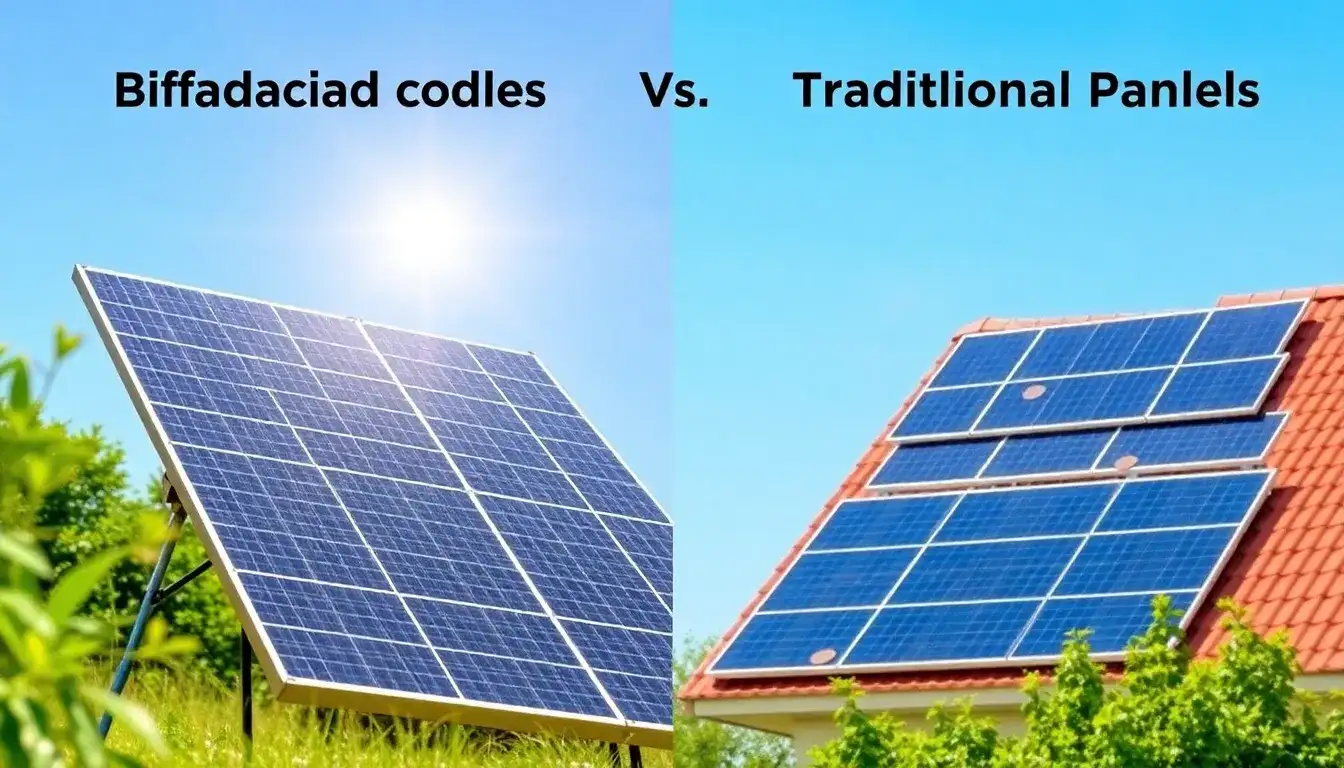
Bifacial solar panels generally cost more than traditional monofacial solar panels, but they offer increased energy generation that can offset the higher upfront cost.
Cost Comparison
- Bifacial panels typically cost about 10 to 20 cents more per watt than monofacial panels. For example, this translates to approximately $600 to $1,200 extra for a 6 kW residential solar system.
- In large-scale utility projects, the price premium for bifacial panels is smaller, around 1 to 5 cents more per watt.
- The total installed cost for a bifacial solar panel system for a medium home (2-3 bedrooms) in the UK can range from about £5,500 to £6,600, while monofacial systems cost approximately £4,000 to £5,000 including installation.
Performance and Value
- Bifacial panels capture sunlight on both their front and rear surfaces, potentially increasing energy yield by 6% to 10% compared to traditional monofacial panels.
- This higher yield can result in up to 30% efficiency in ideal conditions, versus about 15-20% efficiency for monofacial panels.
- The improved energy output often compensates for the higher cost over the system’s lifetime, improving the levelized cost of energy (LCOE).
Additional Notes
- Costs for bifacial panels have been decreasing and are expected to drop further by around 23% over the next five years, making them more competitive.
- Bifacial panels were exempted from certain U.S. tariffs on imported solar panels, potentially lowering cost barriers for adoption.
Summary: While bifacial solar panels are more expensive upfront, costing roughly 10-20 cents more per watt or several hundred dollars more for typical residential systems, their higher energy generation efficiency can offset the higher installation cost over time, making them a potentially cost-effective option depending on installation conditions and scale.
Original article by NenPower, If reposted, please credit the source: https://nenpower.com/blog/how-does-the-cost-of-bifacial-solar-panels-compare-to-traditional-ones/

