

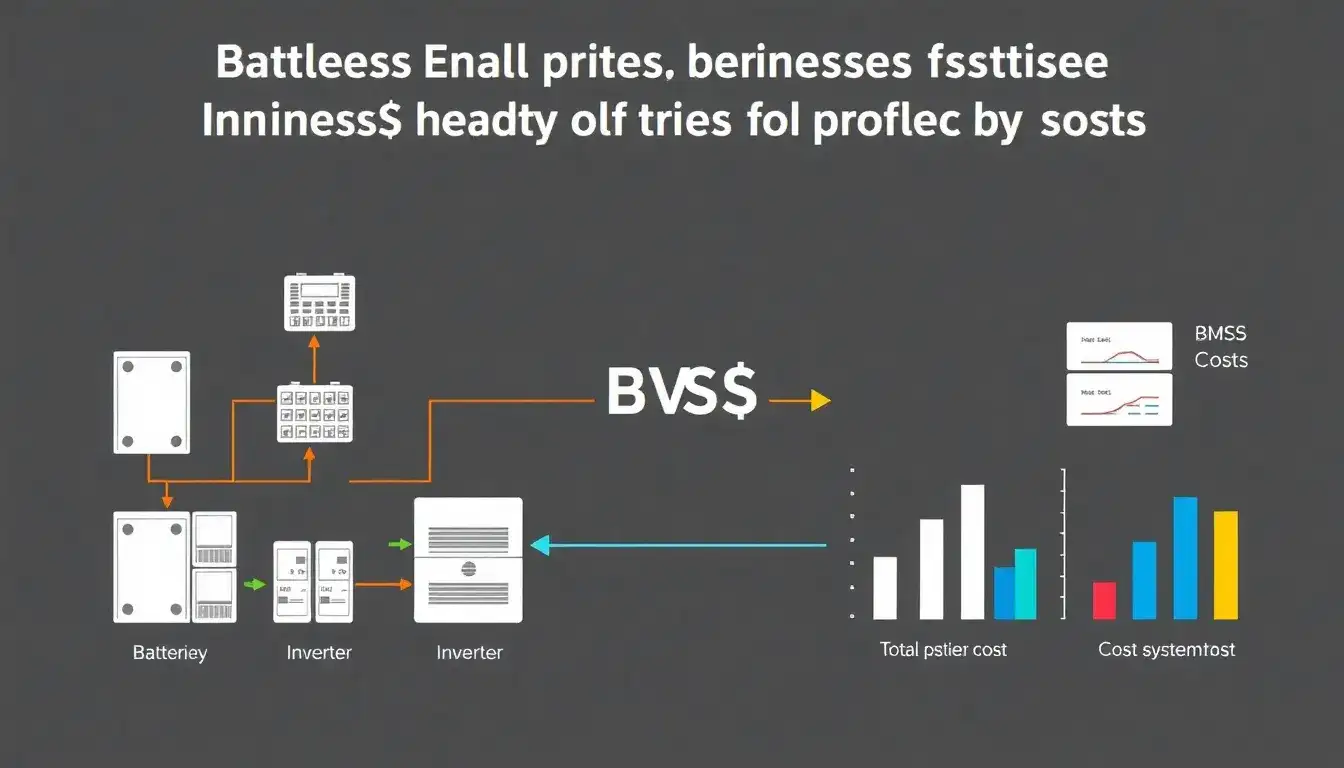
Battery management systems (BMS) play a crucial role in the overall cost of Battery Energy Storage Systems (BESS). While the exact cost contribution of BMS within the literature is often not explicitly detailed, understanding its impact involves considering several factors:
Components and Their Costs
- Balance of System (BoS) Costs: The BMS is part of the BoS, which includes components like inverters, cooling systems, and structural supports. BoS components can account for 30-40% of the total BESS cost. While the BMS itself is a subset of these costs, it is crucial for maintaining battery efficiency and longevity.
- Battery Costs: The battery itself is the largest expense in a BESS, with prices ranging from $300 to $400 per kWh for lithium-ion batteries. However, the cost of the battery does not include the BMS, which is essential for ensuring proper battery performance.
- Installation and O&M: Installation costs, which can vary widely based on the complexity of the system, typically account for 10-20% of the total expense. Maintenance costs are generally lower for lithium-ion systems due to fewer moving parts, but they still add to the overall cost. A well-designed BMS can help minimize these costs by optimizing battery performance and extending lifespan.
Impact on Overall BESS Cost
- Efficiency and Longevity: A BMS helps optimize battery charging and discharging, improving round-trip efficiency and extending the battery’s lifespan. This can indirectly reduce operational costs and extend the system’s useful life.
- Software and Management: Modern BMS solutions often include sophisticated software to manage and optimize energy storage. While this software can add to the upfront cost, it can lead to savings over time by ensuring maximum efficiency.
- System Reliability: By monitoring and managing battery health, a BMS can prevent premature failures and improve overall system reliability, reducing the need for unexpected repairs or replacements.
Overall, while the specific cost of BMS is not detailed in the literature, its contribution to the total BESS cost is significant due to its role in optimizing performance, reducing maintenance needs, and extending battery life. The indirect benefits of a BMS can lead to long-term savings and increased system efficiency.
Original article by NenPower, If reposted, please credit the source: https://nenpower.com/blog/how-does-the-cost-of-battery-management-systems-impact-the-overall-bess-cost/

