

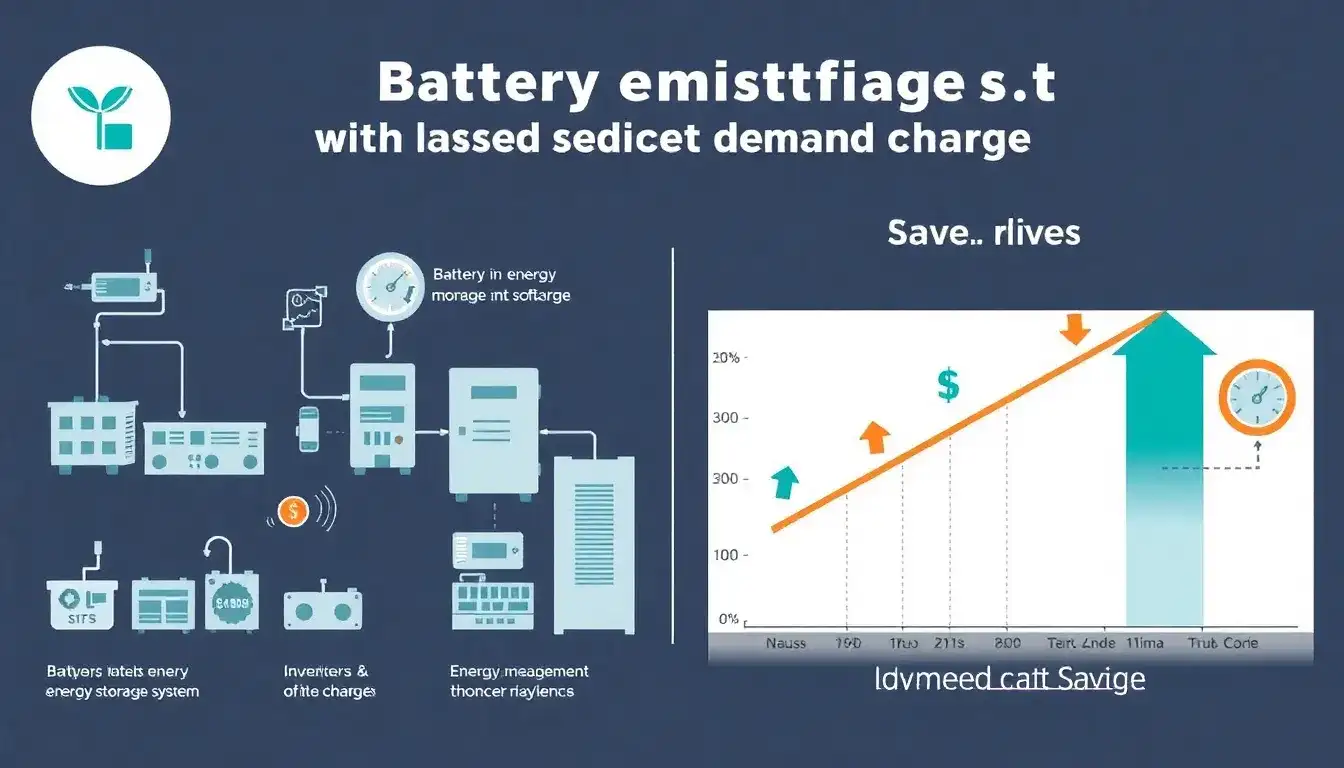
The cost of battery energy storage systems (BESS) is significant upfront, but these costs have been falling rapidly and are expected to continue declining, enhancing the economics relative to savings from reduced demand charges.
Battery Energy Storage System Costs
- Utility-scale lithium-ion battery costs for 4-hour duration systems are projected to decrease from around $482/kWh in 2022 to between $159/kWh and $326/kWh by 2030, depending on the cost scenario (low to mid) and could further drop by 2050.
- Installed capital expenditures (CAPEX) for utility-scale BESS are expected to decline by 18-52% between 2022 and 2035 under various technology innovation scenarios, making them more affordable over time.
- Residential-scale battery systems have also seen dramatic cost reductions, with prices falling by about 71% between 2014 and 2020 in some markets, reaching costs near $776/kWh for small-scale systems.
Savings from Reduced Demand Charges
- BESS allow users to store energy during off-peak periods or from low-cost sources like solar PV, and use it during peak demand times, thus reducing demand charges which are based on the highest power drawn from the grid.
- For residential applications combined with solar panels, savings on electricity bills can be substantial, with reductions of 70-80% in annual electricity bills reported in some cases, compared to about 50% without battery storage.
- Specific scenarios show annual savings of several hundred pounds (e.g., £900 per year) for larger homes with solar and battery storage by shifting usage away from peak tariffs.
- Over a battery’s 10-15 year lifespan, cumulative savings can range from £3,000 to £10,000, often making the investment in battery storage attractive when accounting for energy cost inflation and declining battery system costs.
Cost vs. Savings Comparison
| Aspect | Utility-Scale Battery Storage | Residential Battery Storage |
|---|---|---|
| Capital Cost (approximate) | $159-$326/kWh (2030 projection) | Around £4,000 for a 6-10 kWh system |
| Payback Period | Varies, more favorable as prices fall | ~12 years typical with solar and demand management |
| Annual Savings | Depends on scale and tariff structure | Hundreds of pounds per year (£300-900+) |
| Lifetime Savings | Significant at scale, improves with time | £3,000 to £10,000 over battery lifetime |
Summary
While the upfront cost of battery energy storage systems remains a substantial investment, especially at utility scale, falling costs and increasing grid electricity prices improve the financial case over time. For commercial and residential customers facing demand charges, the savings gained by reducing peak demand can substantially offset the battery system costs over the battery’s lifetime. The economic viability hinges on factors such as battery size, load profile, tariff structures, and availability of low-cost charging electricity (like solar or off-peak rates). With ongoing cost declines and tariff pressures, the balance increasingly favors investment in battery storage for demand charge reduction and overall energy cost savings.
Original article by NenPower, If reposted, please credit the source: https://nenpower.com/blog/how-does-the-cost-of-battery-energy-storage-systems-compare-to-the-savings-from-reduced-demand-charges/

