

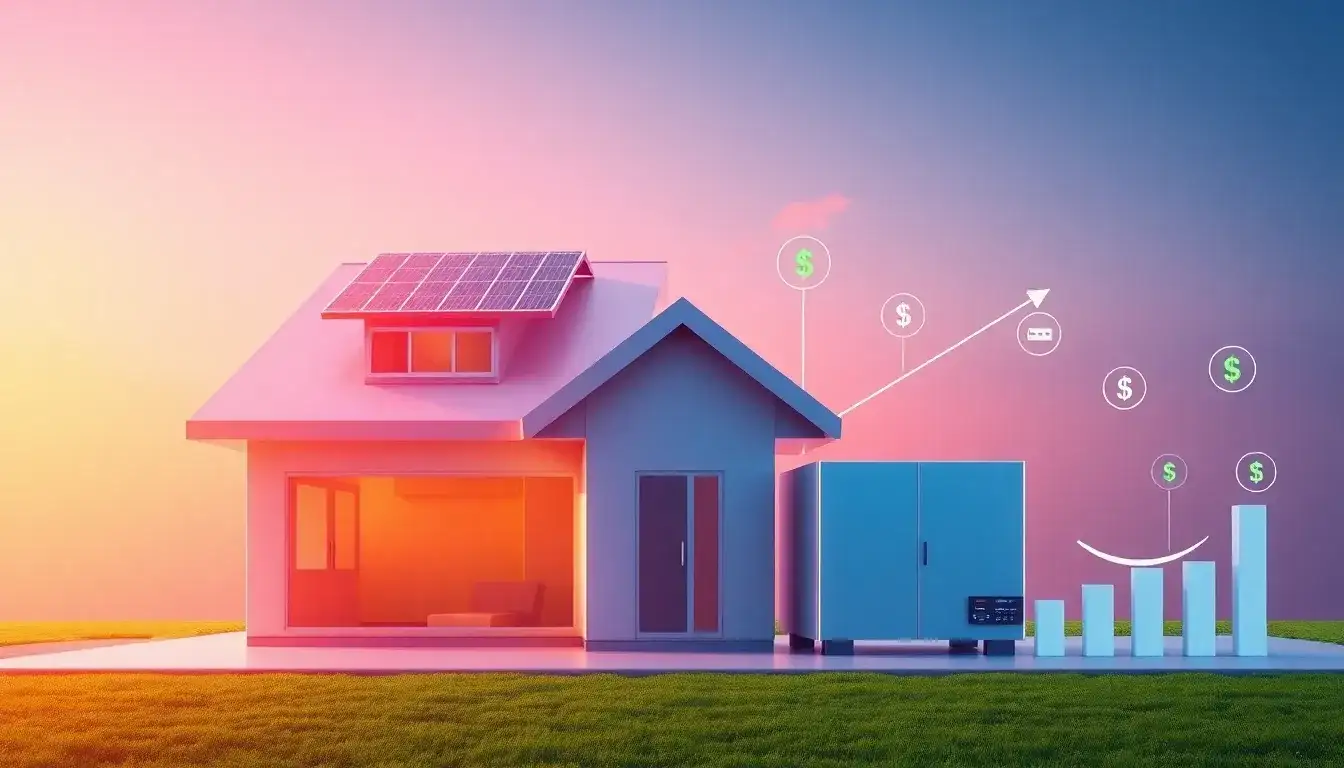
Impact of Cost on Efficiency
- High Initial Investment:
- Cost-Benefit Analysis: While residential energy storage systems can offer long-term savings and energy independence, the high upfront costs can deter potential buyers. The cost includes the purchase of the system, installation, and any necessary electrical modifications.
- Efficiency Tradeoff: Systems with higher upfront costs often feature advanced technologies that can provide greater efficiency and longer lifespans. However, the cost per kilowatt-hour (kWh) of battery capacity determines the system’s economic efficiency. In 2022, the battery pack cost was approximately $283/kWh DC, which contributes to the initial expense.
- System Size and Type:
- Customization: The size and type of the system significantly affect both the cost and efficiency. Larger, more advanced systems may be more expensive but can optimize energy use more effectively by storing more energy and providing reliable backup power during outages.
- Energy Efficiency: Systems designed with energy efficiency in mind can reduce electricity bills by utilizing stored energy during peak demand times, thus optimizing energy use and improving overall system effectiveness.
- Maintenance and Replacement:
- Life Cycle Costs: While modern battery systems require minimal maintenance, homeowners must consider the cost of periodic monitoring and eventual battery replacement, which impacts the system’s long-term efficiency.
- Technology Advancements: Advancements in battery technologies, such as lithium iron phosphate, have improved lifespan and reduced maintenance needs, contributing to better system efficiency over time.
- Government Incentives:
- Cost Offset: Various government incentives and rebates can help reduce the initial cost burden, making these systems more accessible and enhancing their economic efficiency.
Efficiency Considerations
- Peak Shaving and Load Shifting: Efficient systems optimize energy storage to reduce grid dependence during peak demand periods, leading to cost savings and increased energy independence.
- Energy Management Systems: Advanced energy management software further enhances efficiency by allowing homeowners to monitor and control their energy usage more effectively.
- Scalability and Flexibility: Modular designs allow systems to be easily expanded or configured to meet changing energy needs, improving their overall efficiency by optimizing energy storage capacity based on the household’s consumption patterns.
In conclusion, the cost of a residential energy storage system influences its efficiency by impacting the choice of system size, type, and features. While higher costs often correlate with greater efficiency and longer system lifetimes, careful consideration of these factors is essential to maximize efficiency and cost savings over time.
Original article by NenPower, If reposted, please credit the source: https://nenpower.com/blog/how-does-the-cost-of-a-residential-energy-storage-system-impact-its-overall-efficiency/

