

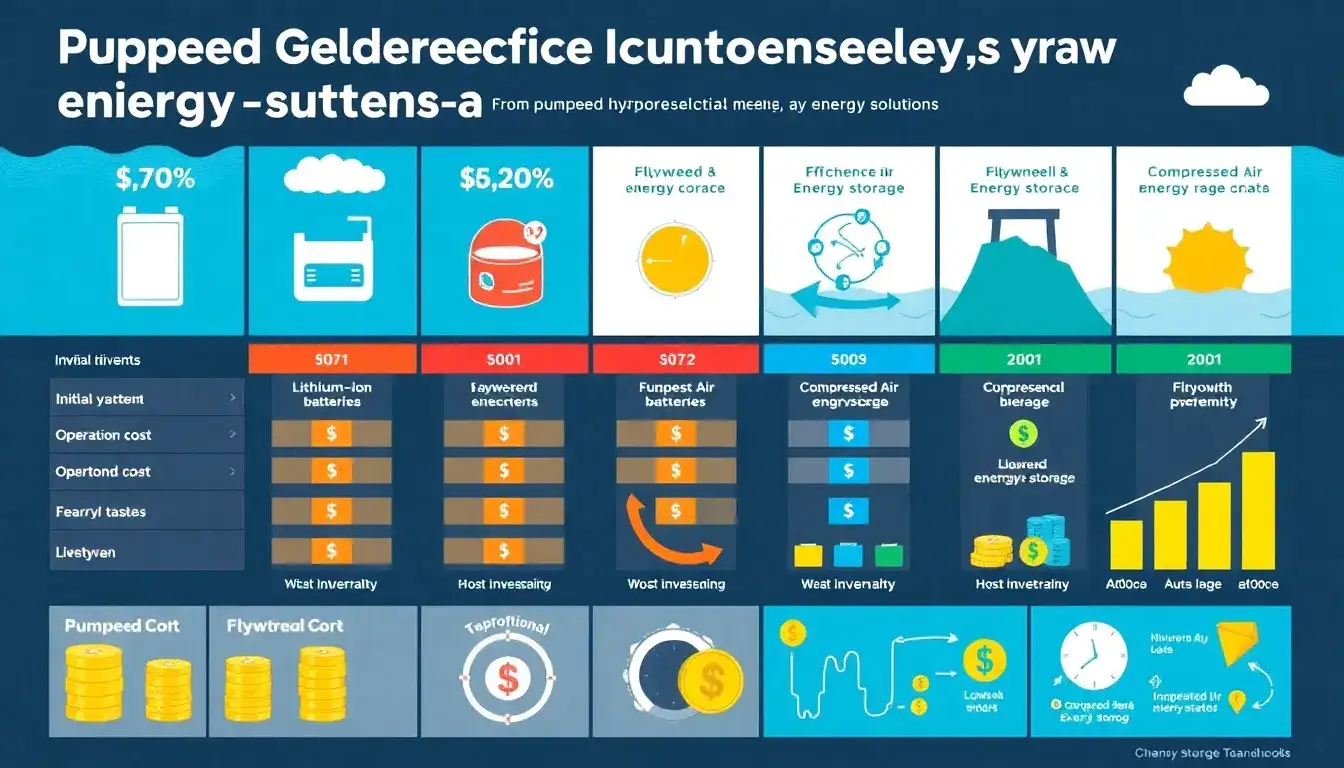
To assess the cost-effectiveness of pumped hydroelectric energy storage (PHES) systems compared to other energy storage solutions, several factors must be considered, including installation costs, operational expenses, and energy capacity.
Pumped Hydroelectric Energy Storage (PHES)
Advantages:
- High Energy Capacity: PHES systems have the ability to store large amounts of energy, making them ideal for grid-scale applications.
- Long Lifespan: These systems can last for decades, contributing to their overall cost-effectiveness.
- Reliability: They provide reliable and predictable energy supply.
Disadvantages:
- Geographic Limitations: PHES requires suitable geography, which can limit their deployment locations.
- High Initial Costs: The initial investment for constructing a PHES facility is substantial.
Comparison with Other Storage Solutions:
1. Lithium-Ion Batteries
- Advantages:
- High energy density and lightweight.
- Suitable for a wide range of applications from small-scale residential to large industrial uses.
- Disadvantages:
- Generally more expensive per kilowatt-hour than PHES systems.
- Require more frequent replacement compared to PHES.
2. Thermal Energy Storage Systems (TES)
- Advantages:
- Can be cost-effective and environmentally friendly with recyclable materials.
- Modular design allows for scalability and versatility in industrial processes.
- Low maintenance costs.
- Disadvantages:
- May not be as widely applicable for direct electrical energy storage as PHES or lithium-ion batteries.
3. Supercapacitors and Hybrid Systems
- Advantages:
- High power density and rapid charging capabilities.
- Can be used in hybrid systems with batteries for enhanced performance.
- Disadvantages:
- Typically more expensive than PHES for bulk energy storage.
- Lower energy density compared to batteries.
Cost-Effectiveness Summary:
- PHES Systems: Cost-effective for large-scale, long-duration energy storage but requires specific geography and high upfront costs.
- Lithium-Ion Batteries: Versatile but more expensive per kWh than PHES, with a shorter lifespan.
- Thermal Systems: Cost-effective and environmentally friendly, but less direct application for electrical energy storage.
- Hybrid Systems: Offer unique performance benefits but are generally more expensive for bulk storage.
In summary, while PHES systems are highly cost-effective for grid-scale energy storage due to their large capacity and long lifespan, other technologies like lithium-ion batteries and thermal systems have advantages in different contexts, such as versatility and sustainability.
Original article by NenPower, If reposted, please credit the source: https://nenpower.com/blog/how-does-the-cost-effectiveness-of-pumped-hydroelectric-energy-storage-systems-compare-to-other-energy-storage-solutions/

