

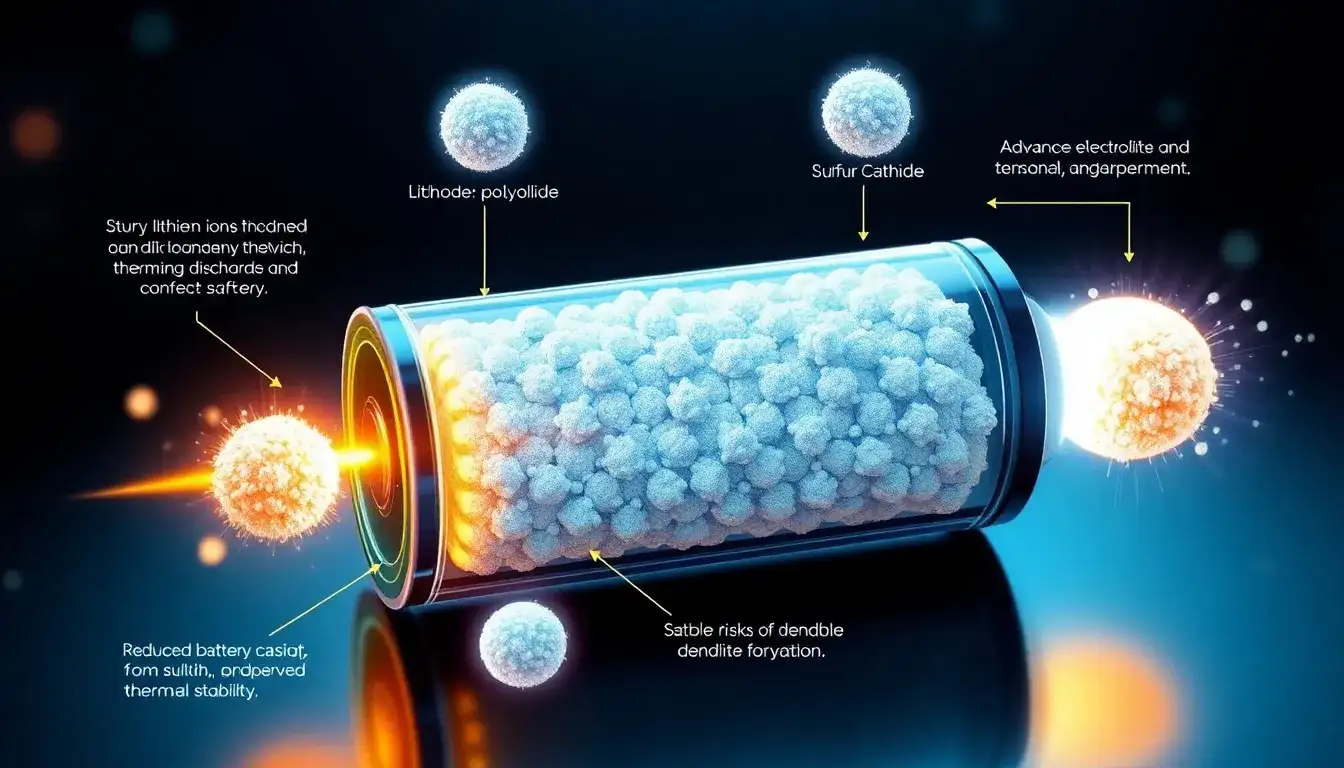
The conversion reaction in lithium-sulfur (Li-S) batteries improves safety primarily by enabling a different electrochemical mechanism that reduces risks typically associated with lithium metal batteries. This mechanism involves the transformation of sulfur and lithium into lithium sulfides during discharge and their reversible conversion back during charge.
How Conversion Reaction Enhances Safety
- Reduced Risk of Lithium Dendrites and Thermal Runaway:
Unlike conventional lithium-ion batteries where lithium plating and dendrite growth can cause short circuits and thermal runaways, the conversion reaction in Li-S batteries operates through the formation and dissolution of lithium polysulfides and lithium sulfides. This process, when well-controlled, can avoid the severe dendrite formation on the lithium anode, which is a major safety hazard in lithium metal batteries. - Suppression of Polysulfide Shuttle Effect:
Polysulfide intermediates formed during the conversion reaction tend to dissolve in the electrolyte and migrate between the cathode and anode causing capacity fading and side reactions. Innovations such as Lewis acid additives form protective films on both electrodes that suppress this shuttle effect, stabilizing the reactions and preventing continuous side reactions that could degrade the battery or provoke unsafe conditions. - Lower Flammability and Gas Generation:
The conversion reaction allows for potentially safer electrolyte formulations that minimize the dissolution of polysulfides and reduce the generation of harmful gases. Although common Li-S electrolytes can be flammable, research into new additives and higher boiling point solvents aims to enhance safety by stabilizing the reaction and preventing gas evolution that can cause venting or explosions. - Intrinsic Stability from Conversion Mechanism:
The operating mechanism based on conversion reactions (sulfur converting to lithium sulfides and back) inherently has safety advantages over intercalation-based lithium-ion batteries. This is because the structure and chemistry of sulfur cathodes produce fewer hazardous byproducts and a simpler reaction pathway that reduces the risk of catastrophic failures.
Summary
The conversion reaction in lithium-sulfur batteries improves safety by:
- Preventing dendrite formation and associated short circuits on lithium metal anodes
- Suppressing polysulfide shuttle reactions that cause side reactions and degradation
- Enabling more stable electrolytes with less flammability and hazardous gas generation
- Providing an electrochemical mechanism inherently safer than traditional lithium-ion battery intercalation chemistry
Together, these features make Li-S batteries safer and more stable, addressing some of the key safety challenges in high-energy lithium metal batteries.
Original article by NenPower, If reposted, please credit the source: https://nenpower.com/blog/how-does-the-conversion-reaction-in-lithium-sulfur-batteries-improve-safety/

