

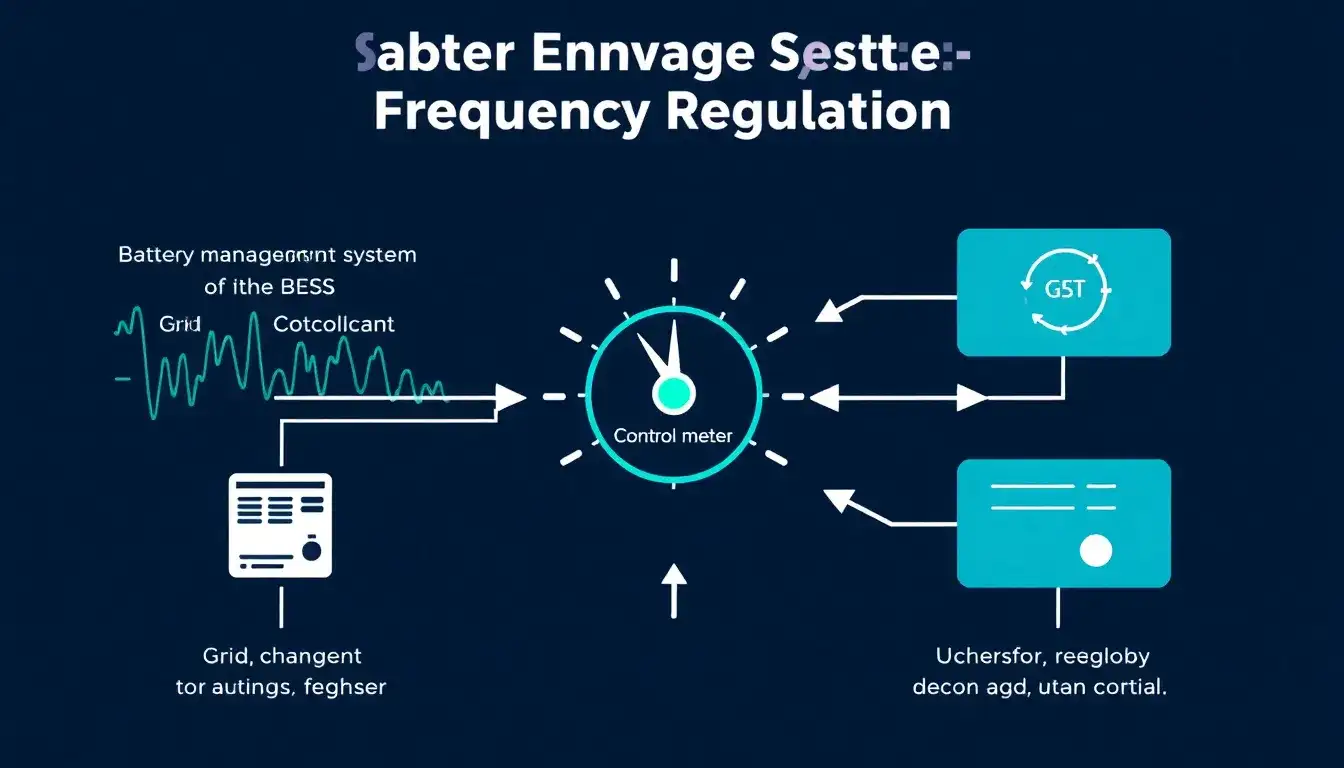
The control coefficient in Battery Energy Storage System (BESS) frequency regulation schemes is a critical component that optimizes the system’s ability to stabilize power grid frequencies. It is designed to adjust how much power the BESS injects into or absorbs from the grid in response to frequency deviations. Here’s how it typically works:
Functionality of Control Coefficient
- Adaptive Adjustment: The control coefficient is often made adaptive, meaning its value can change based on factors like the State of Charge (SOC) of the BESS and the magnitude of the frequency deviation. This allows the BESS to adjust its power output dynamically to better match the needs of the grid.
- SOC-Based Adjustment: The control coefficient increases as the SOC of the BESS increases, enabling the system to provide more power when fully charged and less when discharged, thus preventing over-discharging.
- Frequency Deviation Feedback: The coefficient also takes into account the deviation in grid frequency. Larger frequency deviations can trigger higher control coefficients to rapidly stabilize the grid frequency.
- Droop Control Implementation: Some schemes implement droop control, where the control coefficient is adjusted based on the rate of change of the frequency (df/dt) and the current frequency deviation. This allows the BESS to respond effectively to both gradual and sudden frequency changes.
Benefits
The adaptive control coefficient improves the frequency regulation capability of BESS by:
- Enhancing dynamic system frequency indices, such as reducing the maximum rate of change of frequency and settling frequency.
- Preventing over-charging or over-discharging by adjusting power injection based on SOC and frequency conditions.
- Facilitating better integration of renewable energy sources into the grid by providing fast and flexible frequency support.
Overall, the control coefficient plays a pivotal role in optimizing BESS performance for effective frequency regulation in power systems.
Original article by NenPower, If reposted, please credit the source: https://nenpower.com/blog/how-does-the-control-coefficient-in-bess-frequency-regulation-schemes-work/

