

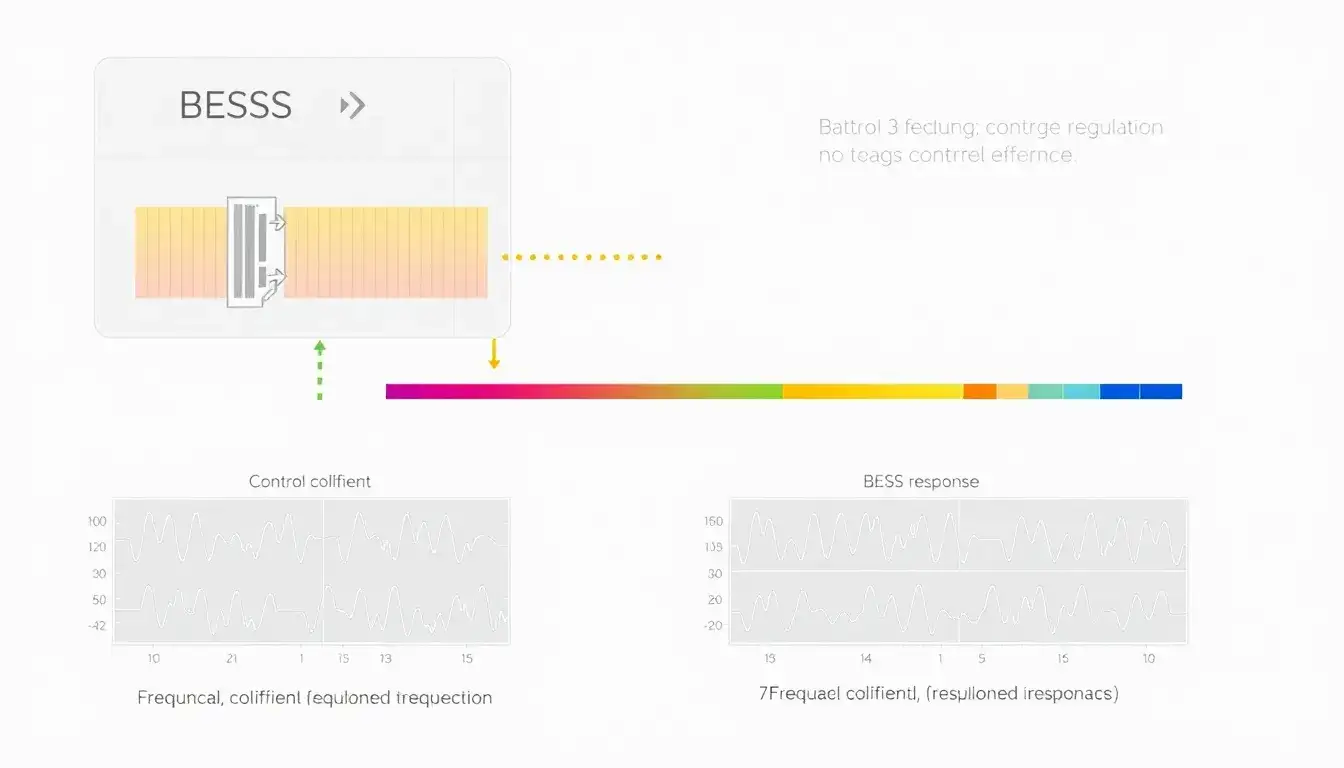
The control coefficient in a Battery Energy Storage System (BESS) plays a crucial role in enhancing its frequency regulation capabilities. Frequency regulation is essential for maintaining the stability of the power grid by ensuring that the system’s frequency remains within an acceptable range. Here’s how the control coefficient impacts this capability:
- Adjustable Frequency Support: The control coefficient can be set as a function of the State of Charge (SOC) and system frequency deviations. This allows the BESS to adaptively adjust its power output in response to changes in the grid frequency, ensuring efficient and dynamic frequency regulation.
- Prevention of Over-discharging: By linking the control coefficient to the SOC, the BESS can prevent over-discharging. When the SOC is low, the control coefficient can adjust to reduce power output, preventing the battery from being excessively depleted and maintaining its operational integrity.
- Optimized Power Injection: The control coefficient determines how much power the BESS injects into the grid. By dynamically adjusting this coefficient based on the SOC and frequency deviations, the BESS can optimally support the grid during frequency fluctuations.
- Integration with Other Control Strategies: Advanced control strategies, such as droop control and virtual inertia control, can be integrated with adjustable control coefficients to enhance frequency regulation performance. These strategies enable the BESS to quickly respond to frequency deviations and improve system stability.
In summary, the control coefficient in a BESS allows for flexible and efficient frequency regulation by adapting power output based on both the system’s SOC and frequency requirements, thus enhancing the stability and resilience of the power grid.
Original article by NenPower, If reposted, please credit the source: https://nenpower.com/blog/how-does-the-control-coefficient-in-bess-affect-its-frequency-regulation-capabilities/

