

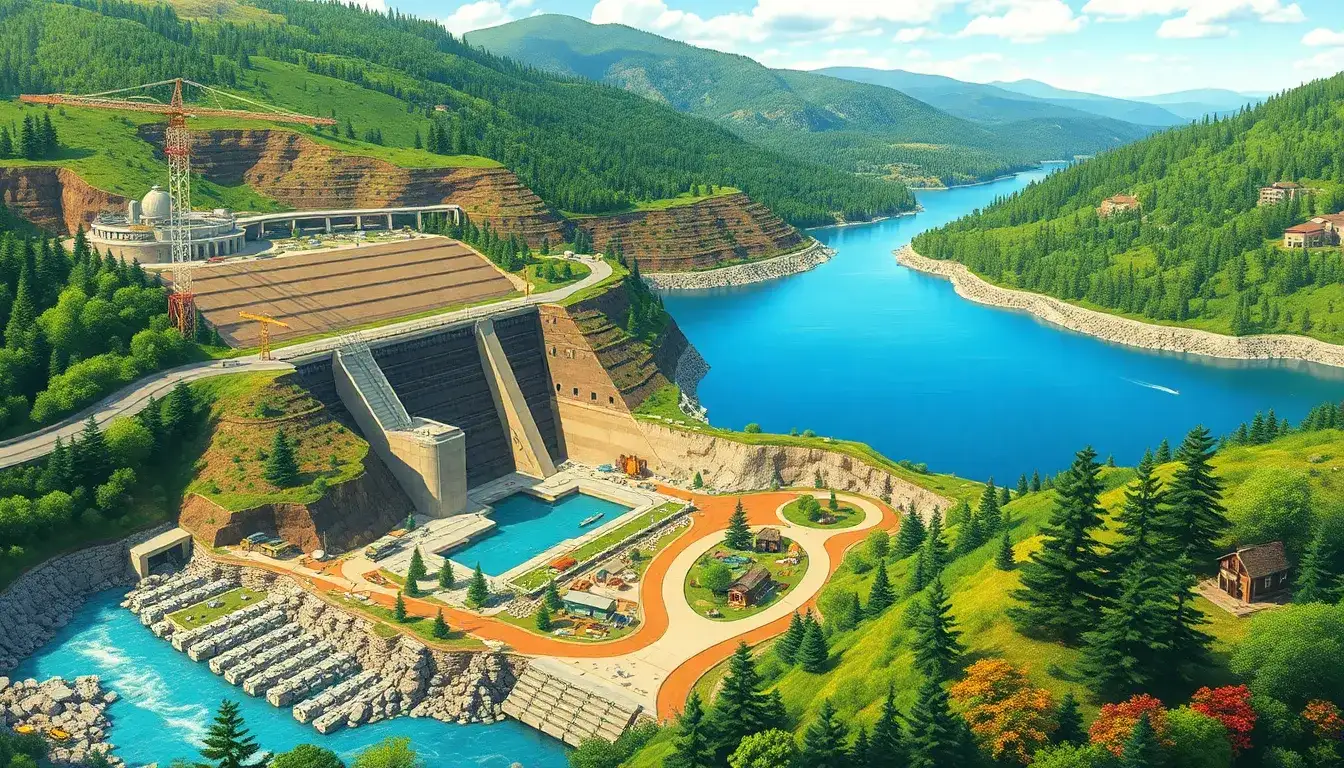
Ecological Impacts During Construction
1. Habitat Disturbance and Land Use Change
- Building the upper and lower reservoirs usually requires extensive excavation, dam construction, and land clearing, which can destroy terrestrial habitats and displace flora and fauna.
- Especially for projects that are not “closed-loop” (i.e., those that use natural water bodies such as rivers or lakes as reservoirs), there can be direct impacts on aquatic ecosystems through altered water levels and flows.
2. Water Quality and Hydrological Changes
- Construction activities can increase sediment runoff into water bodies, reducing water quality and affecting aquatic life.
- Alterations to natural hydrology, including water retention and flow regulation, can influence downstream ecosystems by changing temperature regimes, oxygen levels, and nutrient cycling.
3. Disruption to Wildlife and Endangered Species
- The disturbance and habitat fragmentation caused by construction can impact local wildlife, including potentially endangered species.
- Noise, vibration, and human presence during construction further stress animal populations and may alter migration or breeding behaviors.
4. Cultural and Ecological Sensitivities
- Site selection involves assessment of ecological sensitivity and cultural resources to minimize impacts, but some sensitivity remains due to the scale of infrastructure development.
Mitigation and Design Considerations
- Developers often prefer “closed-loop” systems, which use two man-made reservoirs cycling water internally, reducing interaction with natural water bodies and minimizing ecological disruption.
- Environmental impact assessments are conducted before construction to guide mitigation strategies. This includes careful site selection accounting for topography, geology, and biological factors.
- Design elements such as robust spillways and hydraulic structures are planned to safely manage water levels and flows, aiming to reduce ecological stress once operational.
Summary
In summary, the construction of pumped hydroelectric storage projects impacts local ecosystems mainly through physical habitat alteration, water quality degradation, disruption of wildlife, and hydrological changes. These effects stem from large-scale earthworks, reservoir creation, and infrastructure installation. Though mitigation approaches and careful site selection strive to reduce these impacts, ecological disruption is an inherent challenge during construction phases of pumped storage facilities.
Original article by NenPower, If reposted, please credit the source: https://nenpower.com/blog/how-does-the-construction-process-of-pumped-hydroelectric-storage-affect-local-ecosystems/

