

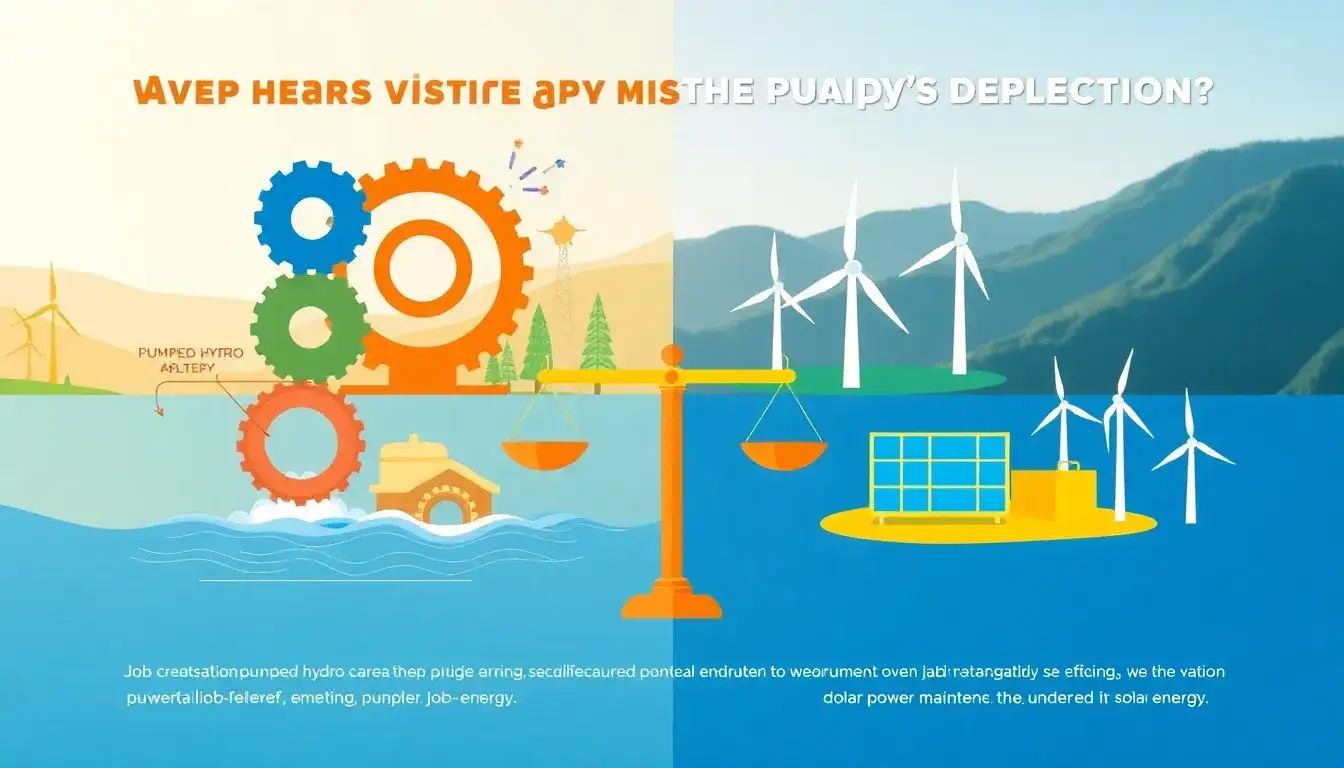
The construction of pumped hydroelectric facilities compares favorably to other renewable energy projects in terms of job creation, particularly during the construction phase, while also providing significant ongoing employment once operational.
Job Creation in Pumped Hydroelectric Facilities
- A specific example is the Eagle Mountain Energy pumped storage project in California, which is expected to create over 500 direct and indirect jobs during its four-year construction period and sustain about 50 permanent jobs during operations.
- The U.S. hydropower sector—including pumped storage—employs a large workforce, estimated at up to 300,000 workers spanning development, manufacturing, operations, and maintenance.
- Pumped storage projects have a notable pipeline of development in the U.S., with expectations to add approximately 8,787 new on-site jobs during construction and operations, compared to roughly 300 on-site jobs expected from conventional hydropower projects under current development pipelines.
Comparison to Other Renewable Energy Projects
- Hydropower, which includes pumped storage, is a mature technology with a vast existing workforce and the potential for significant expansion. Navigant Consulting projects that, with the right policies, hydropower could generate 1.4 million cumulative jobs by 2025 in the U.S., highlighting its strong employment potential within renewables.
- Small-scale hydropower projects require substantial labor input ranging from tens of thousands to over 160,000 person-days per project for construction and ongoing operations, indicating a high labor intensity that benefits local employment, particularly in remote areas.
- By contrast, other renewables like solar and wind typically have high initial construction job creation but generally fewer long-term operational jobs due to automation and lower maintenance demands. Pumped hydro also contributes ongoing operational jobs due to complex mechanical and electrical systems that require continuous workforce involvement.
Summary Table: Pumped Hydroelectric vs. Other Renewables Job Creation
| Aspect | Pumped Hydroelectric | Other Renewables (Solar, Wind) |
|---|---|---|
| Construction job duration | Multiple years (e.g., 4 years) | Usually shorter (months to ~2 years) |
| Construction job numbers | Hundreds to thousands per project | Hundreds to thousands, varies by scale |
| Operational jobs | Dozens to hundreds per facility | Fewer, often lower due to automation |
| Workforce type | Skilled labor for mechanical, electrical, civil | Often less skilled for maintenance |
| Job creation potential | High, with large indirect jobs possible | High initially, but less sustained |
In conclusion, pumped hydroelectric projects tend to generate substantial construction and long-term operational jobs compared to many other renewable energy projects. Their complex infrastructure demands create sustained employment opportunities, especially in regions where such facilities are built, supporting both local economies and the renewable energy workforce expansion.
Original article by NenPower, If reposted, please credit the source: https://nenpower.com/blog/how-does-the-construction-of-pumped-hydroelectric-facilities-compare-to-other-renewable-energy-projects-in-terms-of-job-creation/

