

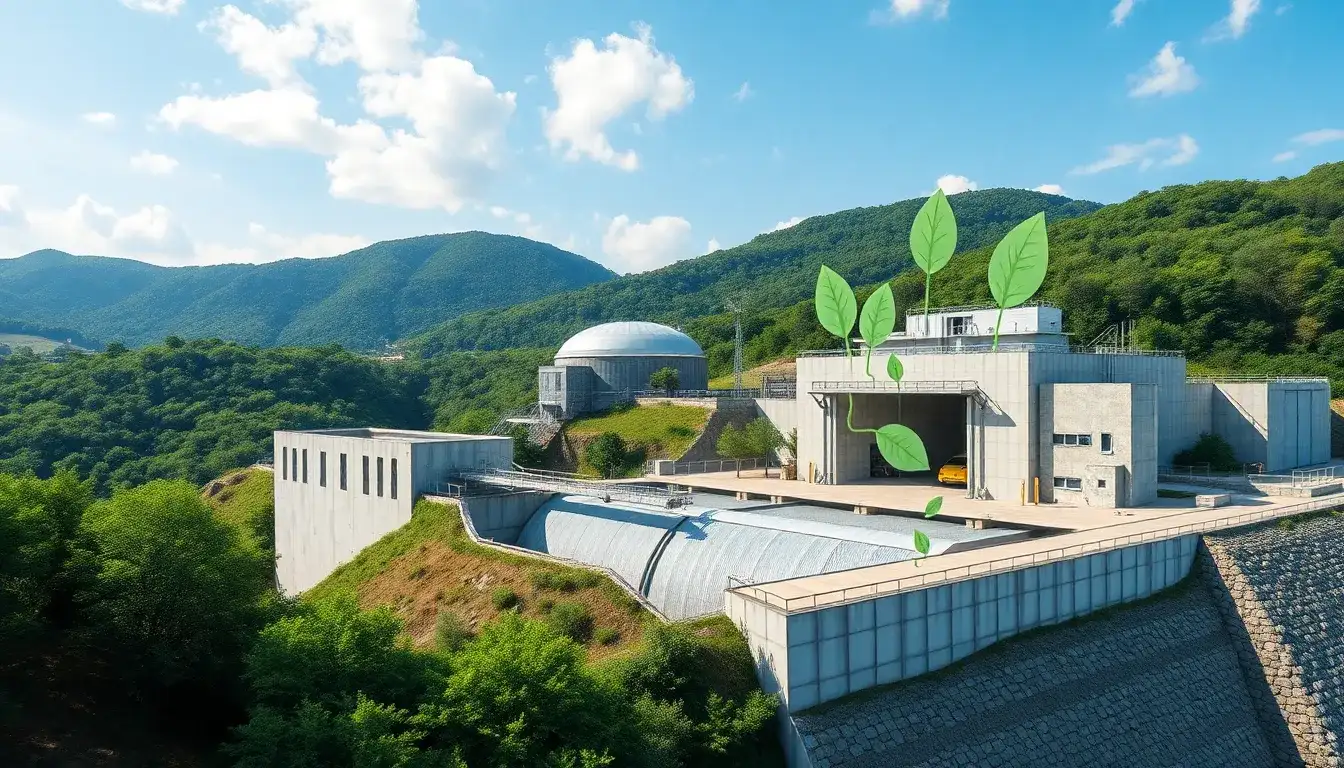
The construction materials used in pumped hydro storage (PHS) facilities significantly impact their environmental footprint, primarily through the scale of infrastructure and resource extraction needed. Here are some key aspects to consider:
Environmental Impact of Construction Materials
1. Scale and Location
- Traditional PHS: Requires large reservoirs, often constructed in mountainous regions. This necessitates extensive civil engineering works, including dam construction, tunnels, and access roads, which can disrupt natural habitats and alter ecosystems.
- Zero Terrain Solution: Optimizes land use by using earth beams as the structure and placing lower reservoirs in the Earth’s crust. This approach reduces material usage and can be applied in areas without traditional hydroelectric prerequisites, limiting environmental disturbance.
2. Material Consumption
- Traditional construction involves substantial amounts of concrete for dams and other infrastructure. The cement production process is energy-intensive and generates significant CO2 emissions.
- Innovative solutions like Zero Terrain may reduce overall material consumption by leveraging existing geological structures.
3. Excavation and Quarrying
- Some solutions, like Zero Terrain, generate additional products (e.g., crystalline aggregates) during the excavation process. This can offset costs and reduce reliance on imported materials.
4. Land Use and Aesthetics
- PHS can alter landscapes and impact scenic values. More efficient designs and smaller footprints can mitigate this impact.
5. Water Impacts
- Although not directly related to construction materials, PHS’s hydrological impact is significant. Water diversion and reservoir creation can affect local aquatic life and water cycles.
6. Innovative Materials
- RheEnergise’s use of high-density fluids reduces the required vertical elevation for energy storage, potentially allowing for smaller projects that are less invasive.
In summary, the environmental footprint of pumped hydro storage is influenced by the scale and location of constructions, material consumption, excavation impacts, land use changes, and innovative solutions that either reduce environmental impacts or optimize resource use.
Original article by NenPower, If reposted, please credit the source: https://nenpower.com/blog/how-does-the-construction-material-used-in-pumped-hydro-storage-facilities-affect-their-environmental-footprint/

