

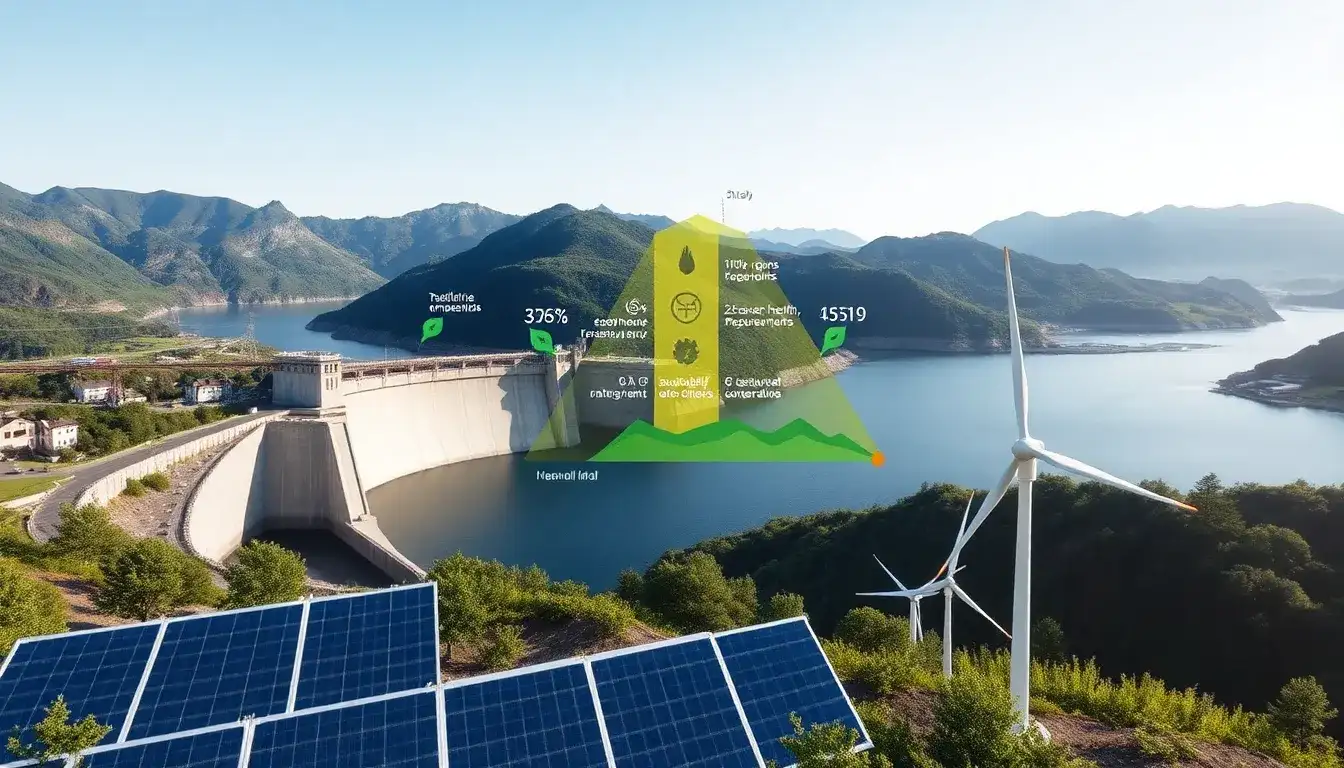
How Construction Materials Affect the Environmental Footprint of Closed-Loop PSH
The construction materials used in closed-loop pumped storage hydropower (PSH) significantly impact its overall environmental footprint. Here are key points highlighting how materials like concrete and steel influence the sustainability of these systems:
- Life Cycle Assessment (LCA) and Greenhouse Gas Emissions (GHG):
- The most substantial environmental impact of closed-loop PSH comes from the source of the stored electricity, but construction materials such as concrete are also significant contributors to GHG emissions.
- Concrete used in facility construction, particularly for reservoirs and connecting structures, accounts for a notable portion of the emissions during the building phase.
- Material Use and Footprint:
- Concrete: It’s a major material used in constructing reservoirs and dams. The cement production process contributes significantly to CO2 emissions due to calcination (the process of heating limestone) and energy consumption.
- Steel: Though less impactful than concrete, steel used in pipelines and machinery also contributes to emissions from extraction, refining, and manufacturing processes.
- Site Selection and Brownfield vs. Greenfield Sites:
- The environmental footprint can be reduced by using brownfield sites (e.g., former mine locations) instead of greenfield sites. Brownfield sites can result in a 20% lower global warming potential compared to developing new greenfield sites.
- Economic and Local Impacts:
- The use of local materials and labor can minimize transportation emissions and provide economic benefits to the local community.
- Projects like the Lewis Ridge Pumped Storage Project utilize former mine sites, offering both environmental advantages and economic revitalization opportunities.
Conclusion
Construction materials, especially concrete, have a significant impact on the environmental footprint of closed-loop PSH systems due to their contribution to greenhouse gas emissions during production and construction. However, these systems still offer substantial climate benefits compared to other energy storage technologies, particularly when integrated thoughtfully into the existing landscape and infrastructure.
Original article by NenPower, If reposted, please credit the source: https://nenpower.com/blog/how-does-the-construction-material-used-in-closed-loop-psh-affect-its-overall-environmental-footprint/

