

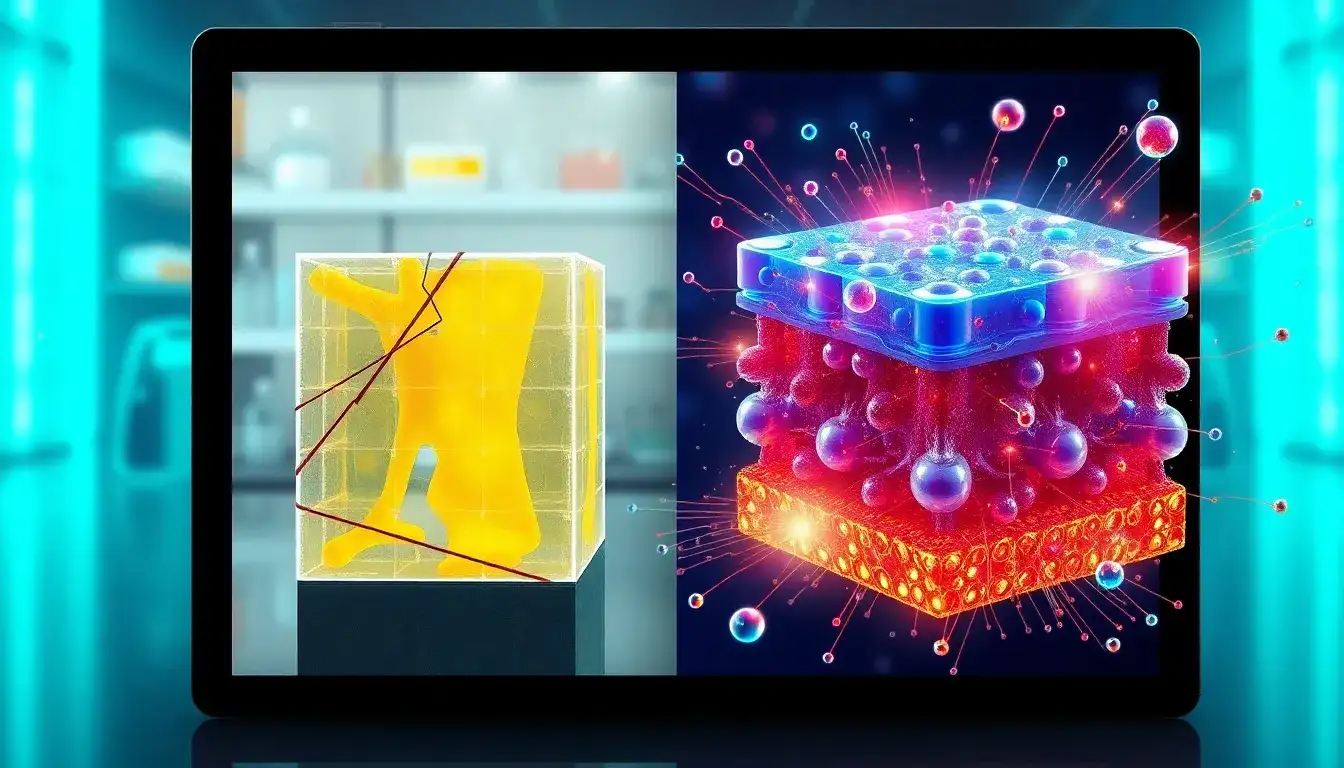
Composite Solid-State Electrolytes Improve Durability
Composite solid-state electrolytes improve durability through several synergistic mechanisms enabled by their hybrid structure:
1. Enhanced Mechanical Properties
Incorporating rigid inorganic fillers (e.g., Li₇La₃Zr₂O₁₂ or LLZO) or flexible polymers creates a stress-resistant framework. This mitigates electrolyte cracking during electrode volume changes and suppresses lithium dendrite penetration, reducing short-circuit risks.
2. Improved Ionic Conductivity
Composite electrolytes leverage dual Li⁺ transport pathways:
- Amorphous polymer regions above their glass transition temperature (Tg) enable segmental chain mobility for ion hopping.
- Inorganic phases provide fast ion-conducting channels, particularly at filler/polymer interfaces.
This combination achieves higher conductivity than single-phase materials while maintaining mechanical stability.
3. Stabilized Electrode Interfaces
The hybrid structure reduces interfacial resistance by:
- Preventing direct contact between reactive electrodes and unstable electrolyte components.
- Facilitating uniform Li⁺ flux at interfaces through optimized filler distribution, minimizing localized dendrite nucleation.
4. Thermal Stability
Inorganic components like ceramics dissipate heat more effectively than pure polymers, while polymer matrices prevent inorganic particle sintering at high temperatures. This dual-phase thermal buffering enhances safety during operation.
5. Electrochemical Stability
Composite materials broaden the electrochemical window by combining oxidation-resistant polymers with reduction-stable inorganic fillers, enabling compatibility with high-voltage cathodes.
By addressing fracture resistance, interfacial degradation, and thermal/electrochemical limitations of single-phase electrolytes, composite methods significantly improve cycle life and safety in solid-state batteries.
Original article by NenPower, If reposted, please credit the source: https://nenpower.com/blog/how-does-the-composite-method-improve-the-durability-of-solid-electrolytes/

