

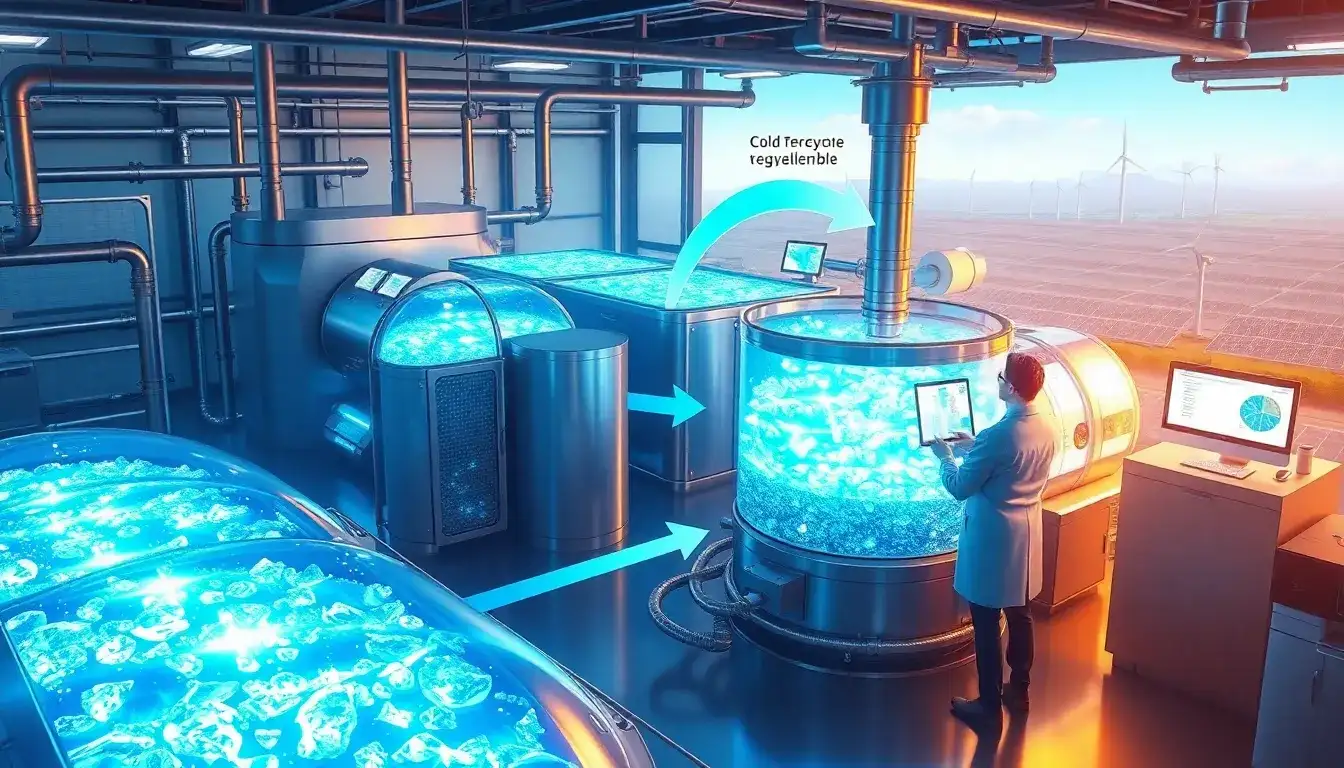
The cold recycle process improves the efficiency of Liquid Air Energy Storage (LAES) systems by capturing and reusing the cold thermal energy generated during the discharge phase to reduce the energy needed during the charging phase when air is liquefied. Here is how it works and why it enhances efficiency:
How Cold Recycle Works in LAES
- During discharge, liquid air is converted back to gas, which absorbs heat and expands to generate electricity. This conversion releases cold energy as a byproduct.
- Instead of wasting this cold, the system captures and stores it in thermal storage tanks, often using materials such as quartz in packed bed stores, which provide durable and effective cold storage.
- When charging (liquefying air), the stored cold is reused to pre-cool the air before liquefaction. This reduces the amount of work the refrigeration system must perform to liquefy the air.
- By lowering the refrigeration load, the overall power consumption during charging is reduced, improving the net round-trip efficiency of the energy storage cycle.
Efficiency Benefits
- The cold recycle process can raise the round-trip efficiency of LAES systems to around 60%, surpassing traditional targets of above 50%. This is a significant improvement compared to systems without cold recycling.
- Experimental pilot plants have demonstrated effective reduction in the liquefier work and the ability to store cold long-term without temperature stratification or degradation, confirming the practical viability of the cold recycling concept.
- Advanced process design optimizations, such as modifying the number and positions of cold expansion turbines, allow more cold energy to be used efficiently without temperature convergence issues within the cold box, further boosting efficiency.
- Additionally, integrating waste cold from processes like LNG regasification during recharge can reduce the power needed by refrigerators and further increase round-trip efficiency.
Summary Table
| Aspect | Benefit of Cold Recycle in LAES |
|---|---|
| Cold energy use | Captures and stores cold from discharge |
| Impact on charging | Reduces energy required for air liquefaction |
| Round-trip efficiency | Improves from ~50% to up to ~60% |
| Thermal storage | Uses low cost, durable materials (e.g., quartz) |
| Process optimization | Advanced turbine design enhances cold utilization |
| Integration with waste cold | Further reduces power consumption during recharge |
In essence, cold recycle improves LAES systems by recovering and reusing otherwise wasted cold energy, thereby reducing electricity consumption in the liquefaction stage, increasing overall efficiency, and making LAES a more competitive large-scale energy storage solution.
Original article by NenPower, If reposted, please credit the source: https://nenpower.com/blog/how-does-the-cold-recycle-process-improve-the-efficiency-of-liquid-air-energy-storage-systems/

